
May and might are modal verbs used to express possibility, permission, or uncertainty. In this Grammar lesson, understanding the differences helps you speak, write, and read English more accurately. Using them correctly makes your sentences precise and natural. In this blog post, you will learn the differences between may and might with usage and examples to practice and use them confidently in everyday English.
Meanings of May and Might
May
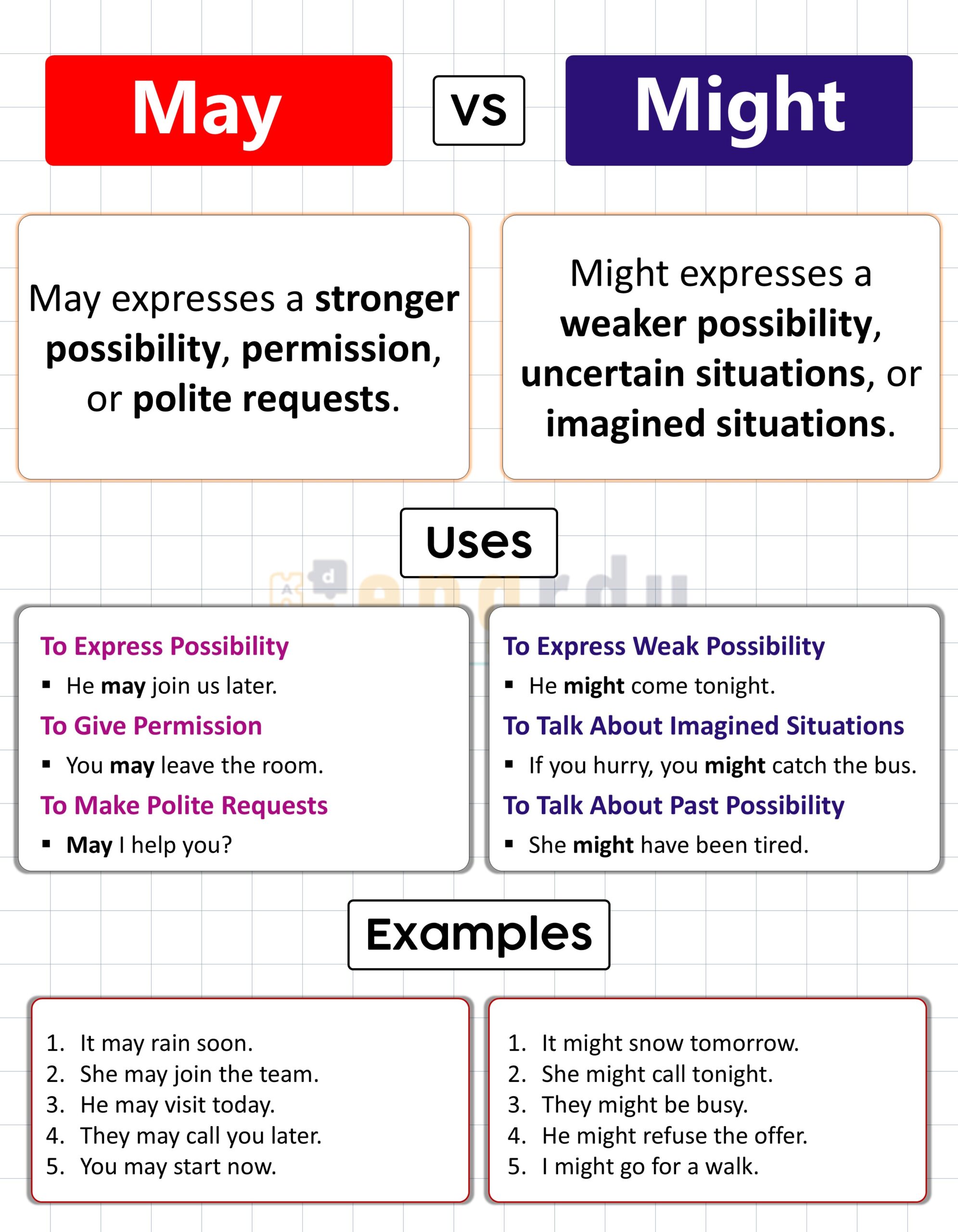
May expresses a stronger possibility, permission, or polite requests. It is often used when something is quite possible or likely.
Examples:
- It may rain later.
- You may start your work now.
Might
Might expresses a weaker possibility, uncertain situations, or imagined situations. It is often used when something is less likely.
Examples:
- It might rain later.
- She might visit tomorrow.
Differences Between May and Might
| Point | May | Might |
|---|---|---|
| Meaning | Stronger possibility | Weaker possibility |
| Permission | Yes, used for permission | Not used for permission |
| Politeness | Formal and polite | Less formal |
| Certainty Level | More likely | Less likely |
Easy trick to remember:
May = more possible
Might = less possible
Usage of May
1. To express possibility
Used for events that are quite possible.
Examples:
- He may join us later.
- The shop may open early.
2. To give permission
Formal and polite permission.
Examples:
- You may leave the room.
- Students may use the library.
3. To make polite requests
Used in very polite questions.
Examples:
- May I help you?
- May I come in?
4. To show uncertainty in the present
Used when we are not fully sure.
Examples:
- She may be at home.
- They may be working now.
Usage of Might
1. To express weak possibility
Used for events that are less likely.
Examples:
- He might come tonight.
- They might move next year.
2. To talk about imagined situations
Used for possibilities that are not certain.
Examples:
- If you hurry, you might catch the bus.
- If we leave now, we might arrive early.
3. To talk about past possibility
Used when guessing about the past.
Examples:
- She might have been tired.
- He might have forgotten.
4. To reduce certainty politely
Used to sound soft and less direct.
Examples:
- I might need help later.
- He might want to rest.
Formal Usage of May vs Might
May:
- You may enter the meeting room.
- The manager may review your request tomorrow.
Might:
- The results might change after review.
- The company might approve the proposal.
Informal Usage of May and Might
May:
- I may go out later.
- She may call you tonight.
Might:
- I might watch a film.
- They might come over.
Sentences with May
- It may rain soon.
- She may join the team.
- He may visit today.
- They may call you later.
- You may start now.
- The shop may close early.
- We may need extra time.
- She may be right.
- He may arrive late.
- The bus may be full.
- You may take a break.
- They may open a new branch.
- He may choose another option.
- She may win the competition.
- The service may take longer.
- Students may bring notebooks.
- The weather may change soon.
- You may return the item.
- He may feel tired today.
- I may try again later.
Sentences with Might
- It might snow tomorrow.
- She might call tonight.
- They might be busy.
- He might refuse the offer.
- I might go for a walk.
- The train might be late.
- She might forget the time.
- He might need help.
- They might cancel the trip.
- I might cook dinner.
- The road might be closed.
- She might visit next week.
- He might get sick.
- They might move house.
- I might read this book.
- She might come early.
- He might lose his keys.
- They might change plans.
- I might not join today.
- The meeting might run longer.
Summary of May vs Might
- May expresses stronger possibility, permission, and polite requests.
- Might expresses weaker possibility, uncertainty, or imagined situations.
- May is more formal; might feels softer and less certain.
- Knowing the difference helps in speaking clearly and showing the right level of certainty.
FAQs about May vs Might
What is the meaning of may?
May means a stronger possibility and can be used for permission or polite requests.
What is the meaning of might?
Might means a weaker possibility and is used for uncertain or imagined situations.
What is the difference between may and might?
May shows a higher chance of something happening, while might shows a lower chance.
Is may used for permission?
Yes, may can give polite and formal permission.
Is might used for permission?
No, might is not used for permission.
Which is more likely: may or might?
May is more likely; might is less likely.
What is an easy trick to remember the difference?
May = more possible
Might = less possible
Read More
- Can vs Could with Meanings and Examples
- Used to vs Be Used to Meanings and Examples
- Must vs Should Differences with Examples

Abdul Manan is an author at engrdu.com. He is passionate about making English language learning accessible and fun. From mastering grammar to expanding vocabulary and understanding the nuances of different accents, our goal is to provide learners with practical tools for real-world communication. If you’re looking to improve comprehension or sharpen your daily conversation skills, our easy-to-follow guides, worksheets, and picture-based learning make it simple for everyone to succeed.