
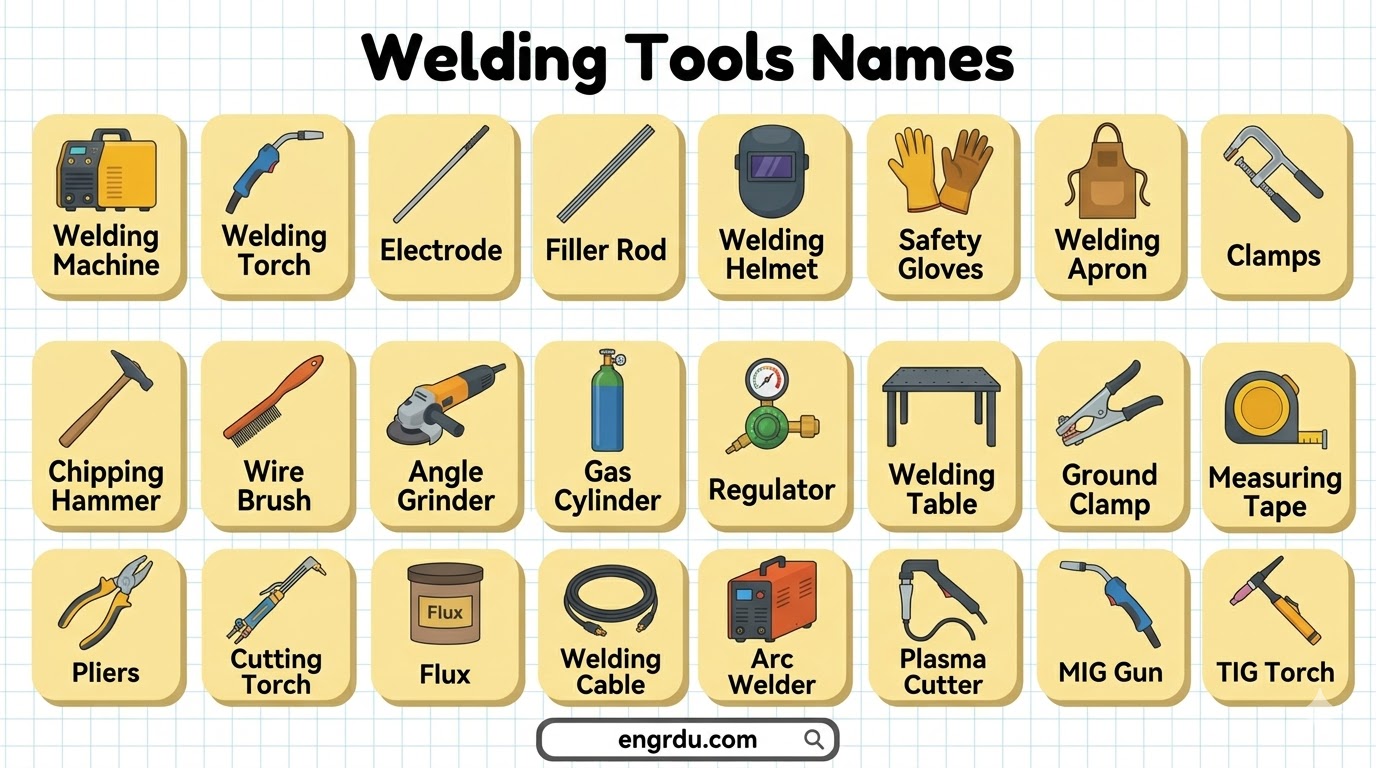

Have you ever watched a welder working and wondered what all those tools are called? Learning welding tools names in English helps students, workers, and English learners speak more confidently in workshops, training centers, and job environments.
From safety gear to cutting equipment, welding vocabulary appears in technical English, trade schools, and daily conversations on construction sites. This article explains common welding tools and equipment with practical uses and easy examples so you can remember them naturally.
What Are Welding Tools?
Welding tools are equipment and hand tools used to join metal parts together. Some tools help create heat, while others protect the worker, hold metal pieces, or clean the welded surface.
People working in factories, garages, pipelines, and construction projects use these tools every day. Knowing their English names improves communication during training and work.
Common Welding Tools Names and Their Uses
Many welding tools have different functions. Some melt metal, while others improve safety or accuracy.
| Welding Tool | Use |
|---|---|
| Welding Machine | Produces heat to join metals |
| Welding Helmet | Protects the eyes and face |
| Electrode Holder | Holds the welding rod |
| Welding Rod | Creates the weld joint |
| Angle Grinder | Smooths and cuts metal |
| Clamps | Hold metal pieces together |
| Chipping Hammer | Removes slag from welds |
| Wire Brush | Cleans metal surfaces |
| Tape Measure | Measures metal length |
| Pliers | Hold hot metal safely |
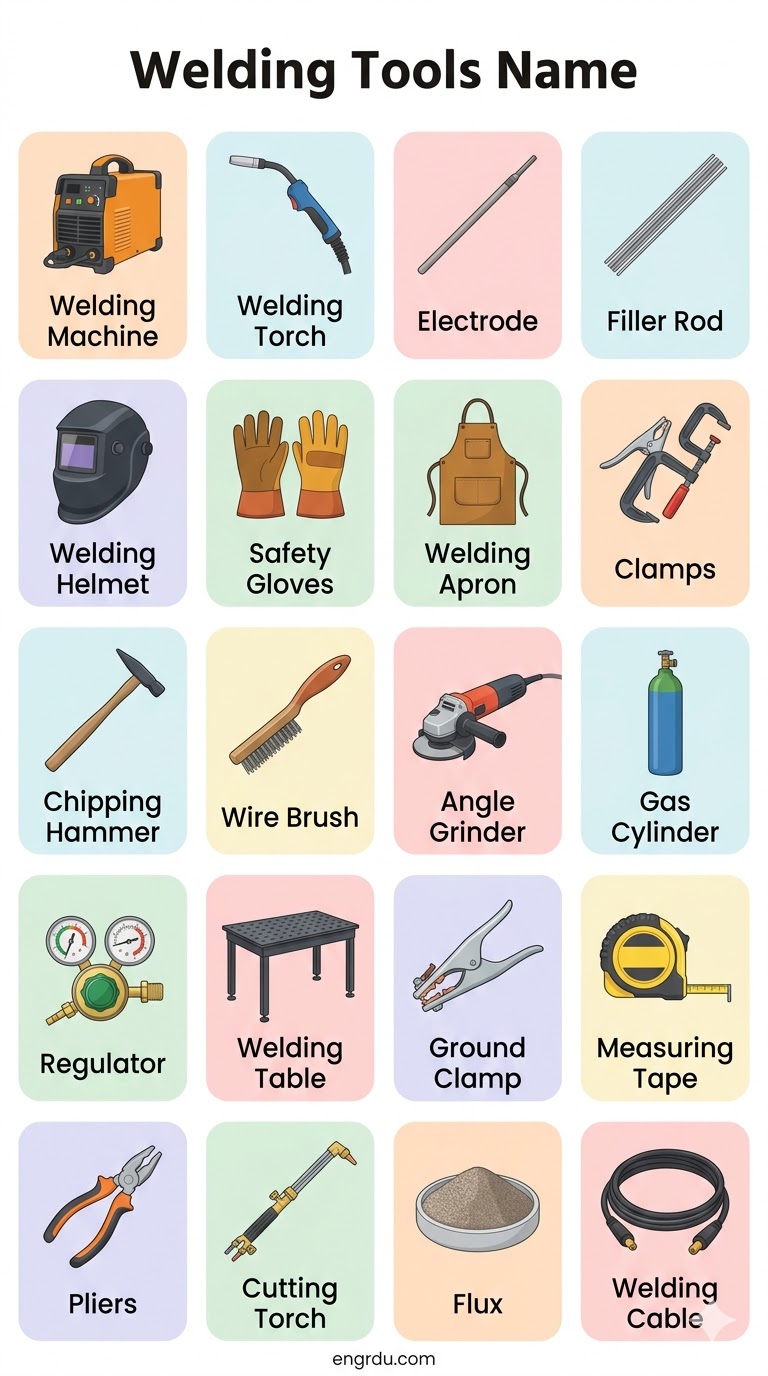
Welding Tools Names and Pictures
Essential Tools Used by Welders
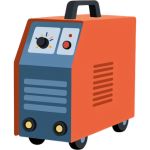
Welding Machine
A welding machine produces heat and electrical power needed to join metal pieces together during welding work.

Welding Helmet
A welding helmet protects the eyes and face from sparks, smoke, and bright welding light during metal fabrication.
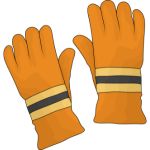
Welding Gloves
Welding gloves protect hands from burns, sharp metal edges, and extreme heat while handling welding equipment safely.
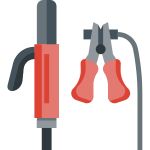
Electrode Holder
An electrode holder grips the welding rod firmly and transfers electrical current during welding operations on metal surfaces.
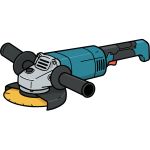
Angle Grinder
An angle grinder cuts, smooths, and cleans rough metal surfaces before and after welding activities in workshops.
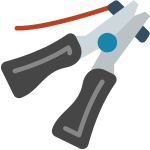
Clamps
Clamps hold metal pieces tightly in place to prevent movement during cutting, fitting, or welding processes.
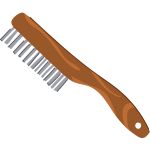
Wire Brush
A wire brush removes rust, dirt, paint, and welding residue from metal surfaces before finishing work.
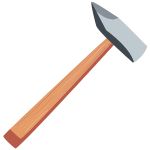
Chipping Hammer
A chipping hammer breaks and removes slag formed after stick welding to leave cleaner welded surfaces.
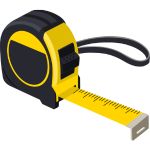
Tape Measure
A tape measure helps welders measure metal accurately before cutting, fitting, or joining materials together.
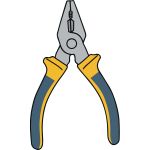
Pliers
Pliers grip, bend, and safely handle hot metal pieces during welding, repair, and fabrication work.
You may also like: Different Types of Pliers explained
Safety Tools for Welders
Safety equipment protects welders from burns, sparks, electric shock, and harmful fumes. These tools help reduce workplace accidents and injuries.
Welding Helmet
A welding helmet protects the face and eyes from intense welding light, heat, and dangerous flying sparks during metal joining work.
Welding Gloves
Welding gloves protect hands from burns, sharp edges, electrical risks, and extremely hot metal materials during welding operations.
Safety Glasses
Safety glasses shield the eyes from dust, sparks, and small metal particles during grinding, cutting, and cleaning tasks.
Welding Apron
A welding apron covers the chest and body from hot sparks, molten metal, and heat produced during welding activities.
Welding Boots
Welding boots protect feet from falling metal objects, hot materials, electrical hazards, and sharp industrial workshop surfaces.
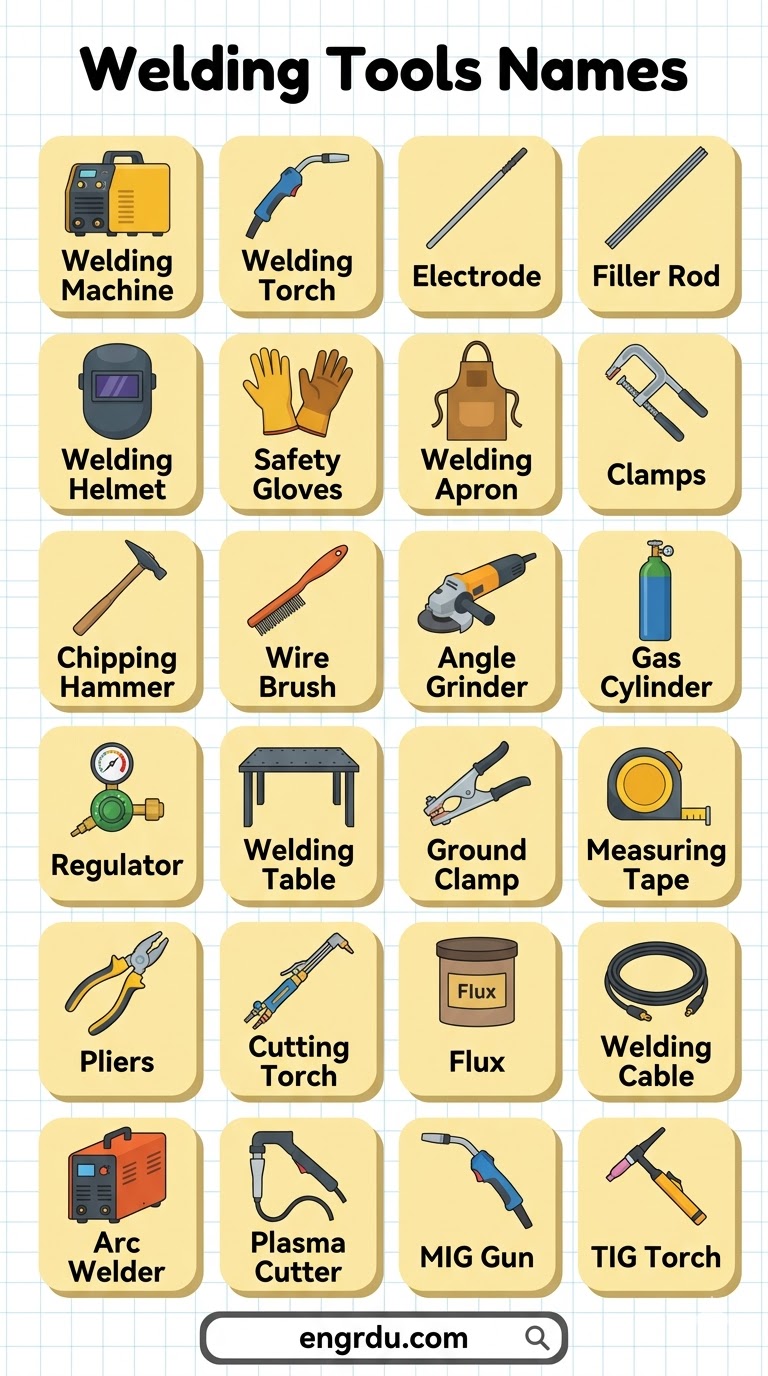
Types of Welding Tools
Measuring and Marking Tools Used in Welding
Accurate measurements help welders create clean joints and properly aligned metal structures. Measuring tools improve precision before cutting or welding begins.
Tape Measure
A tape measure checks metal dimensions accurately before cutting, fitting, or joining steel parts in fabrication projects.
Steel Rule
A steel rule provides straight measurements and helps workers mark metal surfaces carefully during workshop preparation tasks.
Soapstone Marker
A soapstone marker creates visible lines on metal surfaces without damaging materials during cutting or welding preparation work.
Combination Square
A combination square checks right angles and straight edges while helping maintain accurate metal alignment during fabrication work.
Cutting and Cleaning Tool for Welders
Cutting and cleaning tools prepare metal surfaces and improve the appearance of finished welding work. Clean surfaces also improve weld quality.
Angle Grinder
An angle grinder cuts steel, removes rust, smooths welds, and sharpens metal surfaces during fabrication and repair projects.
Chipping Hammer
A chipping hammer breaks and removes slag formed after stick welding to leave cleaner and smoother weld surfaces.
Wire Brush
A wire brush removes dirt, rust, and leftover welding particles from metal surfaces before painting or finishing work.
Metal Cutter
A metal cutter slices metal sheets, pipes, and rods accurately during fabrication, repair, and industrial construction work.
Welding Machine Parts and Accessories
Welding machines include important accessories that help transfer electrical current and control welding performance safely.
Electrode Holder
The electrode holder grips the welding rod securely while safely transferring electrical current during welding operations on metal surfaces.
Ground Clamp
A ground clamp connects the welding machine to metal surfaces safely and completes the electrical welding circuit correctly.
Welding Cable
Welding cables transfer electrical current from the welding machine to the electrode holder during welding work efficiently.
Gas Regulator
A gas regulator controls gas pressure and maintains smooth gas flow during MIG and gas welding procedures.
Hand Tools Used by Welders
Welders use several hand tools while preparing materials, fixing equipment, and adjusting metal structures during daily workshop activities.
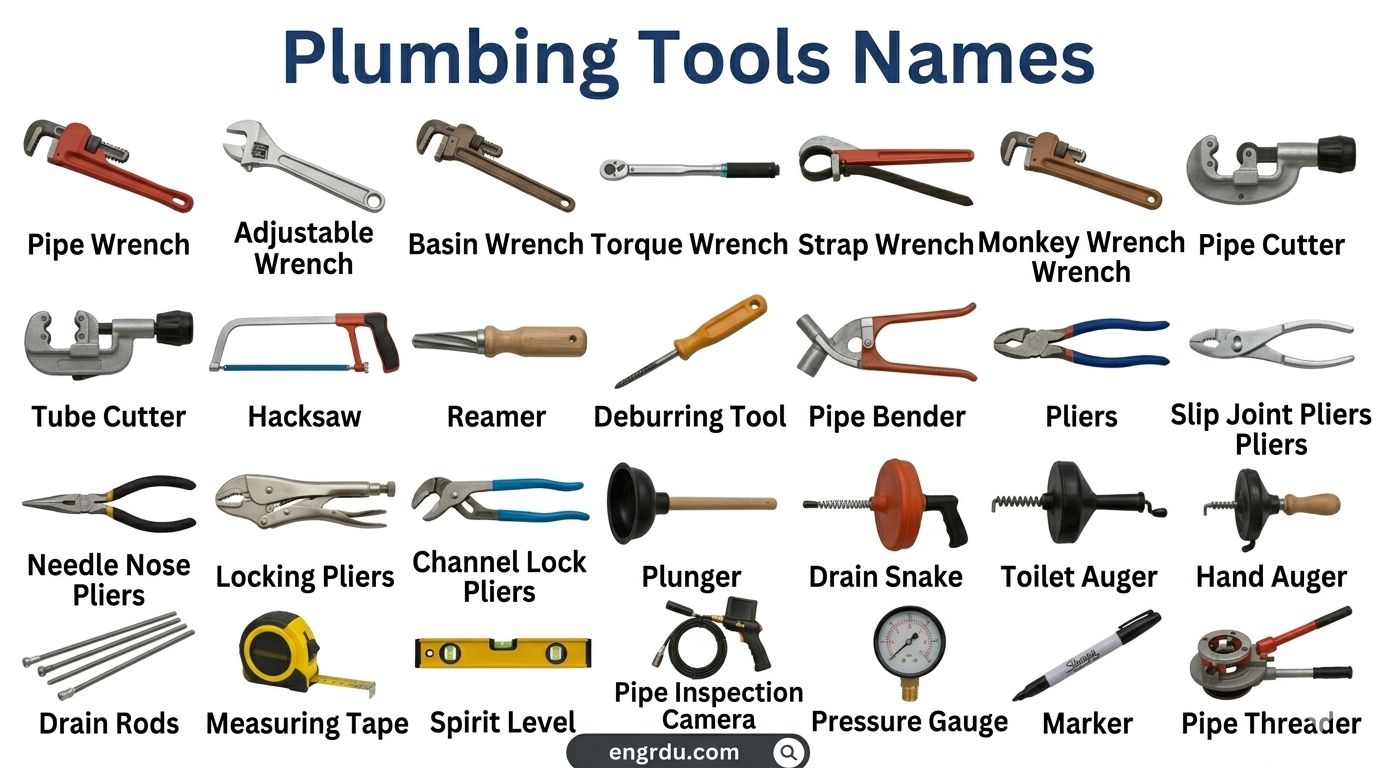
Pliers
Pliers hold, twist, bend, and grip hot metal materials safely during welding, cutting, and repair operations in workshops.
Wrench
A wrench tightens or loosens nuts and bolts attached to welding machines and workshop equipment safely.
Hammer
A hammer shapes metal surfaces and helps adjust welded materials during fabrication and industrial repair work activities.
Welding Pegs
Welding pegs hold metal pieces in the correct position during welding work and help maintain accurate alignment throughout fabrication tasks.
Magnetic Holders
Magnetic holders keep metal parts stable at fixed angles during welding, making alignment faster and improving welding accuracy.
Vise Grips
Vise grips lock tightly onto metal surfaces and hold materials securely during welding, cutting, and repair operations in workshops.
Screwdriver
A screwdriver opens machine panels and tightens screws during welding machine maintenance and repair tasks in workshops.
Tips to Remember Welding Items in English
Learning technical vocabulary becomes easier when you connect words with actions and equipment you see regularly.
Try these helpful methods:
- Watch welding tutorials in English
- Label workshop tools with English names
- Practice tool names aloud daily
- Use vocabulary flashcards regularly
- Learn tools in small categories
- Read welding manuals in English
FAQs
What are the most common welding tools names?
Common welding tools include welding machine, welding helmet, angle grinder, pliers, clamps, wire brush, welding gloves, and electrode holder.
Why is welding vocabulary important for English learners?
Welding vocabulary improves communication in workshops, factories, training centers, and construction environments where technical English instructions are commonly used.
What does an angle grinder do in welding?
An angle grinder cuts metal, removes rust, smooths welded areas, and prepares steel surfaces before fabrication or repair work.
Which welding tool protects the face and eyes?
A welding helmet protects the face and eyes from sparks, intense light, smoke, and dangerous flying metal particles.
What is the purpose of a wire brush in welding?
A wire brush cleans rust, dirt, slag, and welding residue from metal surfaces before painting or finishing work begins.
What tool holds welding rods during welding?
An electrode holder grips the welding rod securely and transfers electrical current safely during welding operations.
Why do welders use clamps?
Welders use clamps to hold metal pieces firmly in position and prevent movement during welding or cutting activities.
What is a welding rod used for?
A welding rod melts during welding and forms a strong connection between metal pieces by filling the welding joint.
You may also like:

Leave a Comment