
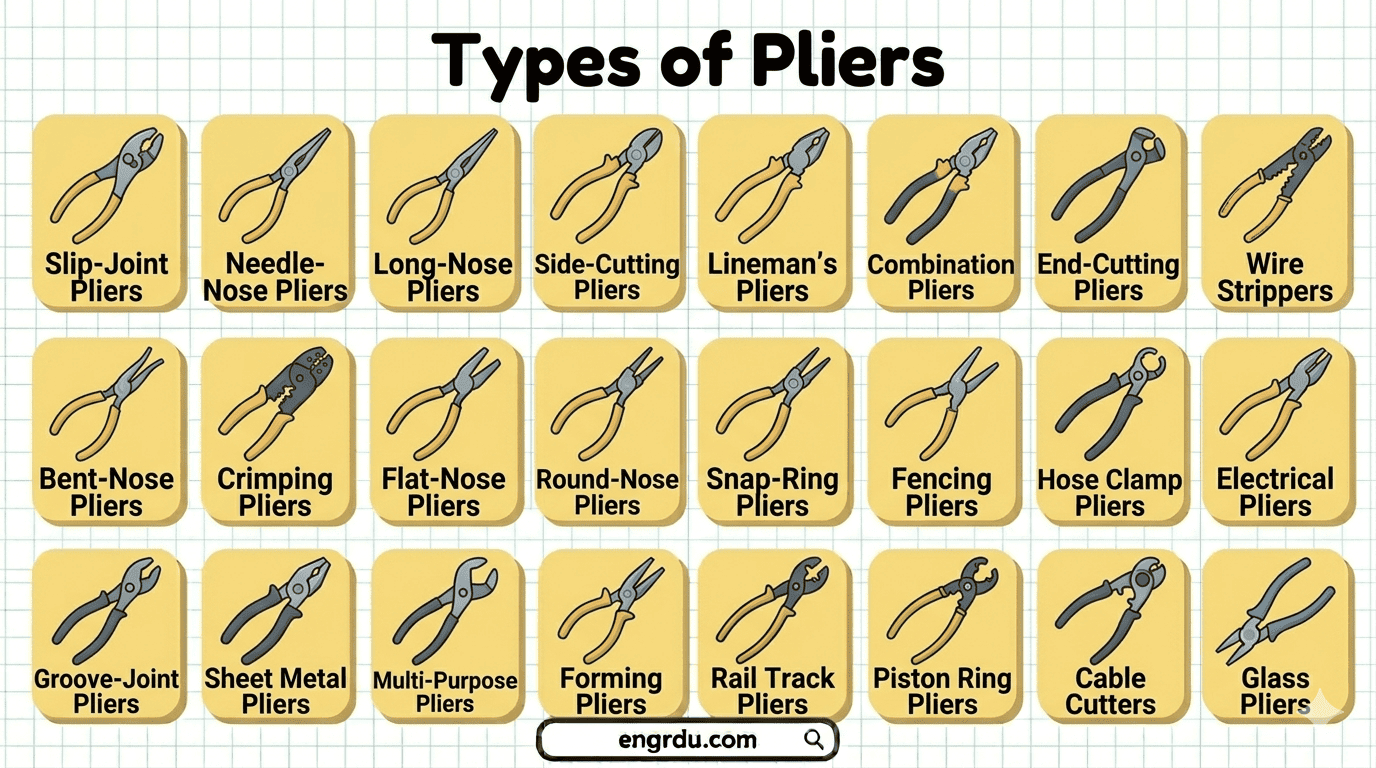

In this blog post, you will learn 30+ types of pliers with their functions and pictures. Knowing these names helps you understand tools and how they are used in different tasks, such as electrical work, carpentry, and household repairs. It also improves your speaking and writing skills because you can describe tools clearly and confidently. Seeing pictures with the names makes it easier to remember them and use them in real-life situations. Learning different types of pliers will make your English vocabulary stronger and more practical for technical and everyday use.
Types of Pliers with Functions and Pictures
Pliers are essential hand tools used in various professions, from electrical work to jewelry making. Each type is designed for different tasks, offering different functions like gripping, cutting, and bending. In this picture vocabulary lesson, we’ll explore 30+ different types of pliers with images and detailed descriptions of their uses.
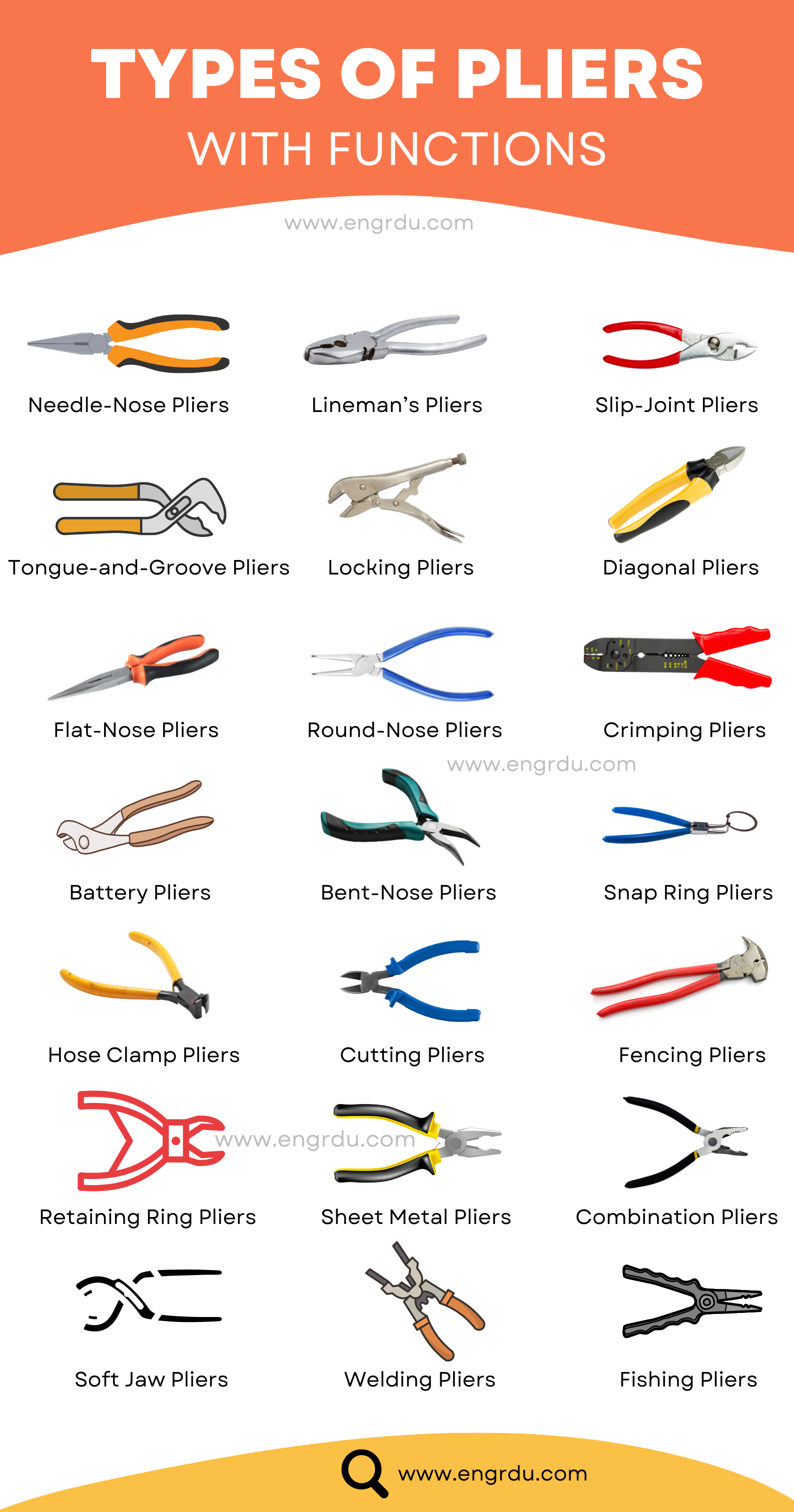
Types of Pliers
Needle-Nose Pliers
Used for gripping small objects and bending wires in tight spaces. Common in electronics, jewellery, and craft work.
Lineman’s Pliers
Strong pliers used by electricians to cut, twist, and grip electrical wires safely and firmly.
Slip-Joint Pliers
Adjustable pliers that can grip objects of different sizes. Common for household and general repairs.
Tongue-and-Groove Pliers
Used for gripping pipes and nuts. They have adjustable jaws and are popular among plumbers.
Locking Pliers (Vise-Grip)
Can lock onto objects firmly and hold them without slipping. Ideal for gripping, clamping, or turning.
Diagonal Pliers
Used mainly for cutting wires and pins in electrical and mechanical work. Also called wire cutters.
Flat-Nose Pliers
Have flat jaws for gripping or bending metal and wires. Useful in jewellery and craft making.
Round-Nose Pliers
Used to make loops or curves in wires. Commonly used in jewellery design and crafts.
Crimping Pliers
Used to join two metal pieces by pressing them together. Mostly used for connecting electrical wires.
Battery Pliers
Specially designed for tightening and loosening battery terminals without damaging them.
Bent-Nose Pliers
Have angled jaws to reach tight or awkward spaces. Great for gripping small items in crafts and repairs.
Snap Ring Pliers
Used to install or remove snap rings in machinery and automotive parts. Have pointed tips for easy handling.
Hose Clamp Pliers
Designed to grip and remove hose clamps easily during car or plumbing repairs.
Cutting Pliers
Used to cut wires, cables, or small metal parts cleanly and precisely. Common in electrical work.
Fencing Pliers
Multi-purpose tool for cutting, twisting, and pulling fencing wire. Commonly used in farm work.
Retaining Ring Pliers
Used to install or remove retaining rings that hold parts on shafts or inside bores.
Sheet Metal Pliers
Used for bending, shaping, or holding sheet metal pieces firmly in place during work.
Combination Pliers
Multi-use pliers for gripping, cutting, and bending wires. Common tool for electricians and home repairs.
Soft Jaw Pliers
Have padded jaws to grip delicate materials without scratching or damaging their surface.
Welding Pliers
Used in welding work to remove spatter, cut wire, and clean nozzles. A must-have for welders.
Fishing Pliers
Used by anglers to remove hooks, cut fishing lines, and handle fish safely.
Hose Grip Pliers
Help to grab and remove hoses easily from fittings without damage. Useful in automotive repair.
Tile Nippers
Used to trim and shape ceramic tiles by small bites for a perfect edge fit.
Oil Filter Pliers
Used to loosen or remove tight oil filters during vehicle maintenance. Provide strong grip.
Jewelry Pliers
Small pliers used for making, bending, or fixing jewellery pieces with precision and care.
Groove Joint Pliers
Adjustable pliers with a pivot that allows gripping objects of various sizes like nuts and pipes.
High-Leverage Pliers
Provide extra cutting power with less effort. Common for cutting hard wires or cables.
Eyelet Pliers
Used to attach eyelets or grommets to fabric, leather, or paper in crafts and tailoring.
Chain Nose Pliers
Have tapered flat jaws to grip, bend, or shape wire ends neatly. Useful in jewellery work.
Long-Nose Pliers
Similar to needle-nose pliers, used for gripping, twisting, and cutting wires in tight or narrow spaces.
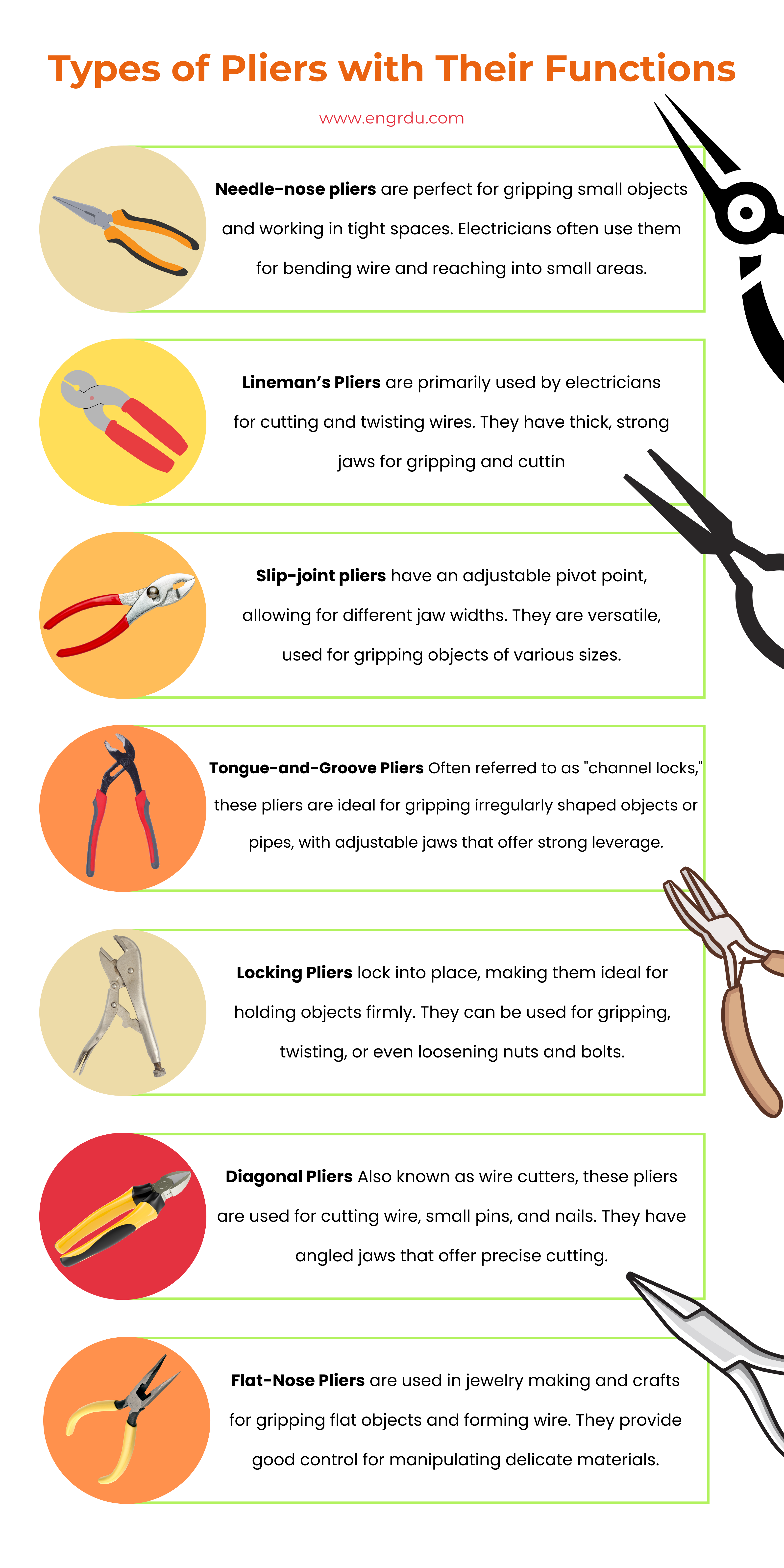
Types of Pliers with Their Functions
Frequently Asked Questions
What are the main types of pliers and their uses?
The main types of pliers include needle-nose, lineman’s, slip-joint, cutting, and locking pliers. Each is used for gripping, cutting, bending, or twisting materials.
What is the most common type of pliers used in daily work?
The most common pliers are combination pliers, as they can grip, twist, and cut wires, making them useful for home, electrical, and repair work.
What are needle-nose pliers used for?
Needle-nose pliers are used for holding small objects and bending wires in tight spaces, often in electrical, craft, or jewellery work.
How many types of pliers are there?
There are over 30 types of pliers, each designed for a specific job such as cutting, gripping, twisting, or shaping metal, wire, and other materials.
Which pliers are best for electricians?
Lineman’s pliers and diagonal cutting pliers are best for electricians because they can cut, twist, and grip electrical wires safely and easily.
Learn More Picture Vocabulary Lessons:
- Weapons Name in English with Pictures
- Meat Names in English with Pictures
- 90+ Men Clothes Names with Pictures
- Rare Fruit Names with Pictures




Leave a Comment