
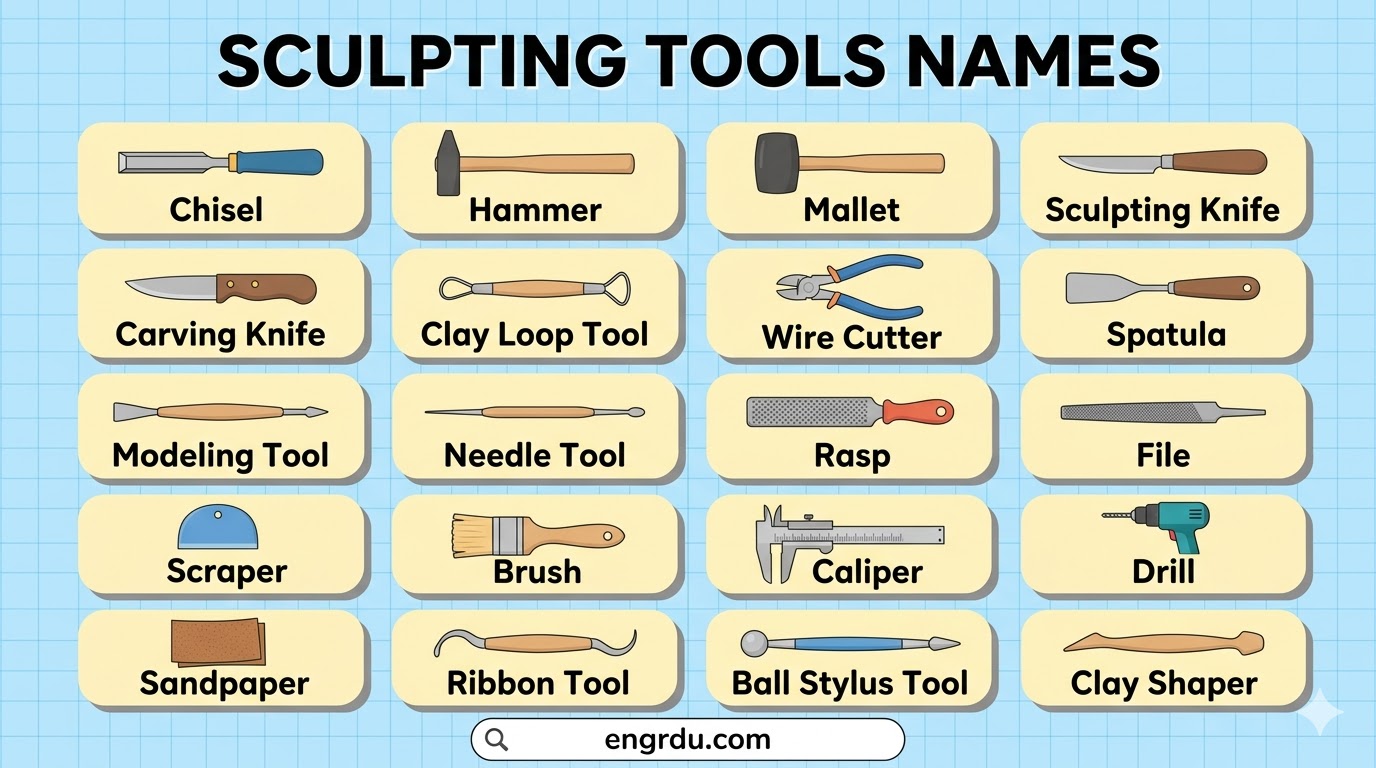

People use sculpting tools to shape clay, wax, wood, stone, and other materials into art. Learning sculpting tools names and uses in English helps learners understand art lessons, follow teacher instructions, buy the right tools, and describe their work clearly. Common sculpting tools include the modeling tool, loop tool, ribbon tool, wire cutter, clay knife, scraper, sponge, needle tool, wooden tool, carving tool, chisel, mallet, rasp, file, caliper, and sculpting brush. Each tool has a clear job. Some tools cut, some smooth, some carve, and some add small details to the sculpture.
What Are Sculpting Tools?
Sculpting tools are special tools used to cut, shape, smooth, and design materials. Artists use them to create statues, models, and designs.
For example, a knife cuts clay, while a brush smooths the surface.
Why Learn Sculpting Tools Names?
Learning these words is useful because:
- You understand art-related topics easily
- You can follow craft or DIY instructions
- You improve your everyday English vocabulary
- You can describe tools and actions clearly
In addition, these words often appear in books, videos, and classrooms.
Common Sculpting Tools Names and Pictures
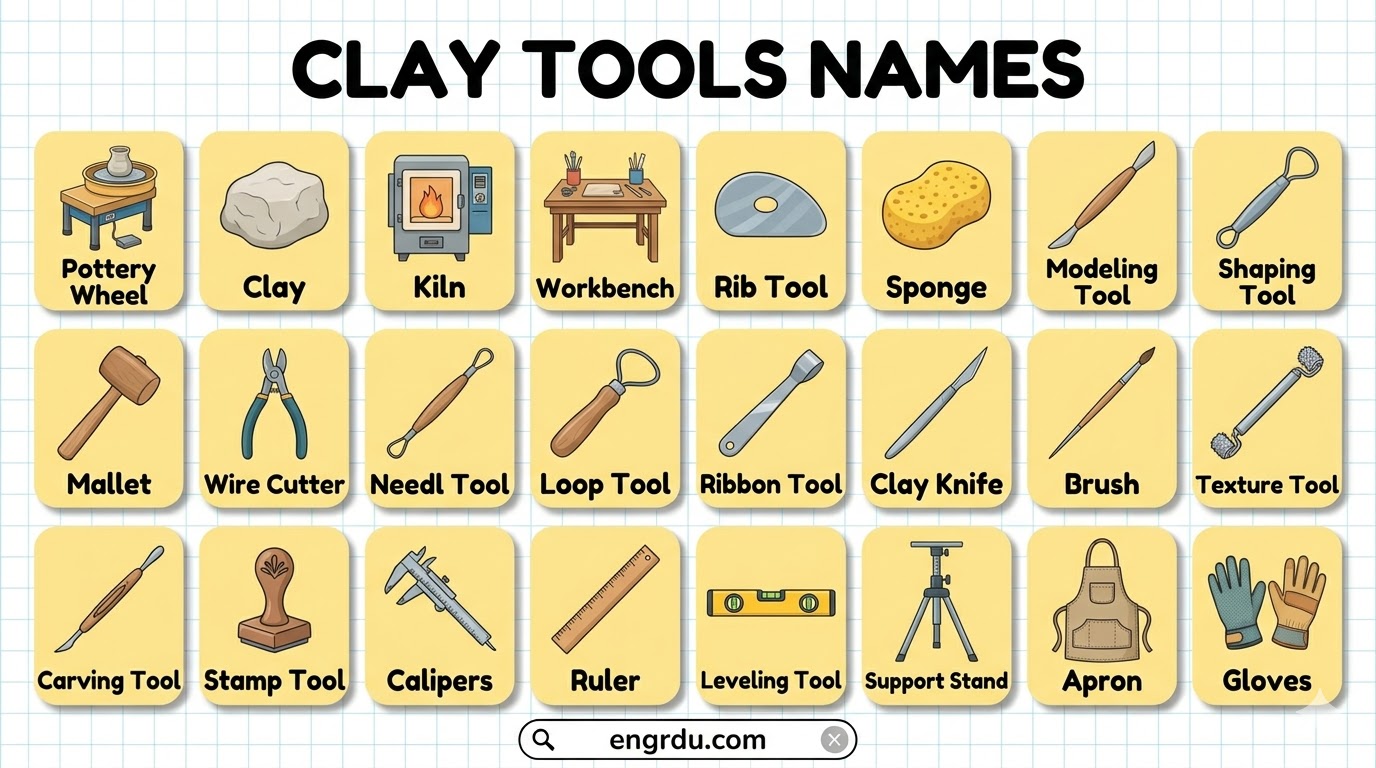
Here are important sculpting tools with uses and pictures:
- Sculpting Knife – A sharp tool used to cut and shape material
- Chisel – A metal tool used to carve wood or stone
- Hammer – Used with a chisel to break or shape hard material
- Clay Loop Tool – A tool with a loop used to remove clay
- Wire Cutter – A thin wire used to cut soft clay
- Spatula – A flat tool for spreading and smoothing
- Rasp – A rough tool used to shape wood
- File – Used to smooth hard surfaces
- Modeling Tool – A small tool for fine details
- Scraper – Used to remove extra material
- Needle Tool – A sharp point for detail work
- Brush – Used to clean or smooth surfaces
- Caliper – Measures size and distance
- Mallet – A wooden hammer for gentle hitting
- Drill – Makes holes in material
- Sandpaper – Smooths surfaces
- Carving Knife – Used for detailed cutting
- Texture Tool – Adds patterns and designs
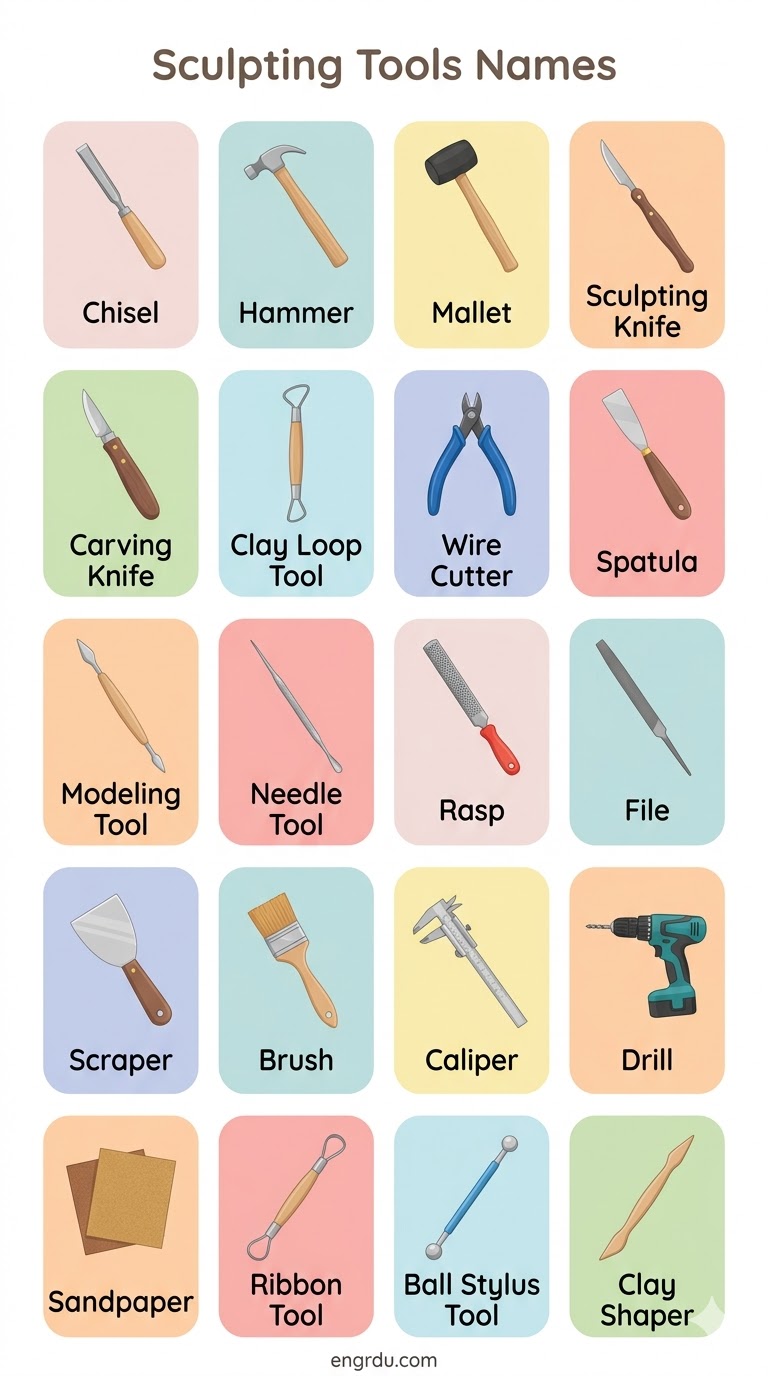
Sculpting Tools Names
Clay Sculpting Tools
These tools are mostly used with soft materials like clay:
- Clay Loop Tool – Removes extra clay quickly
- Wire Cutter – Cuts large pieces of clay
- Modeling Tool – Adds small details
- Spatula – Smooths and shapes clay
- Needle Tool – Makes lines and fine designs
Wood and Stone Sculpting Tools
These tools are used for harder materials:
- Chisel – Cuts and shapes wood or stone
- Hammer – Helps the chisel break material
- Mallet – Used instead of a hammer for control
- Rasp – Shapes wood roughly
- File – Smooths hard surfaces
How to Use These Words in Sentences
Using vocabulary in sentences helps you remember better:
- The artist used a chisel to carve the stone.
- She smoothed the clay with a spatula.
- He cut the clay using a wire cutter.
- The brush cleaned the surface nicely.
Tips to Remember Vocabulary
- Learn 3–5 words daily
- Practice with real objects or pictures
- Use words in simple sentences
- Revise regularly
Related Articles:
Conclusion
Sculpting tools names in English are important for understanding art and improving vocabulary. These words are practical, easy to learn, and useful in real life. By practicing them regularly, you can speak and understand English more confidently.

Leave a Comment