Will vs Going to: Predictions, Plans, and Key Differences
Talking about the future in English can feel like a trap. If you say, “I will visit my mother this weekend,” native speakers will…
Read lesson →Confusing Words is a dedicated category for learners who want to master tricky English words that are often mixed up. Explore word pairs with similar spelling, pronunciation, or meaning, such as affect–effect, accept–except, and advice–advise. Each entry includes clear explanations, examples, and tips for correct usage. Improve your writing, speaking, and comprehension skills while avoiding common mistakes in everyday English.
Talking about the future in English can feel like a trap. If you say, “I will visit my mother this weekend,” native speakers will…
Read lesson →If you have ever felt like you are flipping a coin when choosing between “may” and “might,” you are not alone. These two words…
Read lesson →Many English learners confuse used to and be used to because they look almost the same. However, they have different meanings and follow different…
Read lesson →The words must and should are important modal verbs in English that show obligation, advice, or necessity. In this Grammar lesson, understanding the difference…
Read lesson →Many English learners get confused about can vs could because both words are modal verbs and both are often used to talk about ability,…
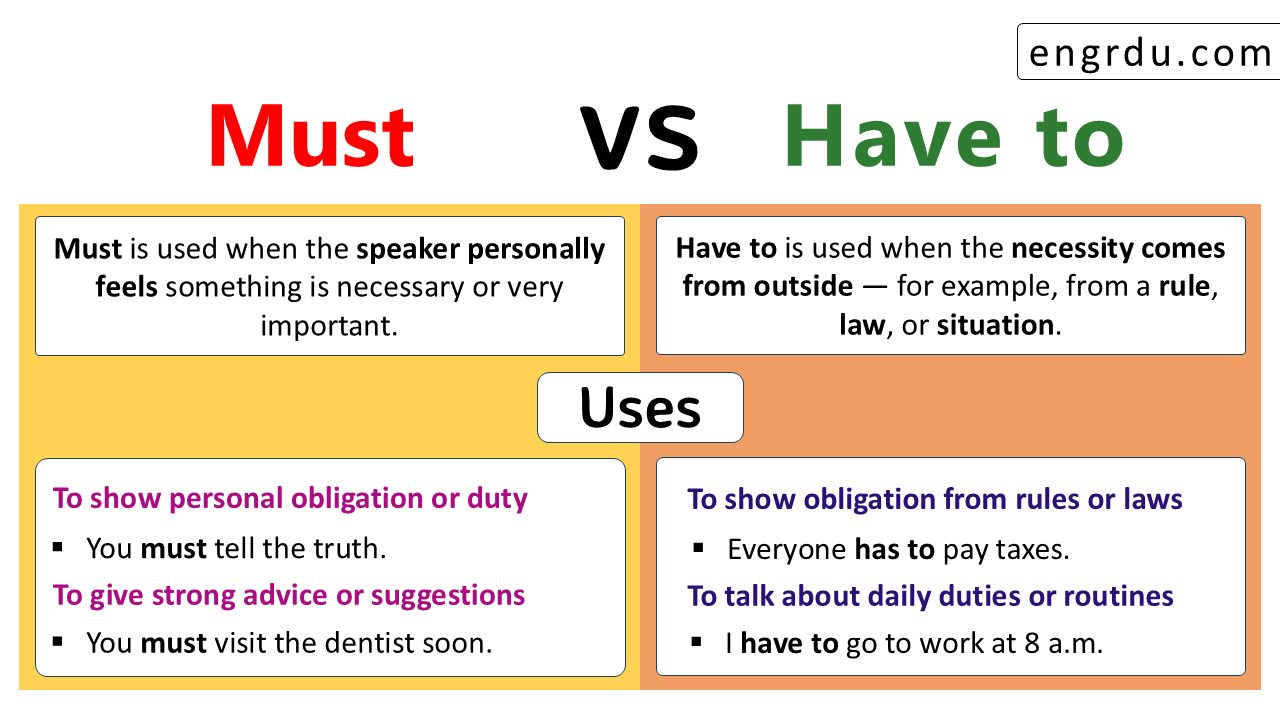
Read lesson →Must and have to are modal expressions used to show obligation or necessity. In this Grammar lesson, understanding their differences helps you speak and…
Read lesson →If you’ve ever wondered whether to write cannot or can not, you’re not alone. Many English learners assume both forms are interchangeable because they…
Read lesson →The words “mould” and “mold” often confuse English learners because they look and sound similar, but their usage depends on the type of English.…
Read lesson →The words “neighbour” and “neighbor” have the same meaning, but their spelling depends on the type of English you use. “Neighbour” is the British…
Read lesson →The words “favour” and “favor” have the same meaning, but their spelling changes depending on the type of English. “Favour” is the British English…
Read lesson →Many English learners come across both behavior and behaviour and wonder whether one spelling is correct and the other is wrong. The answer is…
Read lesson →If you have ever written centre in one document and center in another, you are not alone. Many English learners wonder whether one spelling…
Read lesson →