
Used to and be used to are expressions that show habits or familiarity, but they are used differently. In this Grammar lesson, understanding the difference helps you speak, write, and read English more accurately. Using them correctly makes your sentences clear and natural. In this blog post, you will learn the meanings, usage, and examples of used to vs be used to, so you can practice and use them confidently in daily English.
Meanings of Used to and Be used to
Used to
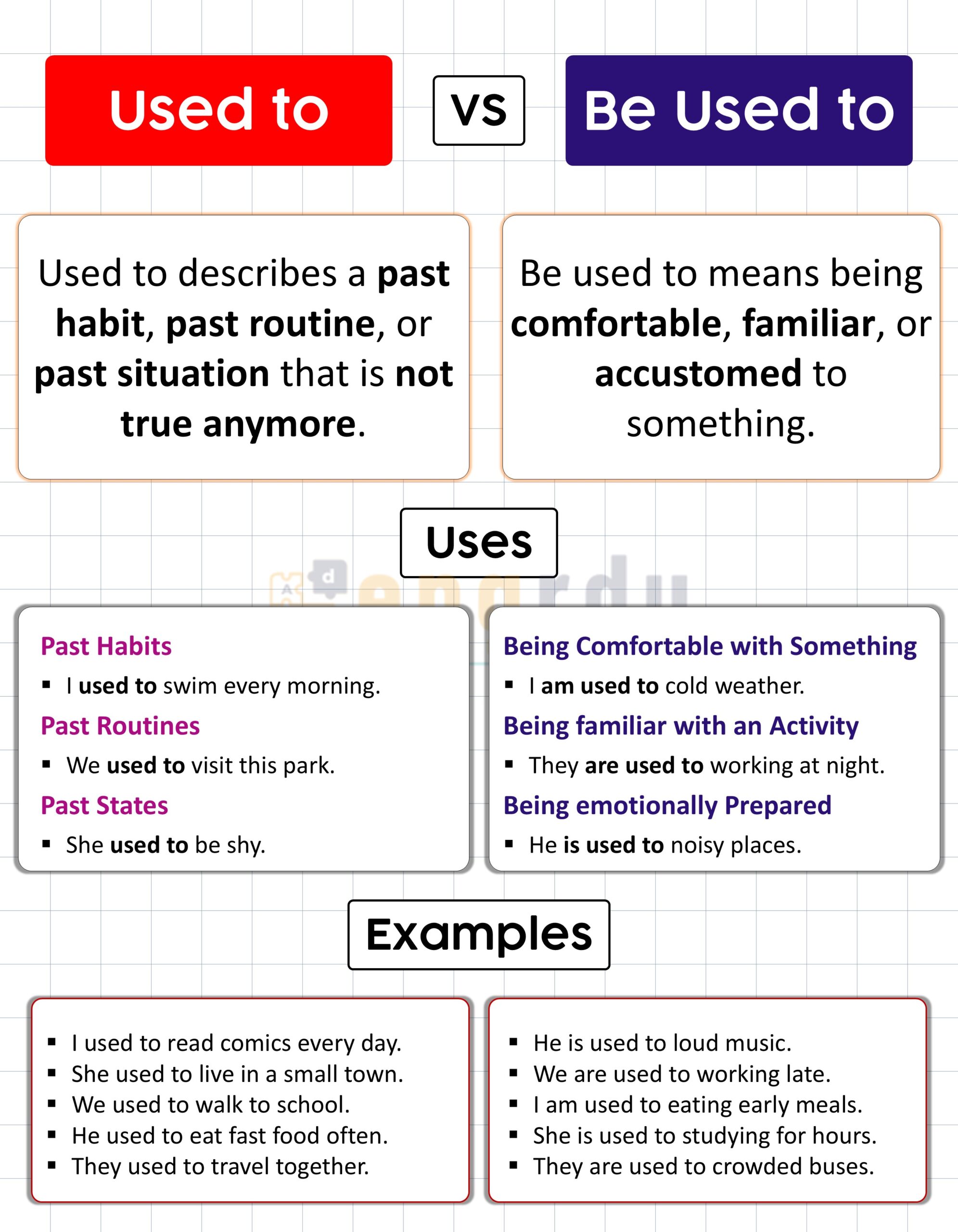
Used to describes a past habit, past routine, or past situation that is not true anymore. It shows something that happened regularly before but no longer happens now.
Structure of Used to
- Used to + base verb
Examples:
- I used to play tennis after school.
- She used to live near the beach.
Be Used to
Be used to means being comfortable, familiar, or accustomed to something. It describes something that feels normal because you have experience with it.
Structure of Be Used to
- Be (am/is/are/was/were) + used to + noun / pronoun / gerund (-ing form)
Examples:
- I am used to cold weather.
- They are used to eating late.
Differences Between Used to and Be used to
| Point | Used to | Be used to |
|---|---|---|
| Meaning | Past habit or past state | Being comfortable or familiar |
| Time | Only past | Past, present, or future |
| Structure | used to + base verb | be + used to + noun/verb-ing |
| Example | I used to walk daily. | I am used to walking. |
Easy trick to remember:
Used to = past habit
Be used to = comfort or familiarity
Usage of Used to
1. Past habits
Something you did regularly in the past.
Examples:
- I used to swim every morning.
- She used to play guitar.
2. Past routines
Daily or weekly actions that no longer happen.
Examples:
- We used to visit this park.
- He used to wake up late.
3. Past states
A condition or situation that changed.
Examples:
- She used to be shy.
- My town used to be small.
4. Past facts that ended
Shows something was true before but not now.
Examples:
- People used to travel less.
- I used to own a bicycle.
Usage of Be used to
1. Being comfortable with something
Something feels normal.
Examples:
- I am used to cold weather.
- She is used to busy streets.
2. Being familiar with an activity
You have experience doing it.
Examples:
- They are used to working at night.
- I am used to driving long distances.
3. Being emotionally prepared
You do not feel surprised or stressed.
Examples:
- He is used to noisy places.
- We are used to long queues.
4. Being adjusted over time
Shows adaptation.
Examples:
- She is used to studying alone.
- I am used to eating early now.
Formal and Informal Usage
Formal Usage
Formal situations such as writing, emails, reports.
Examples:
- Employees are used to following strict rules.
- The company used to manage operations manually.
Informal Usage
Everyday speaking and friendly conversations.
Examples:
- I’m used to getting up early now.
- We used to hang out here.
Sentences with Used to
- I used to read comics every day.
- She used to live in a small town.
- We used to walk to school.
- He used to eat fast food often.
- They used to travel together.
- My brother used to play cricket.
- I used to wake up late.
- She used to drink tea every morning.
- We used to own a small shop.
- He used to watch cartoons at night.
- People used to write letters more often.
- I used to stay up very late.
- She used to enjoy long drives.
- They used to live near the river.
- I used to visit my cousins weekly.
- He used to work in a bank.
- We used to keep a pet dog.
- She used to feel nervous speaking in class.
- I used to think grammar was difficult.
- They used to celebrate together every month.
Sentences with Be used to
- I am used to cold mornings.
- She is used to living alone.
- They are used to walking long distances.
- He is used to loud music.
- We are used to working late.
- I am used to eating early meals.
- She is used to studying for hours.
- They are used to crowded buses.
- He is used to travelling often.
- I am used to speaking in front of people.
- We are used to heavy rain.
- She is used to the new schedule.
- They are used to early meetings.
- He is used to cooking for himself.
- I am used to warm weather.
- She is used to public transport.
- They are used to long holidays.
- He is used to using computers daily.
- I am used to quiet evenings.
- We are used to learning new things.
Summary
- Used to shows past habits, routines, or states that no longer continue.
- Be used to shows comfort, familiarity, or adjustment to something.
- One expresses the past, the other expresses comfort in any time.
- The structure is different, so learn them separately.
- Understanding the difference helps with clear communication.
Knowing the difference between used to and be used to helps you speak and write with clarity. One form shows an old habit, and the other shows comfort or familiarity. By learning the structures, practising the examples, and understanding the key meanings, readers can use both forms with confidence in daily communication.
FAQs
What is the meaning of used to?
Used to means a past habit or past situation that no longer happens or exists.
What is the meaning of be used to?
Be used to means being comfortable or familiar with something because of experience.
What is the difference between used to and be used to?
Used to describes a past habit, while be used to describes comfort or familiarity with something.
How do I use used to correctly?
Use used to + base verb to talk about actions or states in the past.
Example: I used to walk to school.
How do I use be used to correctly?
Use be + used to + noun/verb-ing to show comfort with something.
Example: I am used to walking.
Is there an easy trick to remember the difference?
Yes:
Used to = past habit
Be used to = comfortable with something
Can be used to be used in the past and future?
Yes, it can be used in any tense depending on the verb be.
Read More