
Clothing comes in many types, and knowing them helps you choose, dress, and express yourself appropriately for different occasions. People wear casual, formal, seasonal, or traditional outfits depending on the event, weather, or culture. In this blog post, you will learn about different types of clothing, including examples of casual, formal, seasonal, and traditional dressing. Understanding these categories will help you speak confidently about fashion, dress appropriately, and improve your English vocabulary related to clothing.
What are Clothing and Dressing?
Clothing
Clothing means the items we wear to cover and protect our bodies, like shirts, trousers, dresses, and coats.
Example:
- We wear formal clothing to the office.
Dressing
Dressing means the way we wear or combine clothes to create a suitable appearance.
Example:
- We dress casually when relaxing at home.
Types of Clothing and Dressing
There are many kinds of clothing depending on purpose, culture, season, and place. Below are the most common types:
Formal Clothing
Formal clothes are worn for business meetings, offices, or events that need a professional look.
Examples:
- Suit, tie, blazer, trousers, formal shoes
- Dress shirts and pencil skirts
| For Men | For Women |
|---|---|
| Business suit | Blazer and skirt |
| Tie and shirt | Silk blouse |
| Leather shoes | Heels or flats |
Informal Clothing
Informal clothes are comfortable and neat, but not as strict as formal wear.
Examples:
- Polo shirt, chinos, casual blouse, jeans
Casual Clothes
Casual clothing is for daily use or relaxed moments. It is simple and easy to wear.
Examples:
- T-shirt, jeans, shorts, sneakers
| Occasion | Casual Wear Example |
|---|---|
| Weekend outing | Jeans and T-shirt |
| Walk or park | Shorts and trainers |
Traditional Clothing
Traditional clothes show the culture and customs of a region or country.
Examples:
- Kimono (Japan), Sari (India), Kilt (Scotland), Dirndl (Germany), Abaya (Arab countries)
Regional Clothing
Regional clothing is linked to a specific area or local climate.
Examples:
- Poncho (South America), Beret (France), Lederhosen (Austria)
Seasonal Clothing
Seasonal dressing changes with the weather conditions.
Examples:
- Summer: Cotton shirts, shorts
- Winter: Jackets, sweaters, wool caps
- Spring: Light dresses, cardigans
- Autumn: Coats, scarves, boots
| Season | Common Clothes |
|---|---|
| Summer | T-shirts, sandals |
| Winter | Coats, gloves |
| Spring | Light jackets |
| Autumn | Sweaters, boots |
Sportswear / Activewear
These are clothes for exercise or physical activity. They are made of stretchy and breathable fabric.
Examples:
- Tracksuit, leggings, sports shoes, gym shorts
Party or Evening Wear
Party clothes are stylish and designed for celebrations or formal evenings.
Examples:
- Evening gown, cocktail dress, tuxedo
Workwear or Uniforms
Workwear is clothing designed for specific jobs to provide safety and identity.
Examples:
- Nurse uniform, construction overalls, chef coat, police uniform
Sleepwear
Sleepwear gives comfort and relaxation during rest.
Examples:
- Pyjamas, nightgown, sleep shorts
Loungewear
These are comfortable clothes for wearing at home while relaxing.
Examples:
- Soft T-shirt, loose pants, slippers
Beachwear
Beachwear is made for swimming and sunny areas.
Examples:
- Swimsuit, trunks, beach hat, flip-flops
Religious Clothing
These clothes are worn for faith or religious identity.
Examples:
- Hijab, Turban, Robe, Cross necklace
Festival or Occasion Wear
Clothes worn during special celebrations or festivals.
Examples:
- Wedding dress, Christmas jumper, national costume
Outerwear
Outerwear protects the body from cold, rain, or wind.
Examples:
- Coat, raincoat, jacket, hoodie
Complete List of Common Clothing and Dress Names
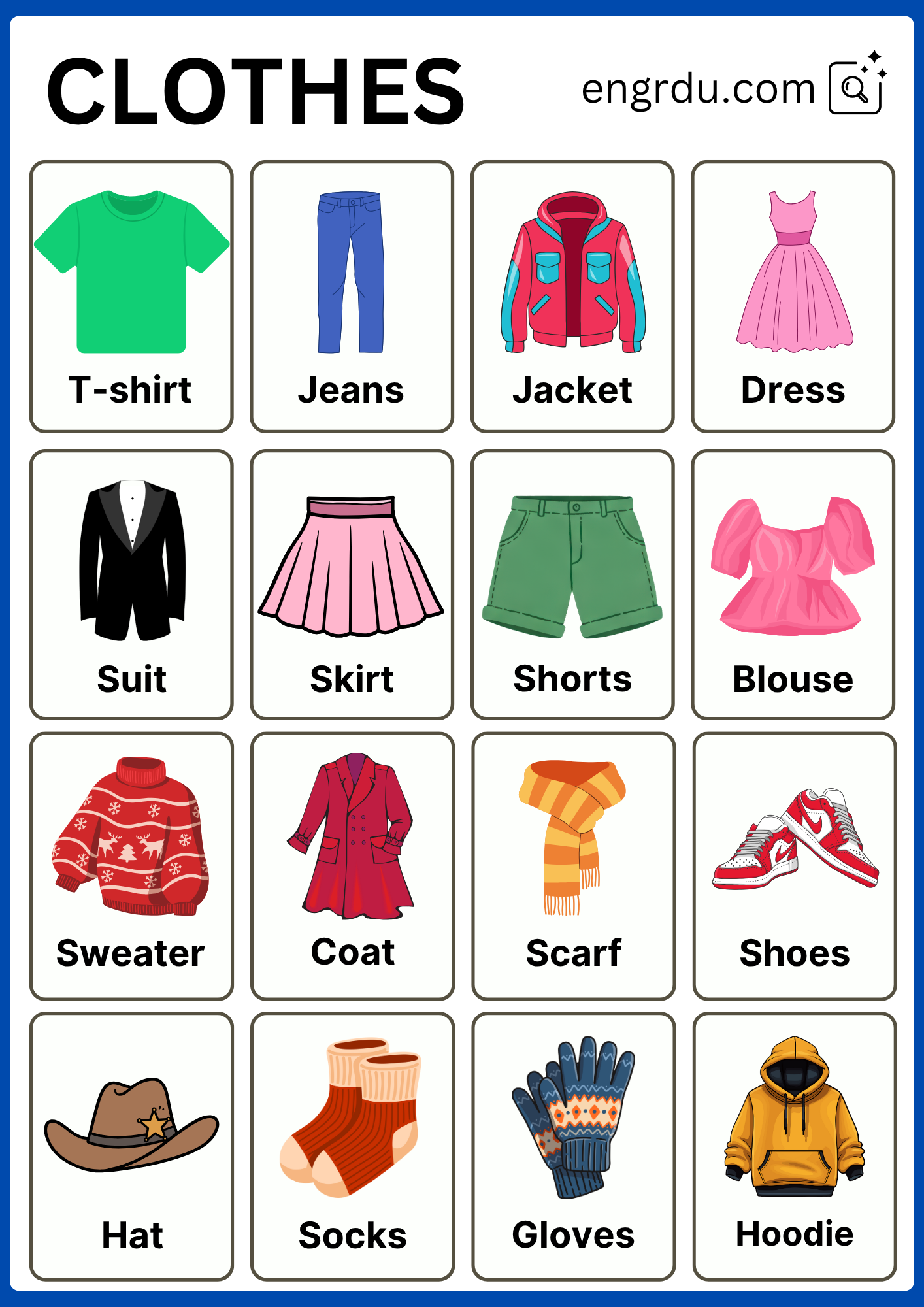
| Clothing Type | Description |
|---|---|
| T-shirt | Soft, short-sleeved top worn casually for comfort and simplicity. |
| Jeans | Strong denim trousers, mostly blue, used for everyday wear. |
| Jacket | Outerwear that gives warmth and protection against cold weather. |
| Dress | One-piece garment worn by women, suitable for casual or formal use. |
| Suit | Matching set of trousers and jacket, mostly used for office or formal meetings. |
| Skirt | Lower garment worn by women and girls, available in different styles. |
| Shorts | Short-length trousers worn in warm weather for comfort. |
| Blouse | Light upper garment for women, worn with skirts or trousers. |
| Sweater | Knitted warm clothing for winter or cold weather. |
| Coat | Long outerwear used during winter for full-body warmth. |
| Scarf | Fabric worn around the neck for warmth or fashion. |
| Shoes | Footwear used for walking and protection of feet. |
| Hat | Headwear used for style, sun protection, or warmth. |
| Socks | Fabric worn on feet under shoes for comfort. |
| Gloves | Hand covering for warmth or protection. |
| Pyjamas | Soft sleepwear worn at night for comfort. |
| Uniform | Special clothing for workers, students, or military to show identity. |
| Tracksuit | Sportswear for exercise, jogging, or training. |
| Swimsuit | Clothing used for swimming or beach activities. |
| Raincoat | Waterproof coat worn in rainy weather. |
| Cap | Light headwear often worn for casual style or sun protection. |
| Boots | Strong footwear that covers ankles or legs for cold or tough weather. |
| Cardigan | Open-front sweater with buttons, used for layering. |
| Hoodie | Casual sweatshirt with a hood, popular among young people. |
Summary
- Formal wear → Used for offices and events.
- Casual wear → For comfort and daily use.
- Seasonal wear → Depends on weather.
- Traditional wear → Shows cultural identity.
Clothing is more than just fabric — it reflects our personality, culture, and comfort. Knowing the types of clothing and dressing helps us dress properly for every place and season. Choosing the right outfit always makes a great impression and brings confidence in daily life.
FAQs about Types of Clothing
What are the main types of clothing?
The main types of clothing include formal, casual, traditional, seasonal, sportswear, and workwear. Each type suits different events, cultures, and weather conditions.
What is the difference between formal and casual clothing?
Formal clothing is worn for offices, meetings, or special events, while casual clothing is for comfort and relaxed times such as at home or with friends.
What are traditional types of clothing?
Traditional clothing represents a country’s culture and heritage, like the kimono (Japan), sari (India), kilt (Scotland), and dirndl (Germany).
How do seasons affect clothing choices?
Seasons influence fabric and style. In summer, people wear light cotton or linen, while in winter, they prefer wool, coats, and jackets for warmth.
What type of clothes should I wear?
Choose clothes based on the weather, event, and comfort. For example, formal clothes for work, casual outfits for home, and seasonal wear for temperature changes.
Why is dressing style important?
Dressing style reflects your personality and confidence. Wearing the right clothes for each occasion helps you look neat and feel comfortable.
Read More