
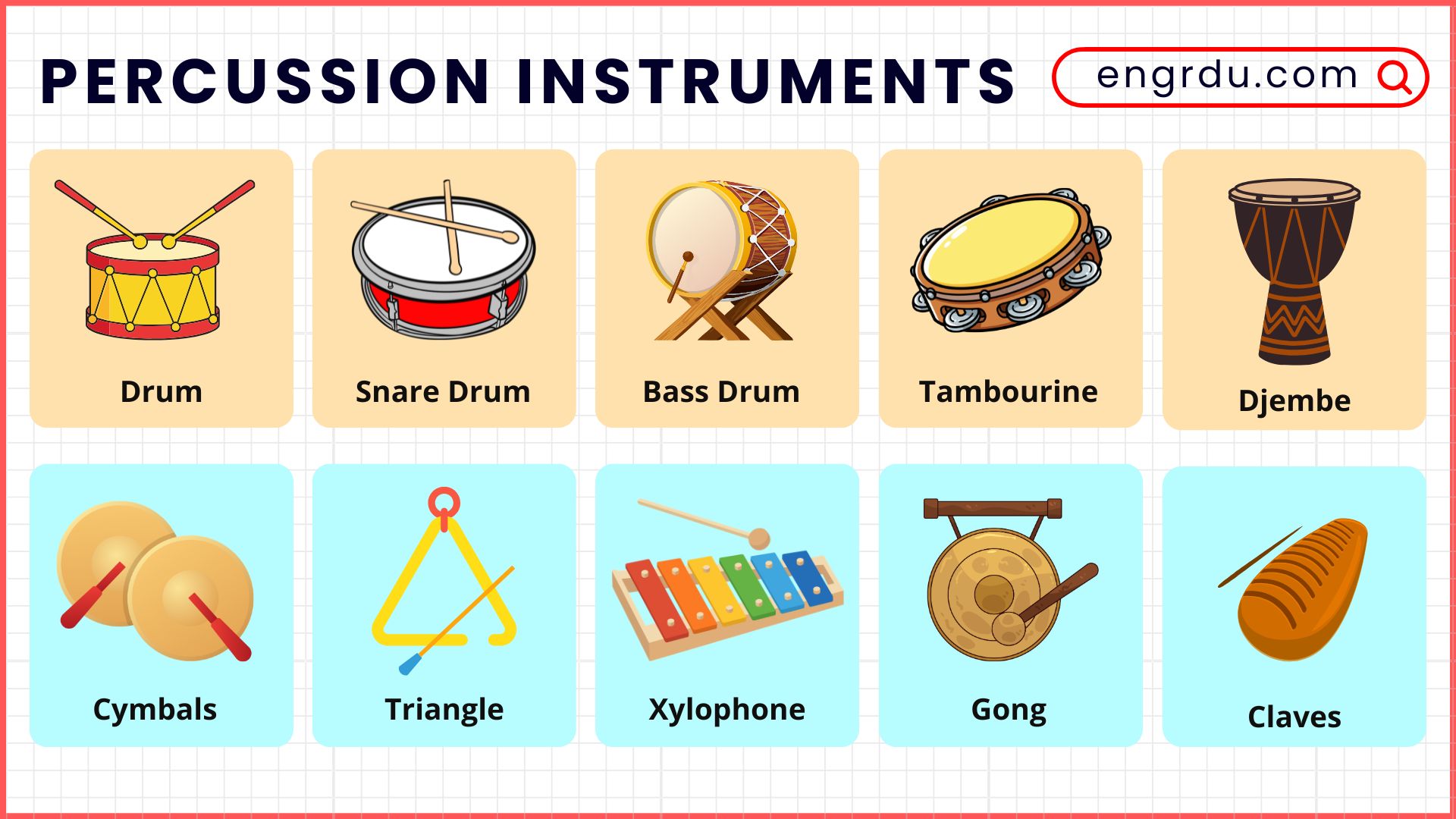

In this blog post, you will learn the names of percussion instruments and understand how they are used in music. Percussion instruments are tools that make sound when you hit, shake, or tap them, like drums, cymbals, and tambourines. Learning these words helps English learners master vocabulary that is useful for speaking, reading, writing, and listening. By knowing the names and uses of percussion instruments, you can describe music, follow lessons, and communicate confidently in English.
What Are Percussion Instruments?
Percussion instruments make sound when you strike, shake, or scrape them. Unlike guitars or pianos, they do not need strings or keys. They are often used to:
- Keep the rhythm in a song
- Create special sounds in music
- Add energy and excitement to performances
Common examples include drums, tambourines, and xylophones.
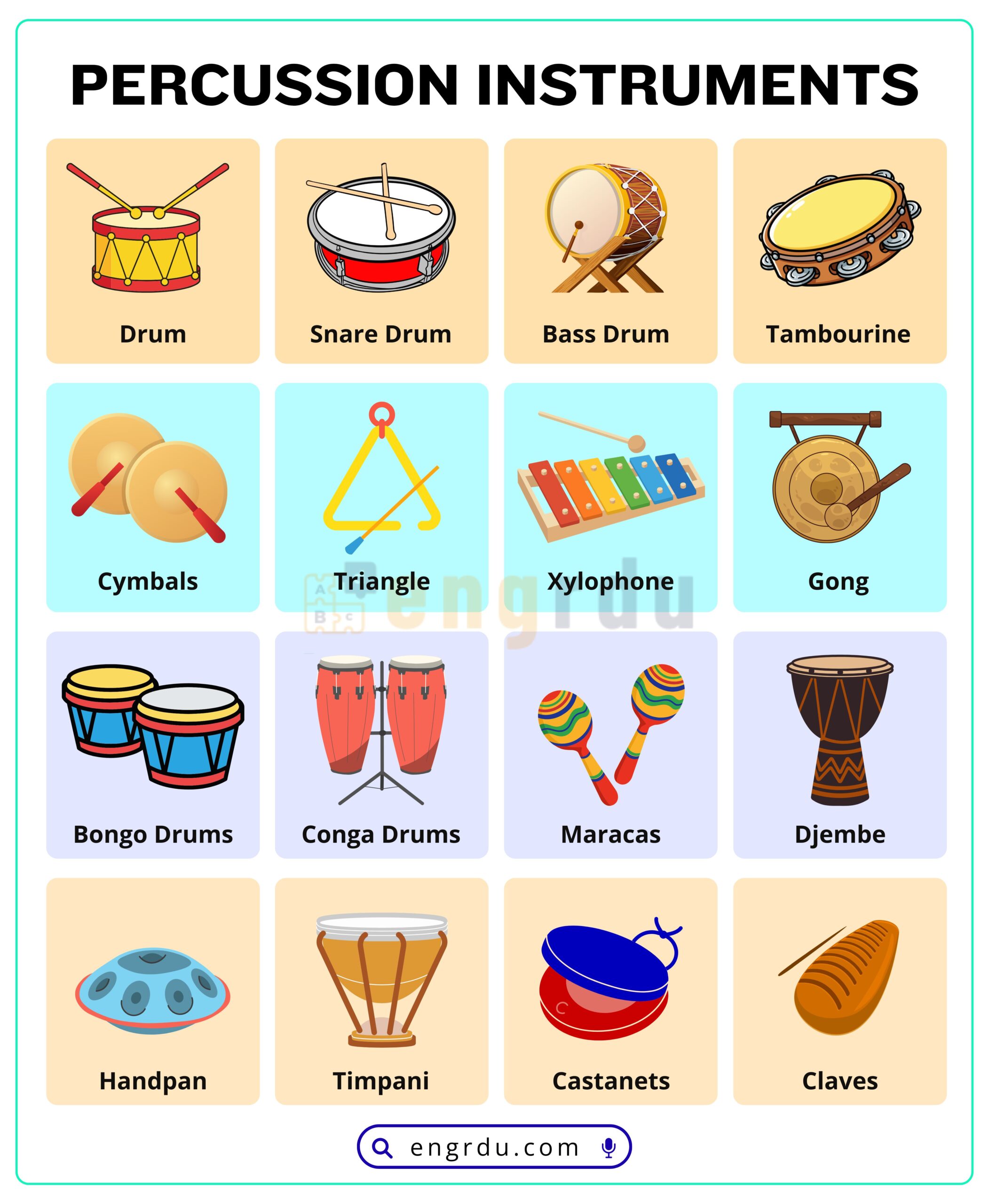
Percussion Instruments Names and Pictures
Why Learn Percussion Instruments Vocabulary?
Learning the names of percussion instruments helps you:
- Expand your English vocabulary
- Understand music in English books or lessons
- Describe music or concerts confidently
- Use words correctly in speaking and writing
For English learners, this topic is practical because you can hear these words in music classes, movies, or online videos.
Common Percussion Instruments and Their Uses
Here is a list of important percussion instruments with uses and pictures:
Drum
A round instrument you hit with sticks or hands. Used in rock, pop, and traditional music.
Snare Drum
A small drum with a sharp, crisp sound. Often used in marching bands.
Bass Drum
A large drum with deep sound. Keeps the beat in bands or orchestras.
Tambourine
A small frame with metal jingles. Shaken or tapped for rhythm.
Cymbals
Thin metal plates that crash when hit. Used for dramatic effect.
Triangle
A small metal triangle you hit with a stick. Makes a high, clear sound.
Xylophone
Wooden bars that produce notes when struck with mallets. Plays melodies.
Gong
Large metal disc that creates a loud, resonant sound when struck.
Bongo Drums
Small hand drums used in Latin music. Played in pairs.
Conga Drums
Tall, narrow drums played by hand. Common in Afro-Cuban music.
Maracas
Shaken instruments with beads inside. Create rhythm in Latin songs.
Djembe
A rope-tuned hand drum from Africa. Produces bass and high tones.
Tamborim
Small Brazilian drum hit with a stick, used in samba music.
Timpani
Large kettle drums in orchestras, tuned to specific notes.
Castanets
Small wooden instruments clicked together, often in Spanish dances.
Claves
Two wooden sticks tapped together to keep rhythm in Latin music.
Handpan
Modern steel drum you play with hands. Produces melodic tones.
Frame Drum
A drum with a shallow frame, used in traditional folk music.
Wood Block
Small wooden block struck with a stick, creates a sharp sound.
Percussion Instruments in Different Settings
Percussion instruments appear in:
- Schools: Music classes, band practice, and concerts
- Festivals: Cultural performances, parades, and dances
- Orchestras: Classical music and stage shows
- Daily Life: Street performers and online music videos
Understanding their names helps you recognize music styles and communicate about instruments in English.
Tips to Remember These Words Easily
- Group words by type: Drums, shakers, and metal instruments
- Use pictures: Seeing the instrument while learning the name helps memory
- Practice in sentences: “I play the tambourine in school band.”
- Listen to music: Identify instruments while watching videos or listening to songs
- Write and repeat: Writing names and uses strengthens memory
Conclusion
Percussion instruments are fun to learn and easy to remember with practice. By studying this vocabulary, you can talk about music confidently, read music articles, and understand lessons better.
FAQs
What are percussion instruments?
Percussion instruments are musical instruments that produce sound when you hit, shake, or tap them. Examples include drums, tambourines, and cymbals.
What are some common percussion instruments names?
Common percussion instruments include drums, snare drums, bass drums, tambourines, cymbals, xylophones, maracas, and bongos. Each has a special sound and musical use.
Is the piano a percussion instrument?
Yes, the piano is considered a percussion instrument because its sound is made by hammers striking strings inside, even though it also produces melody like a keyboard instrument.
What is the difference between drums and cymbals?
Drums produce sound when struck with sticks or hands, giving rhythm. Cymbals are metal plates that crash for accents and dramatic musical effects.
Which percussion instrument is best for beginners?
Drums, tambourines, and maracas are easy for beginners. They are simple to play and help learners practice rhythm and timing.
Related Articles:

Leave a Comment