
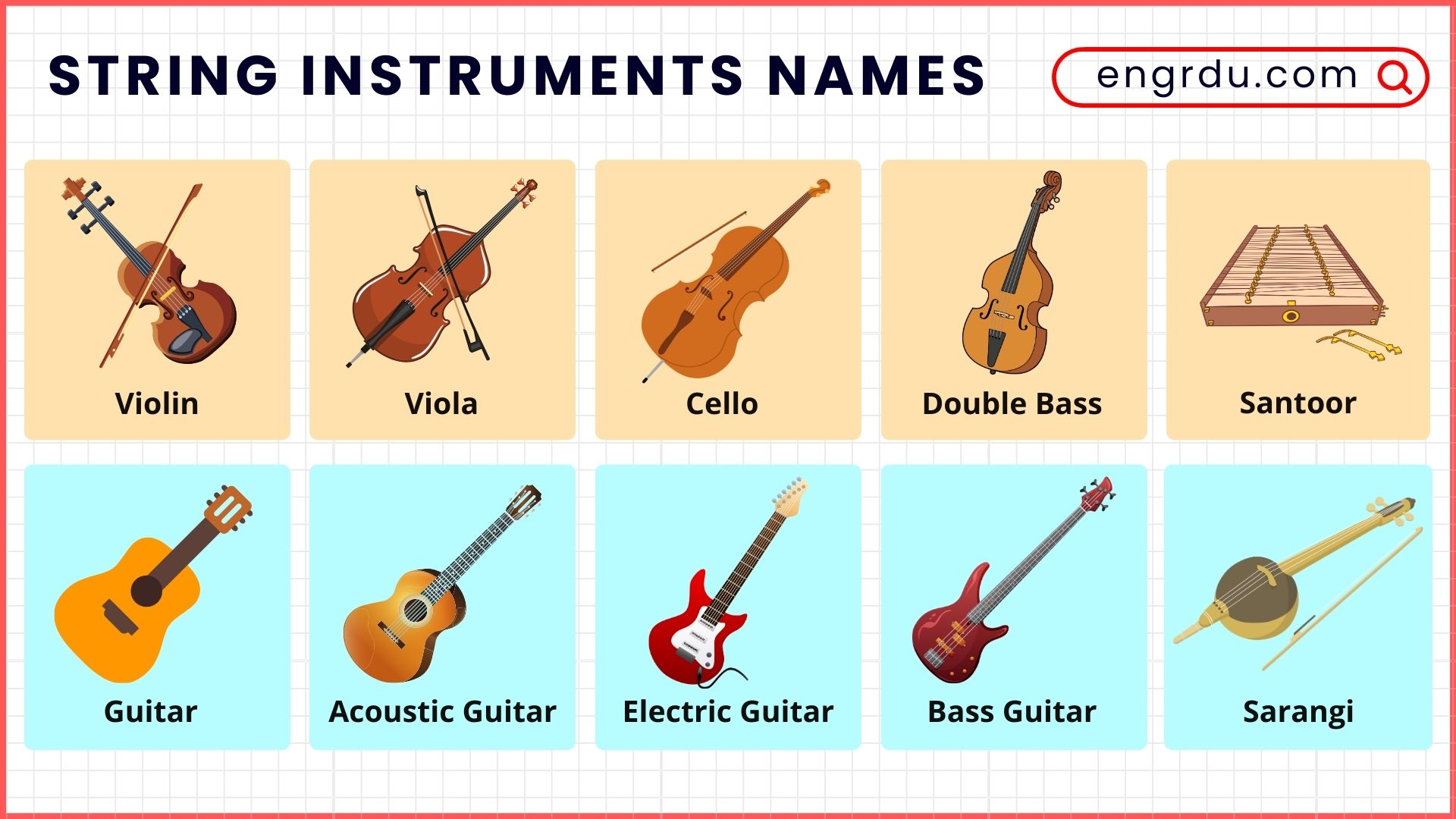

In this blog post, you will learn important string instruments names in English with pictures. String instruments are musical instruments that make sound when we pluck, bow, or strum their strings. Words like violin, guitar, and harp often appear in books, songs, classrooms, and conversations. When you know these names, you can talk about music with confidence. You also improve your vocabulary, which supports better speaking and writing. At the same time, you understand reading texts more easily and follow listening activities about music without confusion. As you continue, you will build stronger word knowledge and feel ready to use these instrument names in real life.
Why Learning String Instruments Vocabulary Matters
Knowing the names of string instruments in English helps in multiple ways:
- Communication: You can talk about music clearly with teachers or friends.
- Reading and Writing: Music books, articles, and online resources often mention these words.
- Cultural Awareness: Many string instruments come from different countries. Knowing them expands your knowledge.
By learning these words, you improve both your vocabulary and your confidence in English.
String Instruments Names in English
String Instruments List by Size
Organizing instruments by size helps learners understand their pitch, playing method, and physical scale.
Small String Instruments
- Violin – High-pitched, played with a bow.
- Ukulele – Small, four-stringed, bright sound.
- Mandolin – Small, lute-like, bright sound.
- Lyre – Ancient, hand-held, gentle sound.
Medium String Instruments
- Viola – Slightly larger than violin, deeper tone.
- Guitar – Six-stringed, strummed or plucked.
- Banjo – Round-bodied, folk music.
- Lute – Old classical instrument.
- Sitar – Long-necked Indian instrument.
Large String Instruments
- Cello – Large, played sitting, rich low sound.
- Double Bass – Very large, deep tones, played standing or sitting.
- Harp – Triangular, many strings, played by plucking.
- Zither – Flat, many strings, plucked or strummed.
- Guzheng – Chinese plucked zither.
- Koto – Japanese zither.
- Hardanger Fiddle – Norwegian fiddle with sympathetic strings.
Traditional String Instruments
These instruments are important in classical, folk, or cultural music:
Sitar
India, long-necked, sympathetic strings.
Guzheng
China, plucked zither with gentle sound.
Koto
Japan, traditional plucked zither.
Erhu
China, two-stringed, bowed instrument.
Balalaika
Russia, triangular, three-stringed folk instrument.
Hardanger Fiddle
Norway, special sympathetic strings.
Lyre
Ancient Greek and Roman hand-held instrument.
List of String Instruments Names with Pictures
Here is a list of frequently used string instruments with simple explanations and pictures:
- Violin
- Viola
- Cello
- Double Bass
- Guitar
- Acoustic Guitar
- Electric Guitar
- Harp
- Ukulele
- Banjo
- Mandolin
- Lute
- Sitar
- Zither
- Lyre
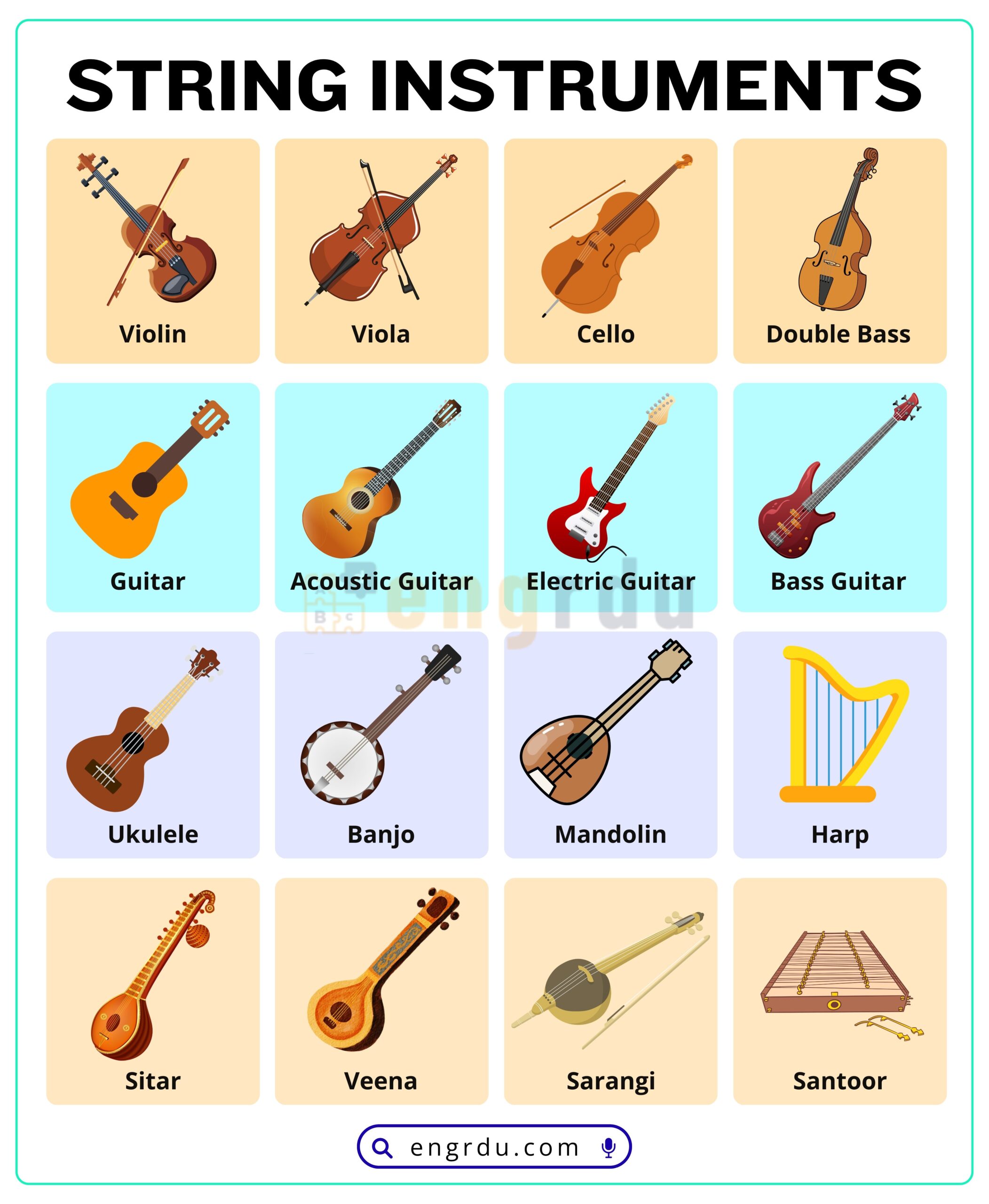
String Instruments Names in English
Less Common and Classical String Instruments
Some string instruments are less common but important in classical or traditional music:
Guzheng
A Chinese plucked zither with a gentle sound.
Koto
A Japanese string instrument, similar to a zither.
Erhu
A Chinese two-stringed instrument played with a bow.
Balalaika
A Russian triangular instrument with three strings.
Hardanger Fiddle
A Norwegian fiddle with extra sympathetic strings.
String Instruments List A–Z
This is a complete alphabetical list for easy learning and reference:
- A – Acoustic Guitar
- B – Banjo
- C – Cello
- D – Double Bass
- E – Erhu
- G – Guzheng, Guitar
- H – Harp, Hardanger Fiddle
- K – Koto
- L – Lyre, Lute
- M – Mandolin
- S – Sitar
- U – Ukulele
- Z – Zither
Conclusion
Learning string instruments names in English with pictures is fun and practical. It improves your vocabulary, helps you describe music, and enhances your understanding of different musical cultures. Start with common instruments, then explore classical or traditional ones. Practice regularly, and soon you can recognize and talk about string instruments confidently in English.
FAQs
What are string instruments?
String instruments are musical instruments that produce sound when their strings vibrate. Players pluck, bow, or strum the strings to create music. Common examples include the violin, guitar, cello, and harp. These instruments are used in classical, folk, pop, and traditional music around the world.
What are the main types of string instruments?
The main types of string instruments are bowed, plucked, and struck strings. Bowed instruments include the violin and cello. Plucked instruments include the guitar, harp, and ukulele. Some instruments, like the piano, also create sound from strings but are played by pressing keys.
What are 10 common string instruments names in English?
Ten common string instruments names in English are violin, viola, cello, double bass, guitar, harp, ukulele, banjo, mandolin, and sitar. These instruments appear often in music lessons, reading texts, and conversations about bands, orchestras, and traditional music.
What is the difference between violin and viola?
The violin is smaller and produces a higher pitch. The viola is slightly larger and has a deeper, warmer sound. Both are bowed string instruments and are common in orchestras. Knowing this difference helps learners describe instruments accurately in English.
Are guitars and harps string instruments?
Yes, guitars and harps are string instruments. Both create sound when players pluck or strum their strings. The guitar usually has six strings and a flat body, while the harp has many strings arranged in a vertical frame. Both are widely used in different music styles.
Related Articles



Leave a Comment