In this blog post, you will learn the names of woodwind instruments and understand how each is used in music. Woodwind instruments produce sound when you blow air into them, either through a mouthpiece, a reed, or directly into the instrument. Examples include the flute, clarinet, saxophone, and oboe. Learning these words helps English learners master vocabulary for speaking, reading, writing, and listening. By knowing the names and uses of woodwind instruments, you can describe music clearly, follow lessons, and communicate confidently in English.
What Are Woodwind Instruments?
Woodwind instruments are musical instruments that produce sound when you blow air into them. The sound is made by air vibrating inside a tube. Some use reeds, while others like the flute produce sound directly from the air stream.
Woodwind instruments are used to:
- Play melodies in bands and orchestras
- Add soft or bright sounds to music
- Perform in classical, jazz, and folk music
Why Learn Woodwind Instruments Vocabulary?
Learning the names of woodwind instruments is helpful because it allows you to:
- Expand your English vocabulary with music words
- Recognize instruments when reading or listening to music lessons
- Speak confidently about music performances or instruments
- Write and describe music accurately in English
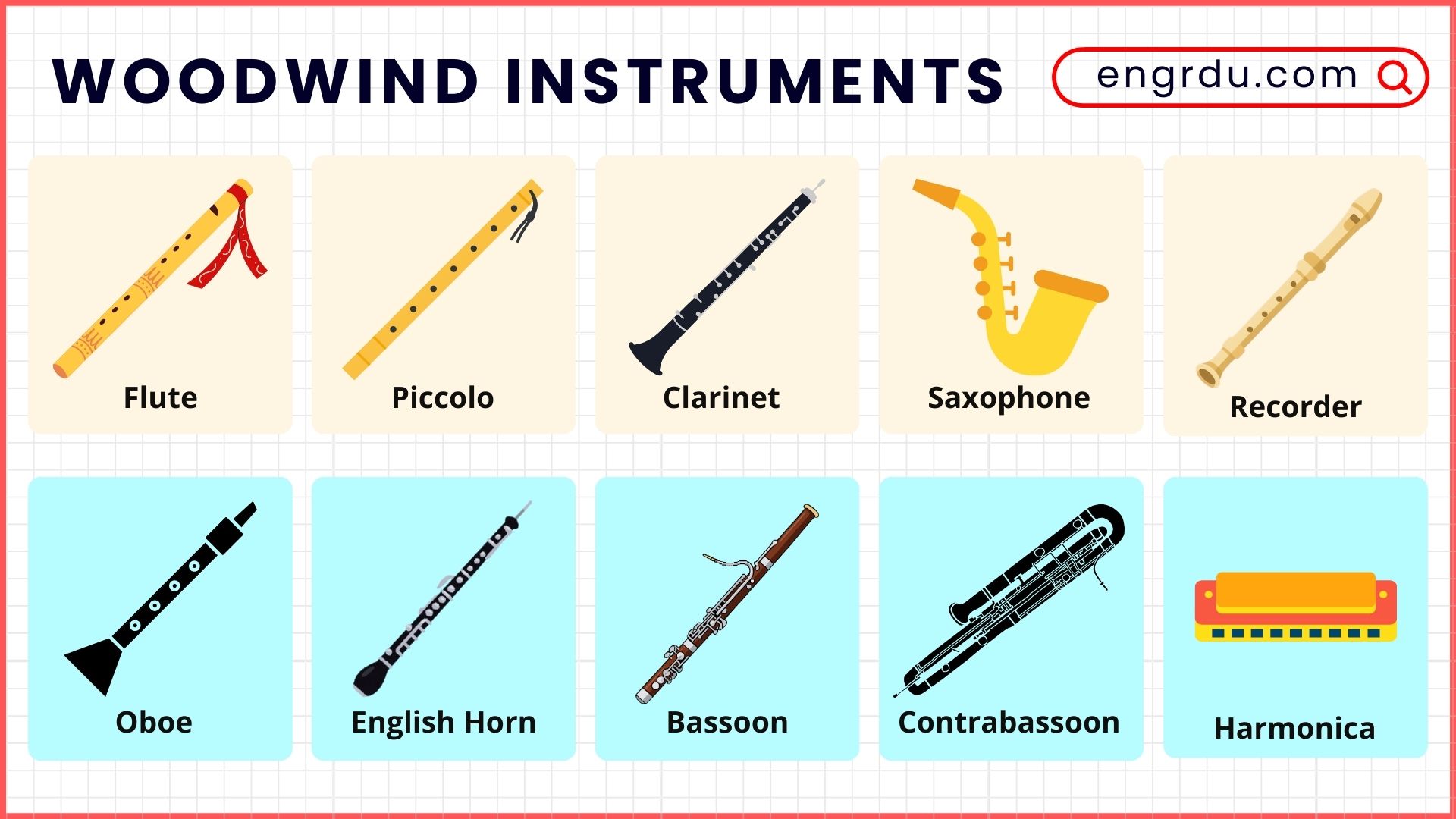
List of Woodwind Instruments with Pictures
Common Woodwind Instruments
- Flute
- Piccolo
- Alto Flute
- Bass Flute
- Clarinet
- E-flat Clarinet
- Bass Clarinet
- Contra-alto Clarinet
- Contrabass Clarinet
- Oboe
- Oboe d’Amore
- English Horn
- Bassoon
- Contrabassoon
- Saxophone
- Soprano Saxophone
- Alto Saxophone
- Tenor Saxophone
- Baritone Saxophone
- Bass Saxophone
Traditional and Folk Woodwind Instruments
- Recorder
- Tin Whistle
- Penny Whistle
- Irish Flute
- Native American Flute
- Pan Flute
- Panpipes
- Ocarina
- Shakuhachi
- Shinobue
- Dizi
- Xiao
- Hulusi
- Bawu
- Ryuteki
- Nohkan
Middle Eastern and Asian Woodwind Instruments
- Ney
- Zurna
- Duduk
- Mizmar
- Sorna
- Suona
- Kaval
- Balaban
- Pungi
- Shehnai
Bagpipes and Related Woodwind Instruments
- Bagpipes
- Uilleann Pipes
- Great Highland Bagpipe
- Northumbrian Pipes
Rare or Less Common Woodwind Instruments
- Crumhorn
- Cornamuse
- Rauschpfeife
- Chalumeau
- Serpent
- Ophicleide
- Octavin
- Sarrusophone
- Heckelphone
Woodwind Instruments and Their Uses
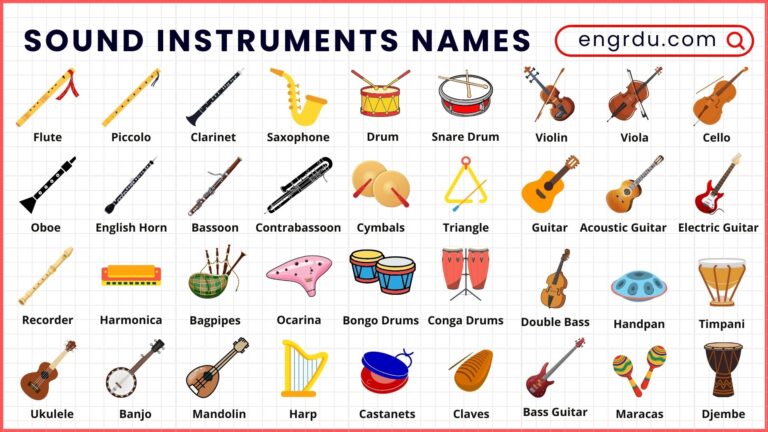
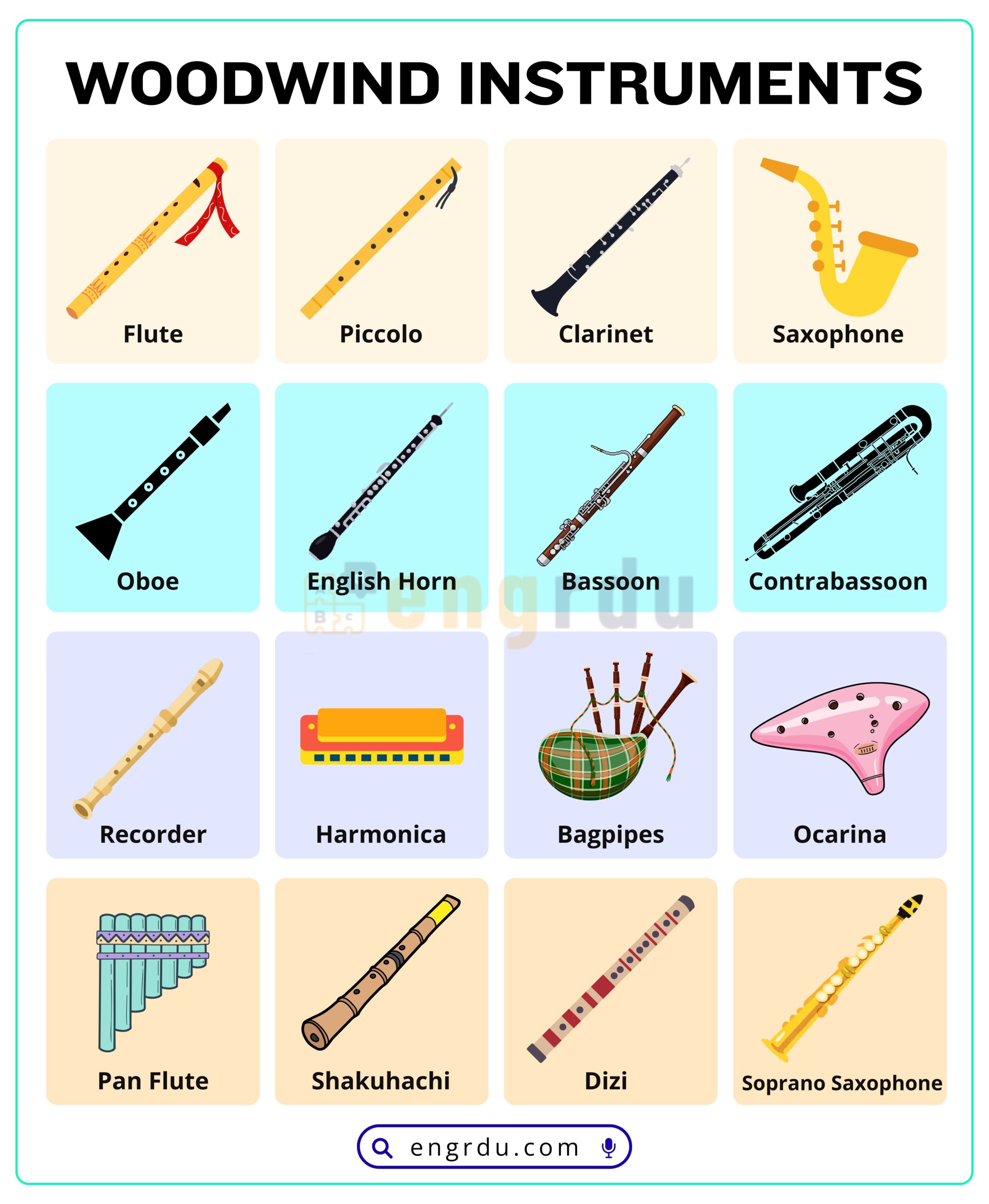
Here is a list of important woodwind instruments with their uses:
Flute
A metal or wooden tube you blow across. Produces soft, high-pitched sounds.
Piccolo
A smaller flute with higher notes. Often used in marching bands and orchestras.
Clarinet
A single-reed instrument that produces smooth, versatile tones for classical and jazz music.
Saxophone
A single-reed brass-looking instrument used in jazz, pop, and marching bands.
Oboe
A double-reed instrument with a clear, bright sound. Common in orchestras.
English Horn
Similar to the oboe but lower in pitch, used in classical music.
Bassoon
A large double-reed instrument with deep, rich sounds. Plays bass melodies in orchestras.
Contrabassoon
A bigger bassoon producing very low notes for symphonic music.
Recorder
A simple woodwind with finger holes, used in schools for beginner lessons.
Harmonica
A small, hand-held instrument blown or drawn to produce melody, popular in blues and folk music.
Bagpipes
A reed instrument with air stored in a bag. Common in Scottish and folk music.
Ocarina
A small vessel flute producing soft tones, often used in folk songs.
Pan Flute
Several pipes of different lengths blown across to create melody, common in traditional music.
Shakuhachi
A Japanese bamboo flute with a breathy, mellow sound.
Woodwind Instruments in Schools and Music
Woodwind instruments are used in:
- Schools: Music classes, bands, and beginner lessons with recorders or flutes
- Orchestras: Classical performances with oboes, clarinets, and bassoons
- Jazz and Pop: Saxophones, clarinets, and harmonicas
- Cultural Music: Pan flutes, bagpipes, and shakuhachi in traditional songs
Understanding their names helps learners identify instruments, describe music, and follow lessons confidently.
Tips to Remember These Words Easily
- Group instruments by type: Flutes, single-reed, and double-reed instruments
- Practice saying the names aloud to remember pronunciation
- Use in sentences: “I play the clarinet in my school band.”
- Listen to music: Identify each woodwind instrument by sound
- Write the names repeatedly to reinforce memory
Conclusion
By learning the names and uses of woodwind instruments, English learners can improve vocabulary, understand music better, and communicate confidently about instruments and performances.
FAQs
What are woodwind instruments?
Woodwind instruments are musical instruments that produce sound when you blow air into them. Examples include flute, clarinet, and saxophone, commonly used in bands and orchestras.
Why are woodwind instruments important in music?
They play melodies, add unique tones, and support rhythm. Instruments like oboe, bassoon, and flute are essential in classical, jazz, and school music.
Is a saxophone a woodwind instrument?
Yes, a saxophone is a woodwind instrument. It produces sound using a single reed, even though it looks like a brass instrument, and is used in jazz, pop, and classical music.
What are some common woodwind instruments names?
Common woodwind instruments include flute, clarinet, saxophone, oboe, bassoon, piccolo, recorder, and harmonica. Each instrument has a specific sound and musical purpose.
Which woodwind instrument is best for beginners?
Recorders and flutes are easy for beginners. They help learners practice blowing, finger placement, and melody while learning woodwind vocabulary in English.
Is a flute a woodwind instrument?
Yes, a flute is a woodwind instrument. It produces sound when you blow air across the mouthpiece, creating soft and high-pitched tones used in orchestras, bands, and solo music.
Related Articles: