

Must and have to are modal expressions used to show obligation or necessity. In this Grammar lesson, understanding their differences helps you speak and write English more accurately while improving your reading and listening skills. Using them correctly makes your sentences stronger and more precise. In this blog post, you will learn the difference between must and have to with examples to practice and use them confidently in daily English.
Must and Have to Meaning
Both words show that something is necessary or required, but the reason behind the obligation changes their meaning slightly.
Must
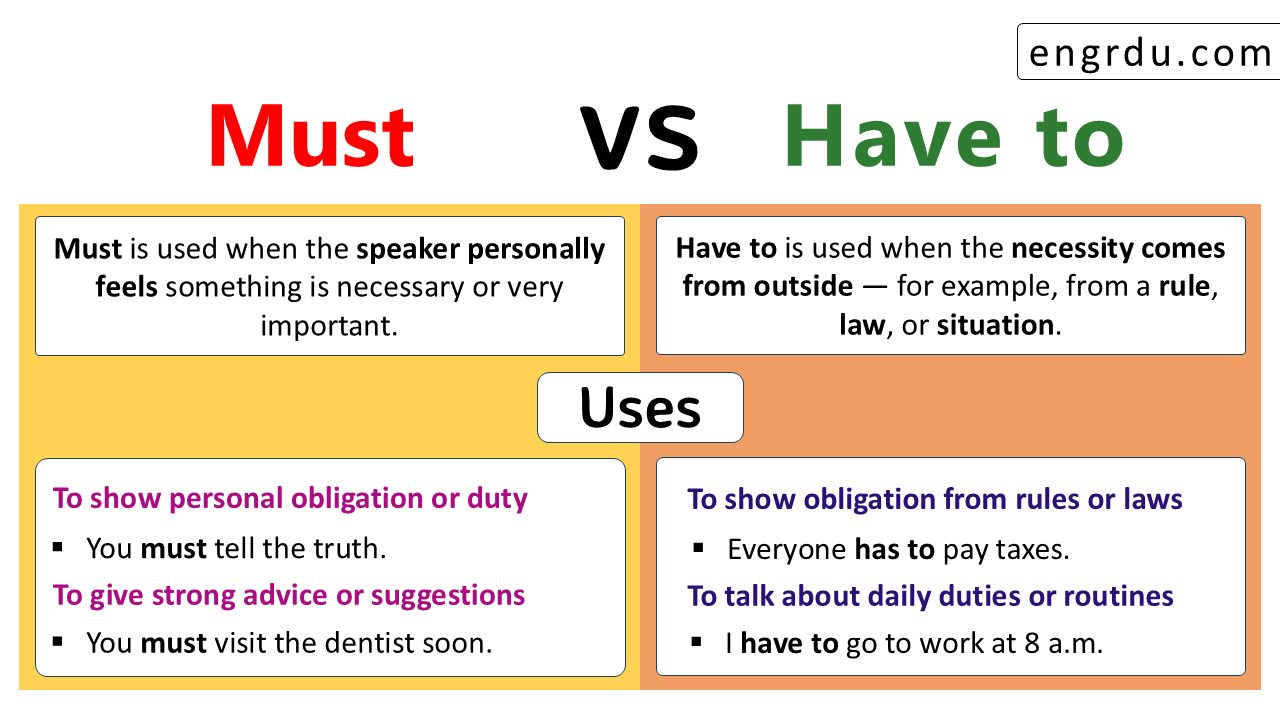
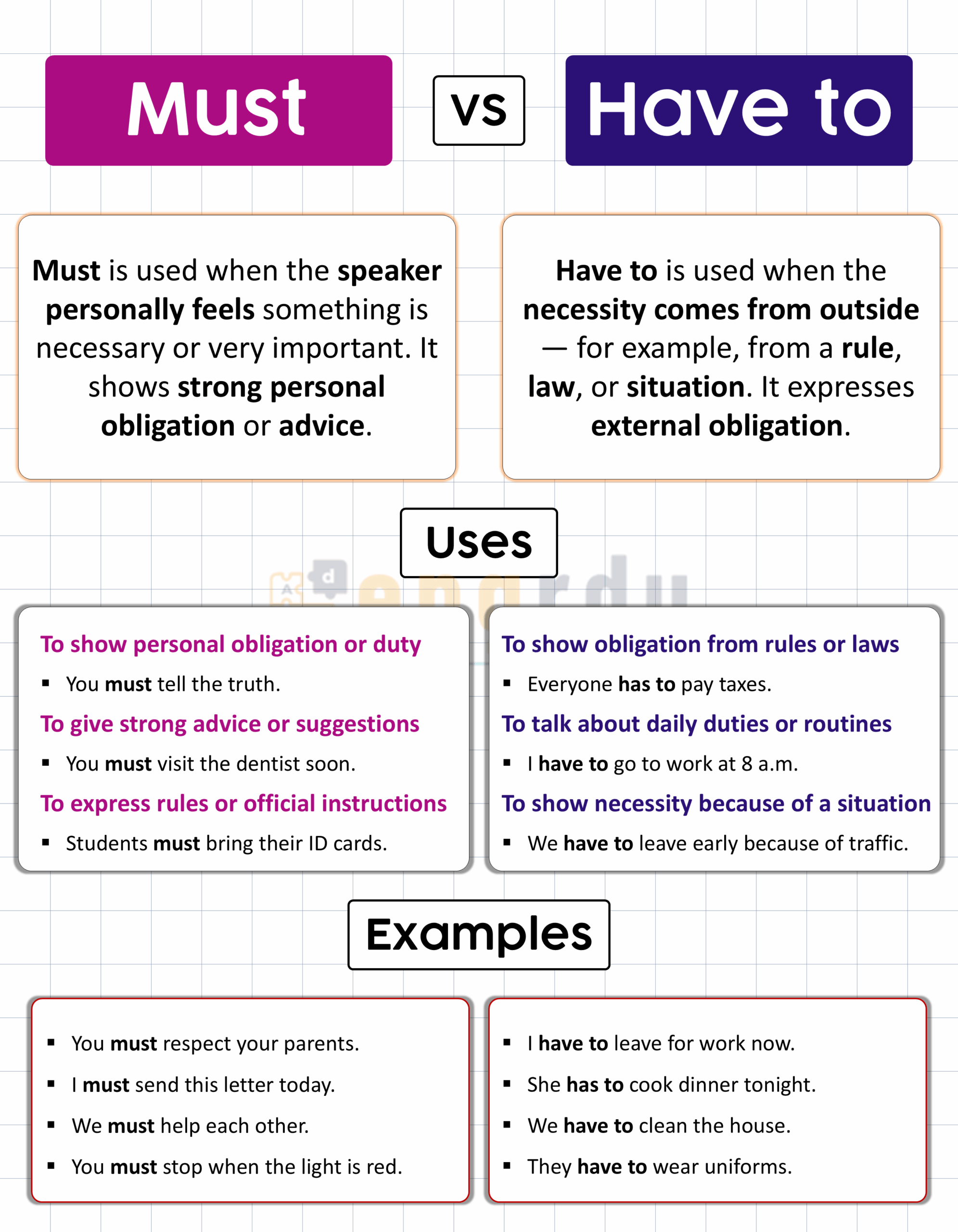
Must is used when the speaker personally feels something is necessary or very important. It shows strong personal obligation or advice.
Examples:
- You must study hard to pass the exam.
- I must call my father today.
Have to
Have to is used when the necessity comes from outside — for example, from a rule, law, or situation. It expresses external obligation.
Examples:
- I have to wear a seatbelt while driving.
- She has to work late tonight.
Differences Between Must and Have to
| Point | Must | Have to |
|---|---|---|
| Type of Obligation | Personal or internal | External (rule, law, situation) |
| Formality | More formal | Common in daily speech |
| Negative Form | Must not = Prohibition | Don’t have to = Not necessary |
| Tense Use | Present/Future | All tenses (had to, will have to) |
Examples:
- You must not smoke here. (Prohibited)
- You don’t have to come if you’re tired. (Not necessary)
Usage of Must
Must is used to show necessity, obligation, or strong advice. It often expresses what the speaker personally feels is important or required.
1. To show personal obligation or duty
Use must when the speaker personally feels something is necessary or a moral duty.
- I must call my parents every week.
- You must tell the truth.
2. To give strong advice or suggestions
Use must to give strong advice to someone.
- You must try this new restaurant.
- You must visit the dentist soon.
3. To express rules or official instructions
Use must when making rules, warnings, or instructions.
- You must wear a seatbelt while driving.
- Students must bring their ID cards.
4. To show logical conclusion or certainty
Use must when you are sure or confident about something.
- He must be tired after that long trip.
- It must be raining outside.
5. To express prohibition (negative form: must not)
Use must not to say something is not allowed.
- You must not smoke in the library.
- Visitors must not touch the paintings.
Usage of Have to
Have to is used to express external obligation — something that is necessary because of rules, laws, or situations, not because the speaker personally feels it.
1. To show obligation from rules or laws
Use have to when the obligation comes from outside authority.
- You have to wear a helmet on a motorbike.
- Everyone has to pay taxes.
2. To talk about daily duties or routines
Use have to for regular actions that are part of your daily life.
- I have to go to work at 8 a.m.
- She has to cook dinner every evening.
3. To show necessity because of a situation
Use have to when something is necessary due to a situation or condition.
- We have to leave early because of traffic.
- They have to cancel the meeting due to rain.
4. To talk about the past or future necessity
Have to can change to had to (past) or will have to (future) to express necessity in different times.
- I had to wake up early yesterday. (past)
- We will have to finish this project tomorrow. (future)
5. To show something is not necessary (negative form: don’t have to)
Use don’t have to when something is optional or not required.
- You don’t have to come if you’re busy.
- She doesn’t have to wear a uniform today.
Formal and Informal Usage
- Formal: You must wear a uniform at school.
- Informal: You have to wear a uniform at school.
Must is more common in formal writing, rules, or official talk.
Have to is more common in everyday conversation.
Example Sentences for Must
- You must respect your parents.
- I must send this letter today.
- We must help each other.
- You must stop when the light is red.
- I must go to bed early tonight.
- They must follow the school rules.
- You must keep this secret.
- We must protect animals.
- He must be tired after work.
- You must listen carefully.
- I must drink more water.
- Students must bring their ID cards.
- You must not enter without permission.
- We must recycle our waste.
- You must check the email again.
- She must call her doctor.
- He must pay attention in class.
- They must complete the report.
- You must not park here.
- I must learn new words daily.
Example Sentences for Have to
- I have to leave for work now.
- She has to cook dinner tonight.
- We have to clean the house.
- They have to wear uniforms.
- He has to finish the report.
- You have to pay the bill today.
- I have to wake up early.
- She has to study for her exams.
- We have to take the bus.
- You have to be patient.
- They have to follow the law.
- He has to see the doctor.
- I have to send an email now.
- We have to clean our desks.
- You don’t have to come tomorrow.
- She has to look after her baby.
- They had to cancel the trip.
- We will have to work harder.
- He doesn’t have to go out today.
- I have to save more money.
Must and Have to
FAQs about Must and Have to
What is the main difference between must and have to?
Must shows a personal obligation, while have to shows an external obligation or rule.
Can I use must in the past tense?
No, use had to instead of must for past necessity.
Which is more formal, must or have to?
Must is more formal; have to is common in everyday talk.
What does “don’t have to” mean?
It means something is not necessary, not forbidden.
Can I use must and have to together?
Usually, no. Choose one based on whether the duty is personal (must) or external (have to).
Read More


Leave a Comment