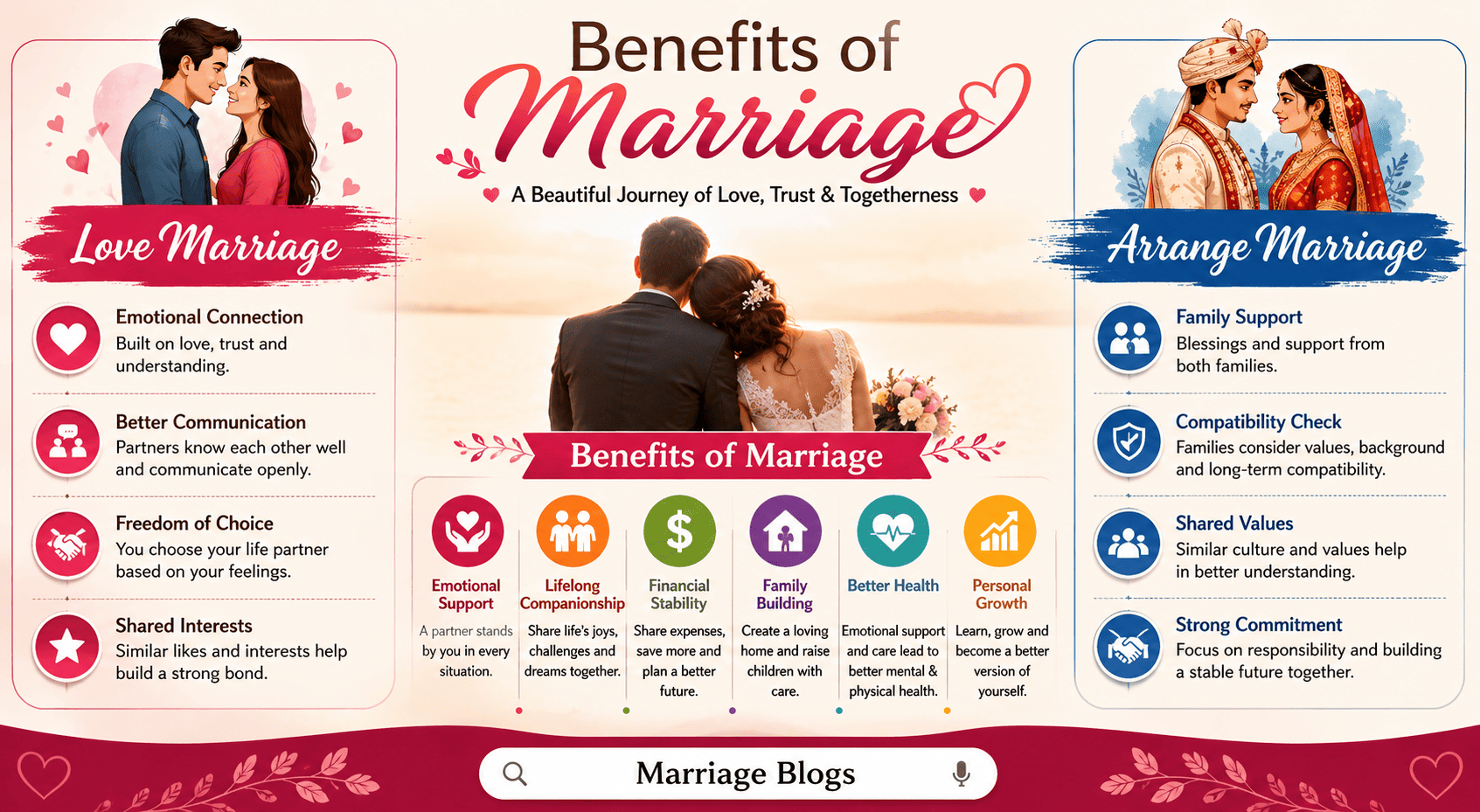
Marriage is one of the most important relationships in life. It is not only about living together, but also about building trust, support, care, and understanding between two people. Around the world, people choose different types of marriages based on culture, personal choice, family values, and emotions. The two most common types are love marriages and arranged marriages.
Both forms of marriage can lead to a happy and successful life when there is respect, communication, and commitment between partners. In this article, we will explain the benefits of marriage, the differences between love and arranged marriages, and how both can create a strong relationship.
What is Marriage?
Marriage is a legal and emotional partnership between two people who decide to share their lives together. It creates a bond based on love, responsibility, trust, and mutual support.
Marriage is important in many societies because it helps people build families, share responsibilities, and create emotional stability.
Pros and Cons of Marriage
Marriage is a major life decision that brings two people together to build a shared future. It offers many emotional, social, and financial benefits, but it can also come with challenges and responsibilities. Understanding both the advantages and disadvantages of marriage helps people make informed and realistic decisions.
Pros of Marriage
- Emotional support during difficult times
- Lifelong companionship and care
- Better financial stability
- Strong family bonding
- Personal growth and responsibility
- Better mental and emotional well-being
- Shared goals and future planning
Cons of Marriage
- More responsibilities and commitments
- Financial pressure in some situations
- Arguments and misunderstandings
- Less personal freedom at times
- Adjustment challenges between partners
- Family or cultural pressure
- Emotional stress if communication is weak
Benefits of Marriage
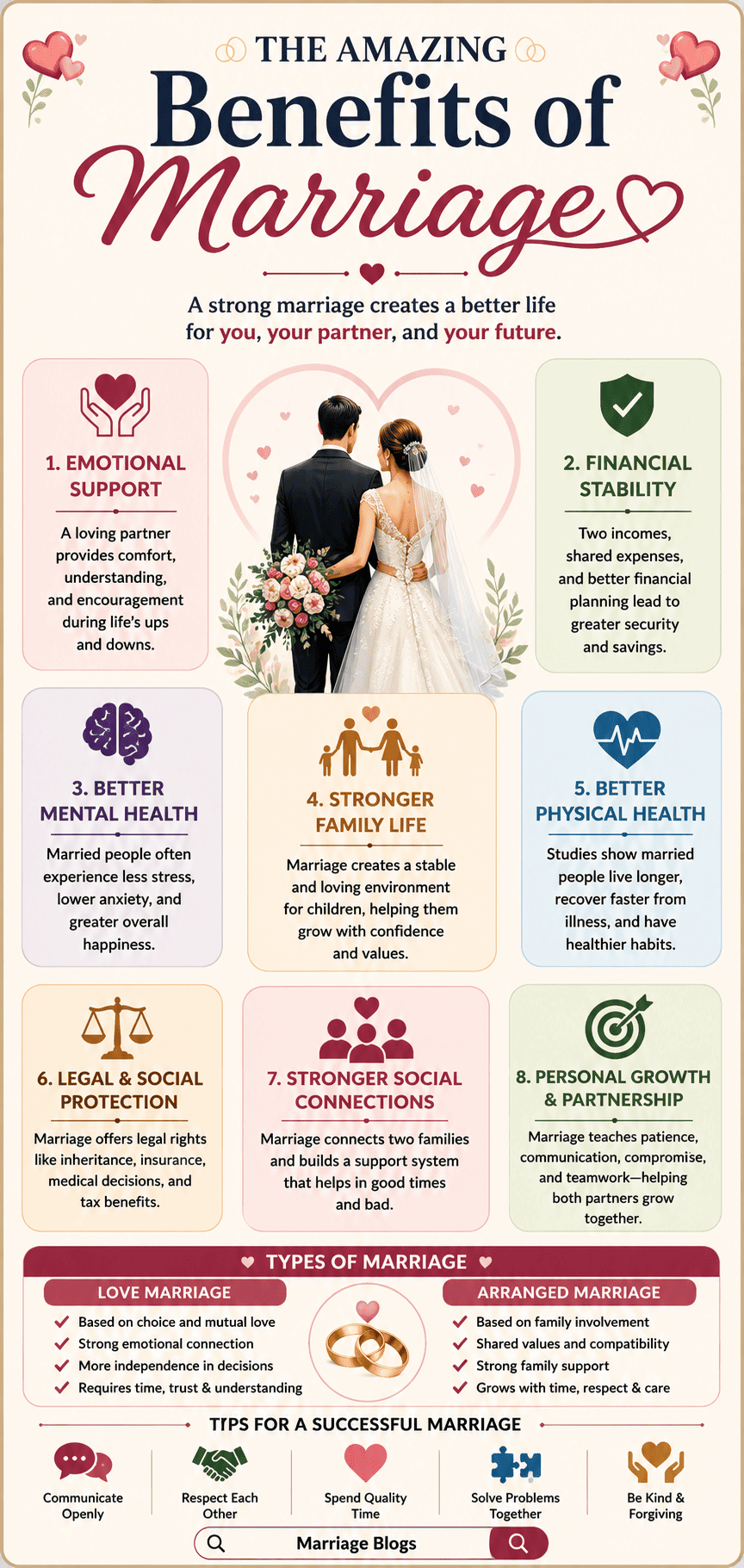
Marriage offers many emotional, social, financial, and personal benefits. A healthy marriage can improve life in many ways.
1. Emotional Support
One of the biggest benefits of marriage is emotional support. A husband and wife support each other during difficult times and celebrate happy moments together.
Emotional benefits include the following:
- Feeling loved and cared for
- Having someone to trust
- Reduced loneliness
- Better mental well-being
- Emotional security during stressful situations
A supportive partner can help reduce anxiety and improve confidence.
2. Strong Companionship
Marriage creates lifelong companionship. Having a partner means you have someone to share daily experiences, dreams, and challenges with.
Good companionship helps people feel connected and valued in life.
Examples of companionship in marriage:
- Traveling together
- Sharing hobbies
- Spending quality family time
- Supporting personal goals
- Building memories together
3. Financial Stability
Many married couples enjoy better financial management because both partners can share responsibilities and expenses.
Financial advantages may include the following:
- Shared household expenses
- Better savings opportunities
- Easier long-term planning
- Joint investments
- Improved financial security
Couples often work together to achieve financial goals such as buying a home, starting a business, or planning for the future.
4. Family Building
Marriage provides a stable foundation for raising children and building a family environment filled with care and support.
Children raised in healthy family environments often benefit from:
- Emotional security
- Better guidance
- Family values
- Educational support
- Strong social development
A caring family structure helps children grow with confidence and stability.
5. Better Physical and Mental Health
Studies often show that people in healthy marriages may experience better overall health because they receive emotional and practical support from their partners.
Health-related benefits include:
- Lower stress levels
- Better emotional balance
- Healthier lifestyle habits
- Motivation to stay healthy
- Support during illness
A caring relationship can positively affect both physical and mental wellness.
6. Personal Growth
Marriage teaches patience, responsibility, communication, and teamwork. Couples often grow emotionally and personally through shared experiences.
Marriage helps individuals learn:
- Problem-solving skills
- Better communication
- Understanding and compromise
- Responsibility and commitment
- Emotional maturity
A strong relationship encourages both partners to become better individuals.
Love Marriage
A love marriage happens when two people choose each other based on emotional connection, attraction, and personal understanding before marriage.
In this type of marriage, the couple usually spends time together before getting married and makes the decision independently.
Benefits of Love Marriage
Love marriages have many positive aspects when the relationship is built on trust and understanding.
1. Better Emotional Connection
Couples already know each other well before marriage. This can create strong emotional bonding and comfort.
2. Freedom of Choice
People choose their life partner based on personal preferences, values, and compatibility.
3. Strong Communication
Because the couple often spends time together before marriage, they may communicate more openly and honestly.
4. Shared Interests
Partners may already know each other’s hobbies, dreams, and lifestyles, making adjustment easier after marriage.
Challenges of Love Marriage
Like every relationship, love marriages can also face challenges.
Common challenges include:
- Family disagreements
- Unrealistic expectations
- Financial pressure
- Cultural differences
- Lack of long-term planning
However, these problems can often be managed through understanding and communication.
Arranged Marriage
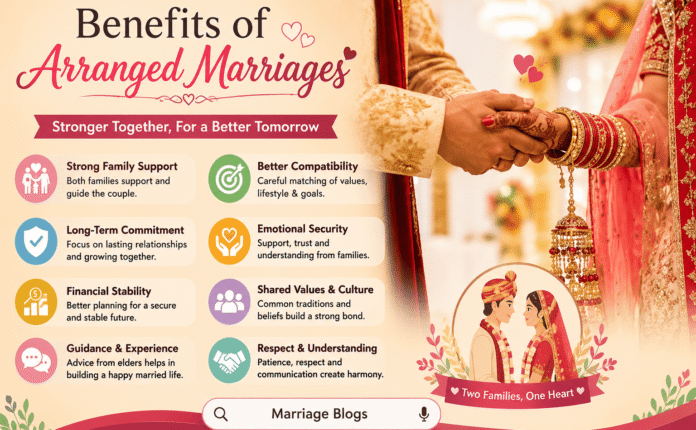
An arranged marriage is a marriage where families or relatives help in choosing a suitable life partner. This type of marriage is common in many cultures around the world.
In arranged marriages, families often consider:
- Family values
- Education
- Lifestyle
- Financial stability
- Cultural compatibility
The final decision may still depend on the couple’s agreement and comfort.
Benefits of Arranged Marriage
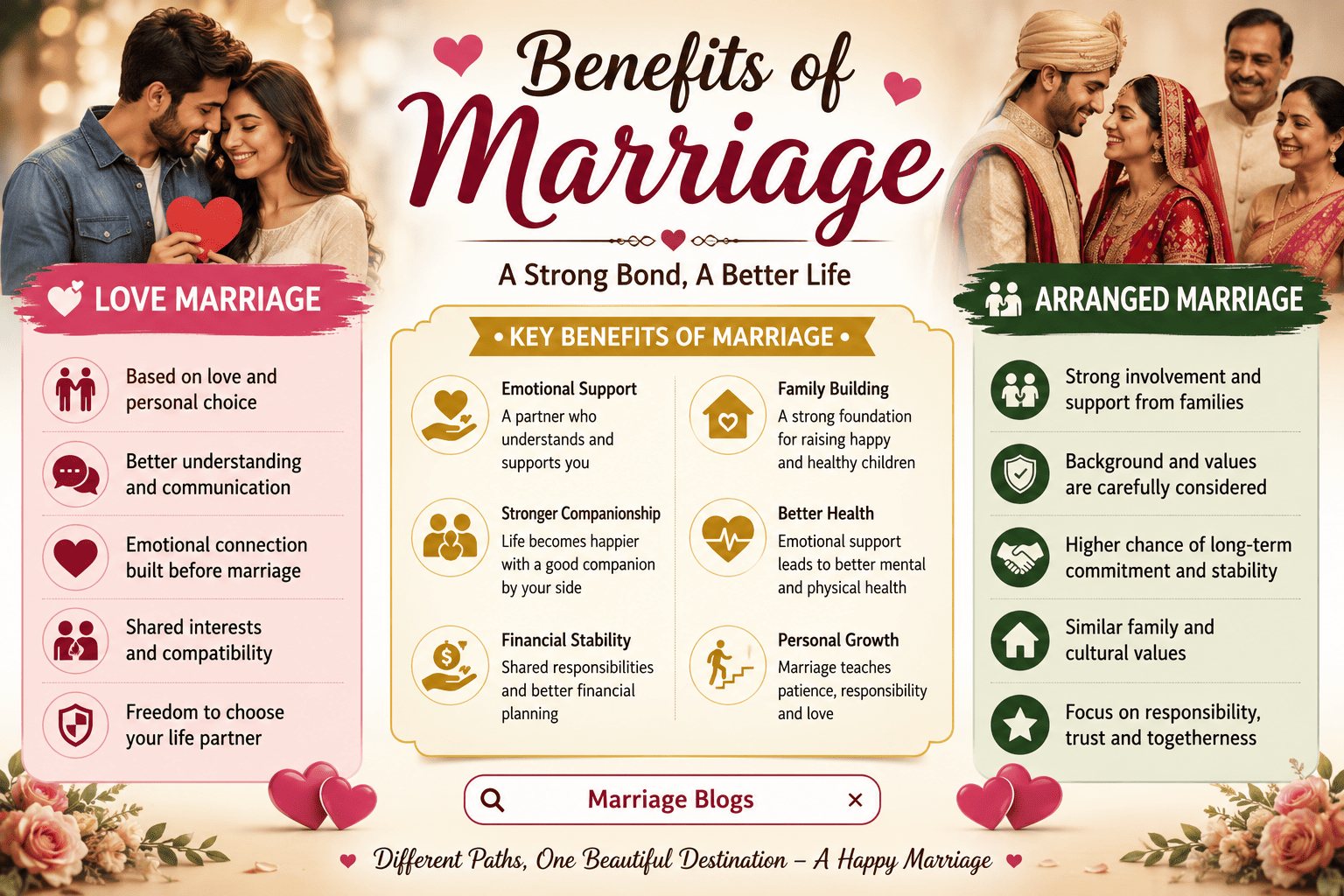
Arranged marriages also have many advantages and can lead to successful long-term relationships.
1. Family Support
Families are usually deeply involved and supportive, which can help couples during difficult times.
2. Compatibility Check
Families often carefully consider background, values, and long-term stability before arranging the marriage.
3. Shared Family Values
Partners may come from similar cultural or social backgrounds, reducing misunderstandings.
4. Strong Commitment
Many arranged marriages focus on long-term responsibility and partnership from the beginning.
Challenges of Arranged Marriage
Arranged marriages can also have difficulties if communication and understanding are missing.
Possible challenges include:
- Less emotional connection at the start
- Pressure from family expectations
- Adjustment difficulties
- Limited personal choice in some situations
Modern arranged marriages are changing, and many couples now spend time understanding each other before making a final decision.
Love Marriage vs Arranged Marriage
Both love and arranged marriages can be successful. The success of marriage depends more on the people involved rather than the type of marriage.
| Love Marriage | Arranged Marriage |
|---|---|
| Based on personal choice | Often guided by families |
| Emotional connection develops early | Understanding may grow after marriage |
| Greater personal freedom | Strong family involvement |
| Partners know each other before marriage | Families help evaluate compatibility |
| May face family resistance | Usually supported by families |
There is no perfect type of marriage for everyone. Every relationship becomes successful through effort, trust, patience, and respect.
Important Qualities for a Successful Marriage
No matter whether it is a love marriage or arranged marriage, some qualities are necessary for a healthy relationship.
1. Trust
Trust creates emotional safety and strengthens the relationship.
2. Communication
Open communication helps solve misunderstandings and improves connection.
3. Respect
Both partners should respect each other’s feelings, opinions, and personal goals.
4. Patience
Every relationship faces challenges. Patience helps couples handle problems calmly.
5. Commitment
Strong commitment keeps the relationship stable during difficult situations.
Marriage Benefits Overview Chart
| Area | Benefits |
|---|---|
| Emotional Health | Less loneliness and better emotional support |
| Financial Stability | Shared expenses and better savings |
| Physical Health | Healthier habits and faster recovery |
| Family Life | Stable environment for children |
| Social Support | Stronger family and community ties |
| Legal Protection | Inheritance, healthcare, and insurance rights |
| Mental Well-Being | Reduced stress and emotional security |
Facts and Statistics About Marriage
- Married adults often report lower stress levels than socially isolated individuals.
- Two-income households usually manage financial emergencies better than single-income homes.
- Studies show children in stable homes often perform better in school and social settings.
- Marriage rates differ across countries due to economic, cultural, and social changes.
- Many successful marriages depend more on communication than on income or social status.
How to Build a Happy Marriage
A successful marriage requires continuous effort from both partners.
Helpful tips include:
- Spend quality time together
- Listen carefully to each other
- Solve problems peacefully
- Support each other’s goals
- Appreciate small efforts
- Maintain honesty and trust
Small acts of kindness and understanding can make relationships stronger over time.
FAQs About the Benefits of Marriage
The main benefits of marriage include emotional support, financial stability, family growth, legal protection, and companionship. Healthy marriages also improve mental and physical health for many people.
Both systems can succeed. Love marriages focus on personal choice, while arranged marriages often include family involvement. Respect, communication, and trust matter more than the marriage type.
A supportive spouse can reduce stress, loneliness, and anxiety. Emotional connection and daily support help many married people feel safer and happier.
Married couples often share expenses, save more money, and receive legal or tax benefits. Shared financial planning also helps families manage emergencies better.
Marriage helps build stable families and social support systems. Strong family structures often improve child development emotional health and community relationships.
Conclusion
Marriage is an important journey that brings emotional support, companionship, stability, and personal growth. Both love marriages and arranged marriages have their own advantages and challenges. A happy marriage does not depend only on how it started but on how both partners work together to maintain love, respect, and understanding.
Whether people choose love marriage or arranged marriage, the key to success is mutual trust, communication, patience, and commitment. When both partners support each other and grow together, marriage can become one of the most meaningful and rewarding relationships in life.