In this blog post, you will learn useful train station sentences for real travel situations.
Train station vocabulary includes the words and sentences people use when they buy tickets, ask for directions, check times, and talk during a journey. These sentences help you learn real English used every day in busy places. When you practice them, you improve your speaking because you can ask and answer questions with confidence. You also build reading skills by understanding signs and schedules, writing skills by forming correct sentences, and listening skills by following announcements. These sentences prepare you for real conversations, so you feel ready when you travel or speak with others in English.
Basic Train Station Sentences in English
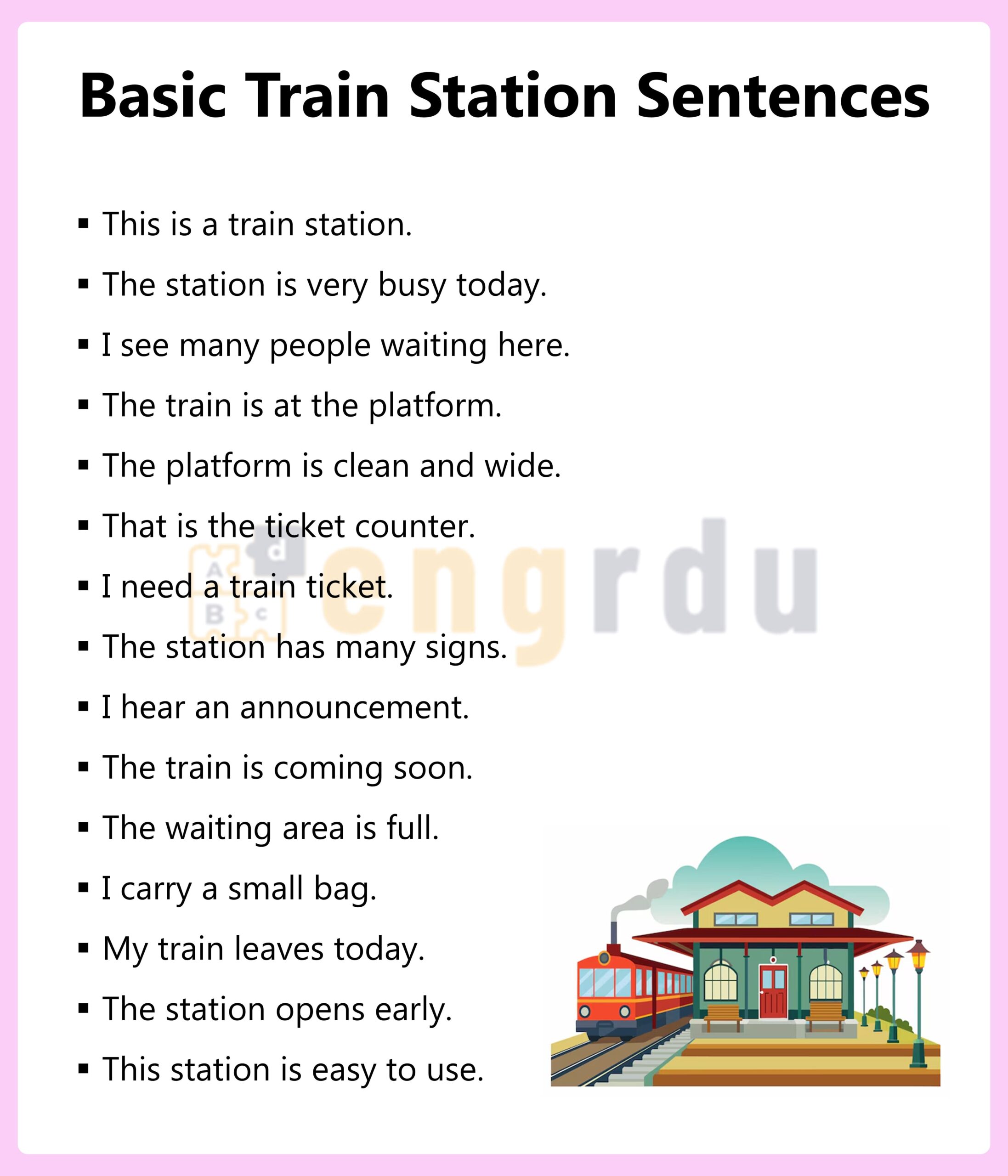
This section introduces essential words and short sentences used at a train station. Learners understand key terms like train, platform, ticket, and station. These form the foundation for all travel conversations.
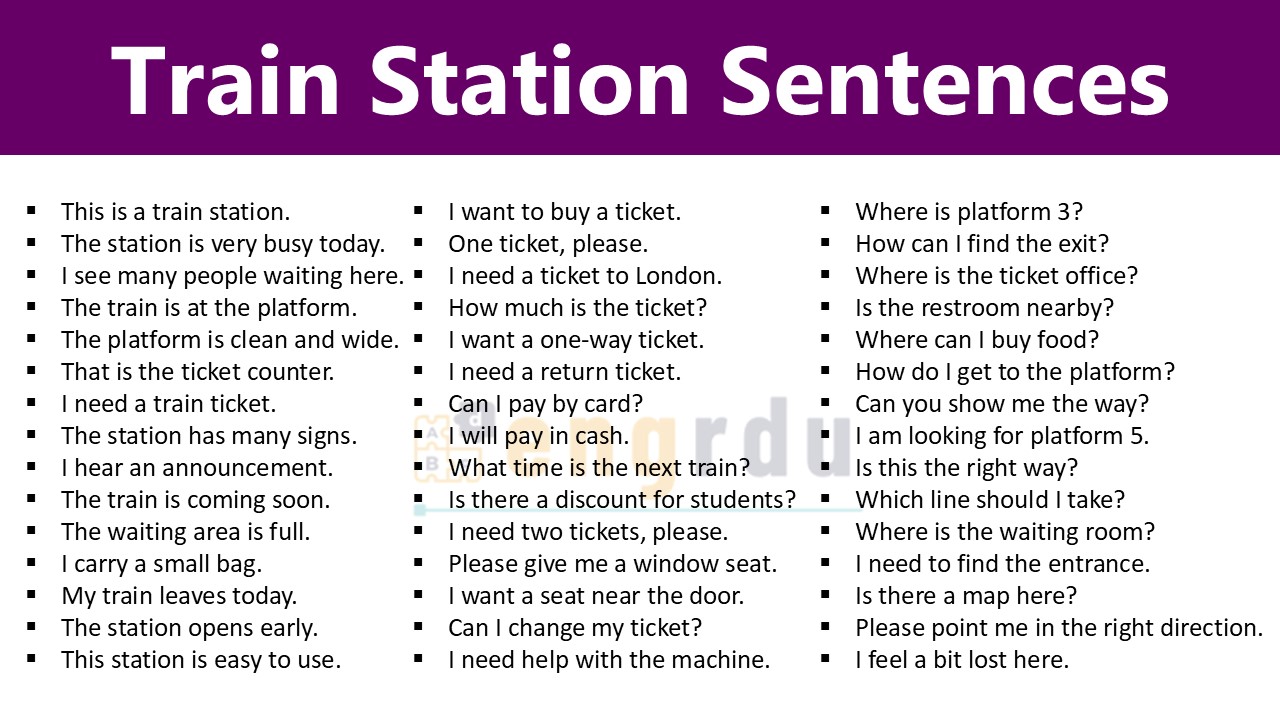
- This is a train station.
- The station is very busy today.
- I see many people waiting here.
- The train is at the platform.
- The platform is clean and wide.
- That is the ticket counter.
- I need a train ticket.
- The station has many signs.
- I hear an announcement.
- The train is coming soon.
- The waiting area is full.
- I carry a small bag.
- My train leaves today.
- The station opens early.
- This station is easy to use.
Buying Tickets at the Counter
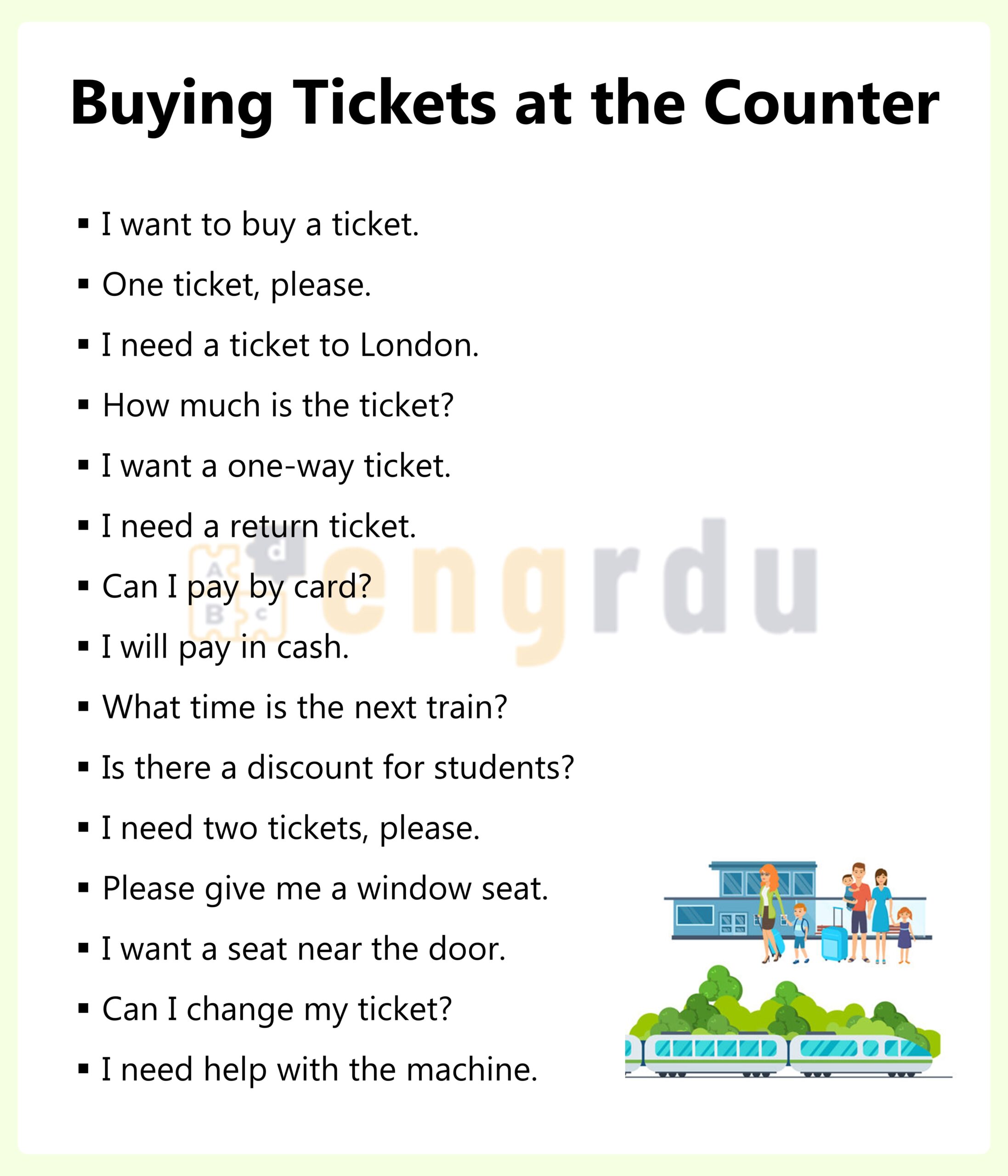
This section teaches sentences used when purchasing train tickets. Learners practice asking for tickets, checking prices, and choosing destinations.
- I want to buy a ticket.
- One ticket, please.
- I need a ticket to London.
- How much is the ticket?
- I want a one-way ticket.
- I need a return ticket.
- Can I pay by card?
- I will pay in cash.
- What time is the next train?
- Is there a discount for students?
- I need two tickets, please.
- Please give me a window seat.
- I want a seat near the door.
- Can I change my ticket?
- I need help with the machine.
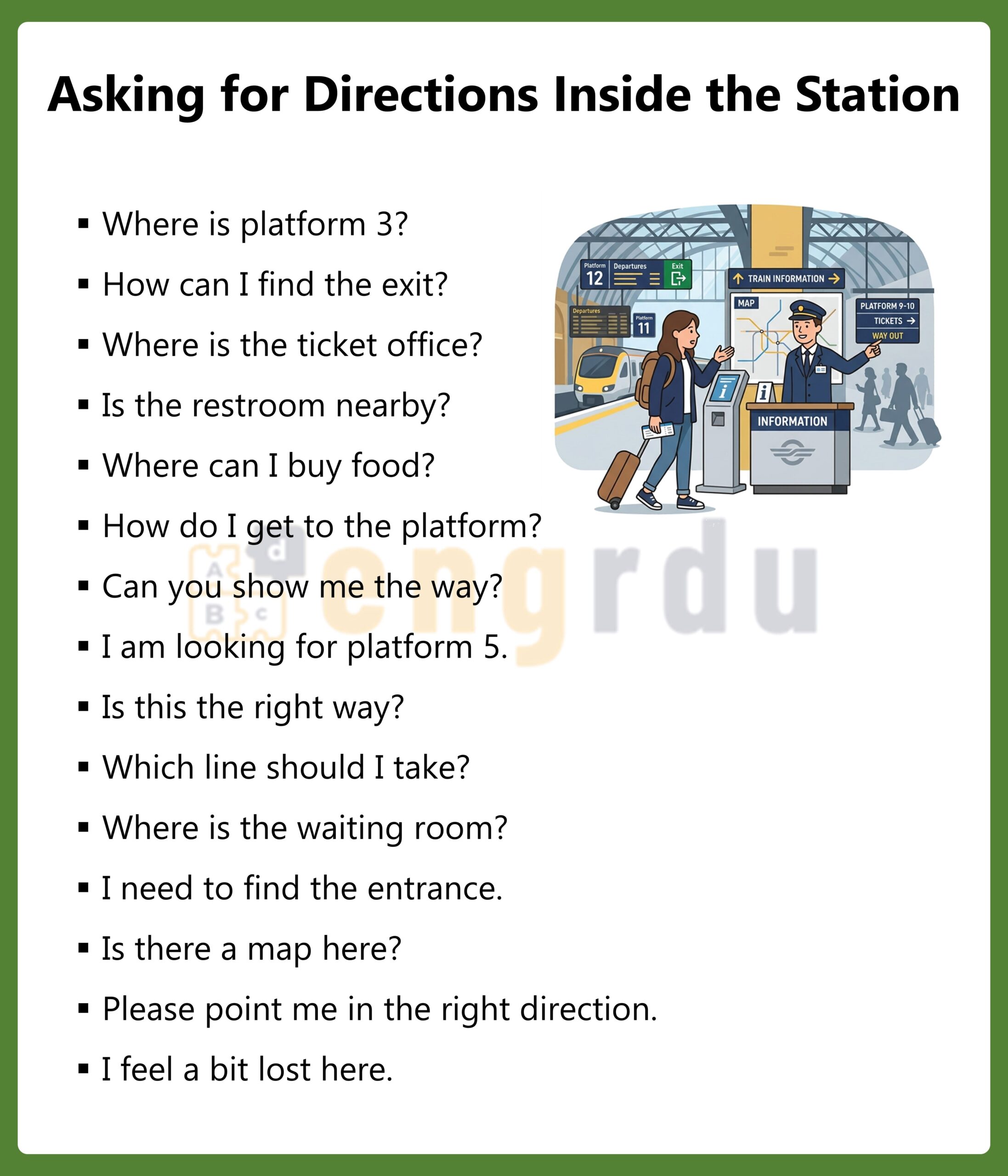
Asking for Directions Inside the Station
This section includes sentences for finding places like platforms, exits, ticket counters, and restrooms. It helps learners ask for help when they are lost.
- Where is platform 3?
- How can I find the exit?
- Where is the ticket office?
- Is the restroom nearby?
- Where can I buy food?
- How do I get to the platform?
- Can you show me the way?
- I am looking for platform 5.
- Is this the right way?
- Which line should I take?
- Where is the waiting room?
- I need to find the entrance.
- Is there a map here?
- Please point me in the right direction.
- I feel a bit lost here.
Talking About Train Times and Schedules
This section focuses on asking and understanding train timings, delays, arrivals, and departures. Learners practice time-related travel communication.
- What time does the train leave?
- The train leaves at 10 a.m.
- My train is late.
- The train arrives on time.
- The train is delayed by 10 minutes.
- When does the train arrive?
- The train arrives at noon.
- I need an earlier train.
- Is the train on schedule?
- The train is canceled today.
- I will take the next train.
- The last train leaves at night.
- I missed my train.
- The train is ready to depart.
- Please check the schedule board.
Boarding and Platform Conversations
This section teaches sentences used while getting on and off trains, finding seats, and following platform instructions. It reflects real boarding situations.
- This is my platform.
- The train is now boarding.
- Please stand behind the line.
- I will get on the train now.
- The doors are open.
- Please let people get off first.
- I found my seat.
- This seat is mine.
- Can I sit here?
- The train is full today.
- I need space for my bag.
- Please move a little.
- I am getting off at the next stop.
- The train is leaving now.
- Please close the door.
Asking for Help and Solving Problems
This section includes sentences for lost tickets, missed trains, cancellations, and asking for assistance. It helps learners handle unexpected travel issues.
- Can you help me, please?
- I lost my ticket.
- I cannot find my train.
- I missed my platform.
- My train is canceled.
- What should I do now?
- I need to change my ticket.
- Can I get a refund?
- I have a question.
- Please explain it again.
- I do not understand.
- Can you speak slowly?
- I need help with directions.
- Where can I get information?
- Thank you for your help.
Safety, Politeness, and General Use Sentences
This section teaches polite expressions and safety-related sentences used in train stations, such as “excuse me,” “be careful,” and “thank you.”
- Please be careful.
- Watch your step.
- Keep your bag close.
- Do not run in the station.
- Please wait in line.
- Be polite to others.
- Excuse me.
- Sorry for the trouble.
- Thank you very much.
- Have a safe trip.
- Enjoy your journey.
- Take care of your belongings.
- Follow the station rules.
- Listen to announcements carefully.
- Stay alert at all times.
Train Station Sentences for Class 1
These sentences introduce very basic train-related words like train, station, ticket, and seat. Young learners begin by recognizing objects and actions they see in real life.
- This is a train.
- I see a station.
- The train is big.
- I have a ticket.
- The train stops here.
- People wait here.
- I go by train.
- The train is fast.
- I sit on a seat.
- The train comes.
Train Station Sentences for Class 2
These sentences expand basic understanding by adding actions like buying tickets, waiting on platforms, and observing train movement. Learners start forming slightly longer and more structured sentences.
- This is a busy train station.
- I buy a ticket at the counter.
- The train comes on time.
- I wait on the platform.
- The train is very long.
- I sit near the window.
- People stand in a line.
- The train stops at the station.
- I carry my small bag.
- The guard blows a whistle.
Train Station Sentences for Class 3
These sentences focus on real travel experiences such as buying tickets, boarding trains, listening to announcements, and describing journeys. The language becomes more detailed and practical.
- I go to the train station with my family.
- We buy tickets from the counter.
- The train arrives at the right time.
- I wait for my train on platform two.
- The station is full of people and noise.
- I listen to the station announcement carefully.
- We find our seats inside the train.
- The train moves slowly at first.
- I look out of the window during the journey.
- We reach our place safely by train.