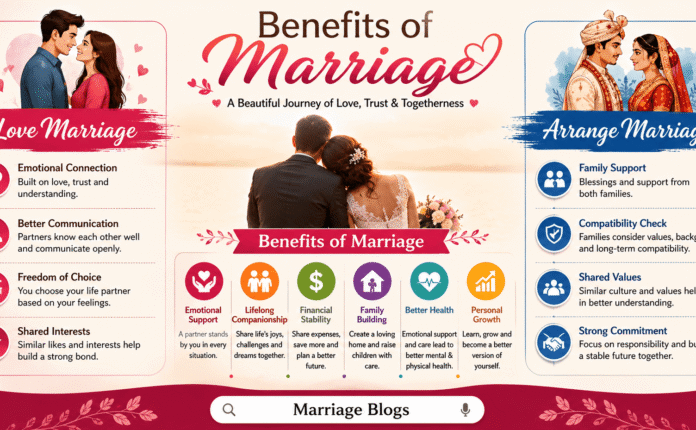
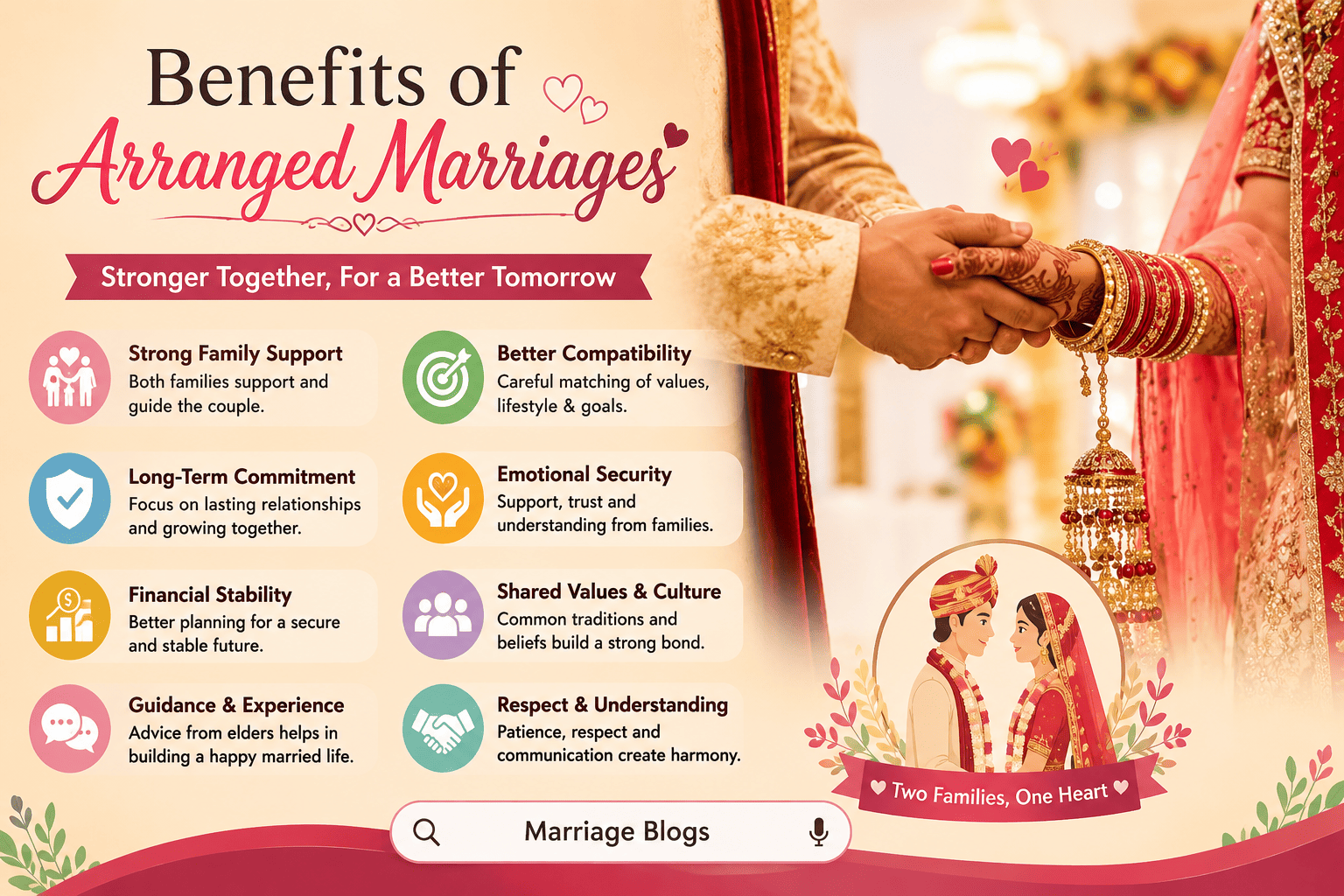
Arranged marriages have been part of many cultures for centuries. Even today, many people choose arranged marriages because they believe this system offers stability, family support, and long-term understanding between partners. Modern arranged marriages are often based on mutual agreement, where both individuals have the freedom to accept or reject the proposal.
This article explains the benefits of arranged marriages in a simple and easy way. It covers emotional, social, financial, and family-related advantages that make arranged marriages successful for many couples around the world.
Understanding Arranged Marriage
An arranged marriage is a marriage where families, relatives, or trusted matchmakers help two people meet for a possible relationship and marriage. In most modern cases, the couple gets time to know each other before making a final decision.
Arranged marriage does not always mean forced marriage. A healthy arranged marriage happens with the consent and comfort of both partners.
Main Benefits of Arranged Marriages
1. Strong Family Support
One of the biggest advantages of arranged marriages is family involvement and support.
Families often help the couple during difficult times, emotional challenges, and financial situations. Since both families are connected from the beginning, the relationship usually starts with trust and cooperation.
Benefits of family support:
- Better emotional guidance
- Help during personal problems
- Strong bonding between families
- Easier adjustment after marriage
When couples feel supported by their families, they often feel more secure and confident in their married life.
2. Better Compatibility Matching
In arranged marriages, families usually consider many important factors before suggesting a match.
These may include:
- Education
- Lifestyle
- Religious values
- Cultural background
- Financial stability
- Personality traits
This careful matching can increase compatibility between partners. Couples may find it easier to understand each other because they share similar values and life goals.
3. Long-Term Commitment
Many arranged marriages focus on long-term relationships instead of short-term attraction. Couples often enter marriage with a serious mindset and a strong sense of responsibility.
Because of this, many people believe arranged marriages encourage:
- Patience
- Respect
- Understanding
- Commitment
Partners usually work together to solve problems instead of ending the relationship quickly.
4. Lower Pressure of Finding a Partner
Finding the right partner can sometimes be stressful and emotionally exhausting. Arranged marriages can reduce this pressure because families help with the search process.
This support can save the following:
- Time
- Emotional stress
- Uncertainty
- Dating pressure
For many individuals, this creates a more comfortable and guided experience.
5. Financial Stability and Security
Families often consider financial responsibility before arranging a marriage. This can help couples build a more stable future.
Financial discussions may happen early, including the following:
- Career goals
- Income expectations
- Living arrangements
- Future planning
As a result, couples may face fewer financial surprises after marriage.
6. Respect for Cultural and Family Values
Arranged marriages often help preserve traditions, cultural values, and family connections.
For people who strongly value family traditions, arranged marriages can provide the following:
- Cultural understanding
- Shared customs
- Similar family expectations
- Strong community relationships
This shared background may reduce conflicts related to lifestyle differences.
7. Emotional Maturity in Relationships
In many arranged marriages, couples focus more on emotional understanding and practical compatibility than only physical attraction.
Over time, this can create:
- Deep friendship
- Mutual respect
- Emotional bonding
- Trust and loyalty
Many successful arranged marriages develop strong love gradually through shared experiences and daily life.
8. Shared Responsibility Between Families
In arranged marriages, families are often more involved in helping the couple build a successful life together.
This can include:
- Advice from elders
- Support during challenges
- Help with family responsibilities
- Guidance for parenting and relationships
The couple may feel less alone when handling major life decisions.
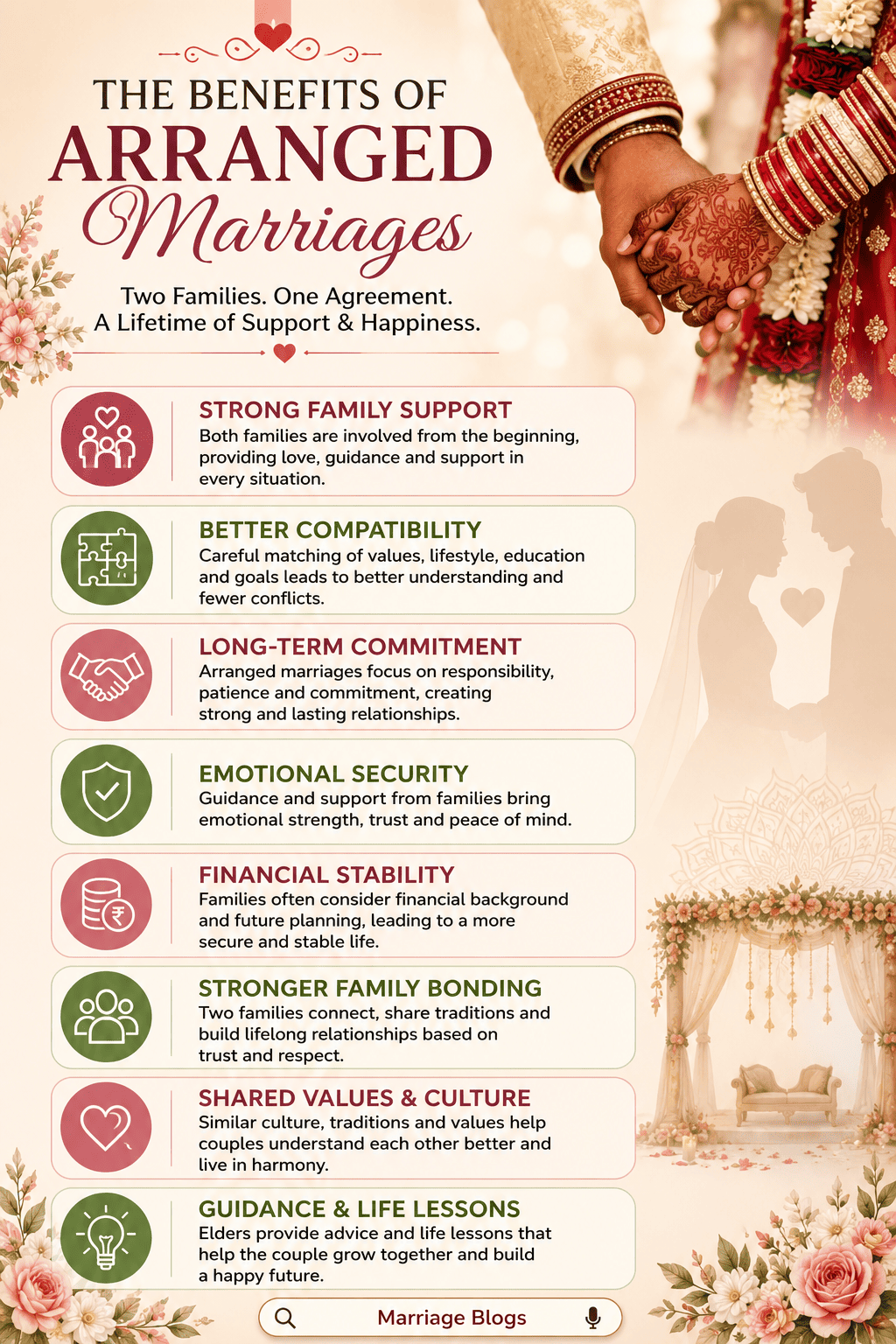
Modern Arranged Marriages vs. Traditional Arranged Marriages
Today, arranged marriages are very different from older systems in many places.
Modern arranged marriages usually allow the following:
- Personal choice
- Open communication
- Meetings before marriage
- Time to understand each other
In many cases, the final decision completely depends on the couple.
Common Misunderstandings About Arranged Marriages
“There is no love in arranged marriages.”
This is not always true. Love can grow naturally after marriage through understanding, trust, and shared experiences.
“People are forced into arranged marriages.”
Forced marriage and arranged marriage are different. A healthy arranged marriage happens only with the consent of both individuals.
“Arranged marriages are old-fashioned.”
Many educated and independent people still choose arranged marriages because they value family support and compatibility.
Challenges of Arranged Marriages
Like every type of marriage, arranged marriages also have challenges.
Some possible difficulties include:
- Limited time before marriage
- Family pressure in some situations
- Adjustment issues between partners
- Different expectations after marriage
Good communication and mutual respect are important for making any marriage successful.
Tips for a Successful Arranged Marriage
Communicate Openly
Talk honestly about goals, expectations, and future plans.
Take Time to Know Each Other
Spend time understanding personalities, habits, and values.
Respect Differences
Every person is unique. Understanding differences helps create balance.
Build Trust Slowly
Strong relationships grow with patience and consistency.
Involve Families Positively
Family support should encourage peace and understanding, not pressure.
Are Arranged Marriages Successful?
Success in marriage depends on many factors, including:
- Communication
- Respect
- Trust
- Commitment
- Emotional support
Many arranged marriages become happy and successful because both partners work together to build a stable relationship over time.
There is no single perfect way to marry. Both arranged marriages and love marriages can succeed when there is understanding and mutual care.
FAQs about Benefits of Arranged Marriages
The benefits of arranged marriages include strong family support, better compatibility, financial stability, shared values, and long-term commitment that help couples build stable relationships.
Arranged marriages are often successful because couples and families focus on responsibility, understanding, respect, communication, and long-term relationship goals instead of short-term attraction.
Yes, many arranged marriages lead to lasting relationships because partners usually enter marriage with serious commitment, patience, and support from both families.
Arranged marriages can improve family bonding because both families are involved from the beginning, creating stronger relationships, trust, and emotional support between relatives.
Yes, love can naturally grow in arranged marriages through daily understanding, trust, emotional connection, shared experiences, and mutual respect between partners over time.
The importance of arranged marriages lies in promoting family unity, cultural understanding, emotional security, and stable relationships that often support long-term social balance.
Arranged marriages may provide emotional stability because couples often receive guidance, support, and encouragement from families during personal and relationship challenges.
Arranged marriages help with compatibility by matching people based on education, values, lifestyle, family background, personality, and future goals before marriage decisions are made.
Final Thoughts
Arranged marriages continue to be an important part of many societies because they offer several benefits, including family support, compatibility, emotional stability, and long-term commitment.
Modern arranged marriages are often based on choice, respect, and mutual understanding. When both individuals are comfortable and willing, arranged marriages can lead to strong and meaningful relationships.
The success of any marriage depends less on how it begins and more on how both partners support, respect, and understand each other throughout life.