
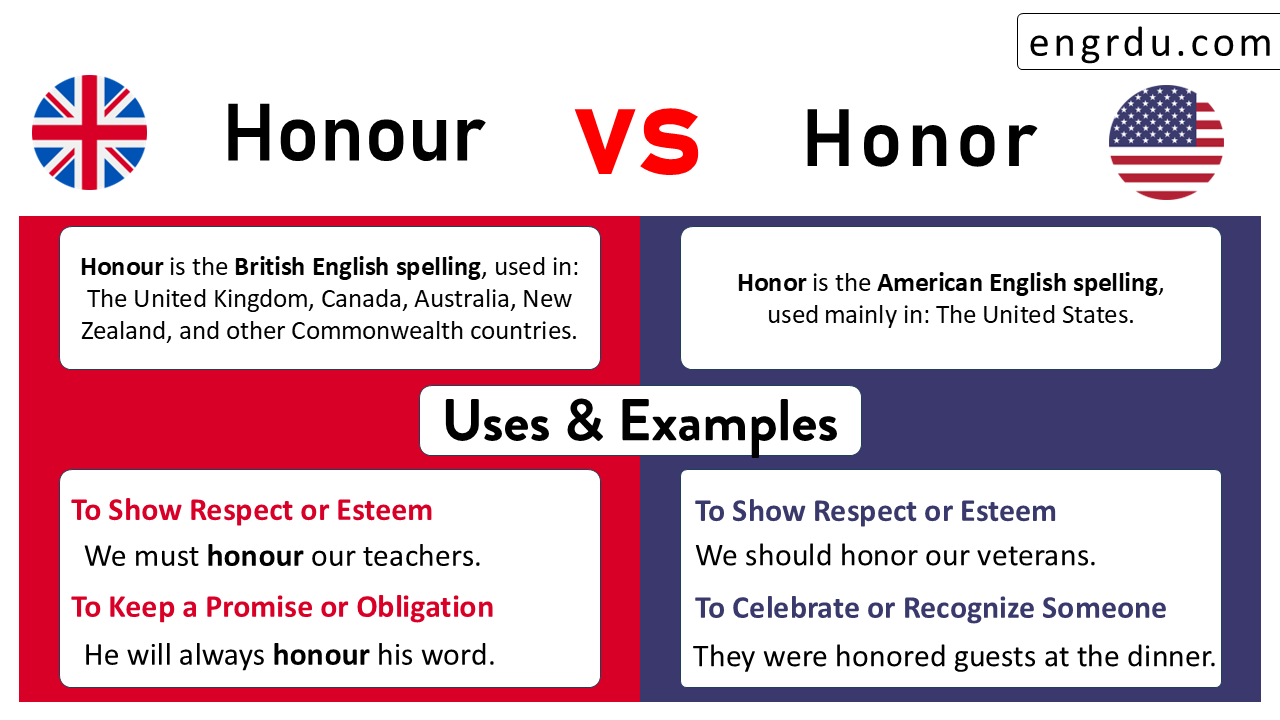

Ever noticed how the same word can look slightly different in English, like “honor” and “honour,” yet still mean exactly the same thing? This small spelling change often appears in essays, exams, and online reading, and it usually reflects American English vs British English spelling. Both forms are used to express ideas like respect, esteem, integrity, and recognition, and both can function as a noun or a verb depending on the sentence.
For example, you might say “It’s an honor to serve the community” in American English or “She received the honour of leading the ceremony” in British English, while as a verb both follow the same idea in sentences like “He honored his promise” or “We must honour our teachers.”
To read more mispronounced and misused words, explore our Confusing Words category.
What Does Honour vs Honor Mean?
The words honour and honor refer to respect, dignity, or high moral value.
They describe:
- Respect given to someone
- A moral or ethical quality
- Recognition for achievement or behavior
Example idea:
A student receiving an award is often said to be given “honour” or “honor” for achievement.
Both spellings carry the same meaning, but the usage depends on the English variety.
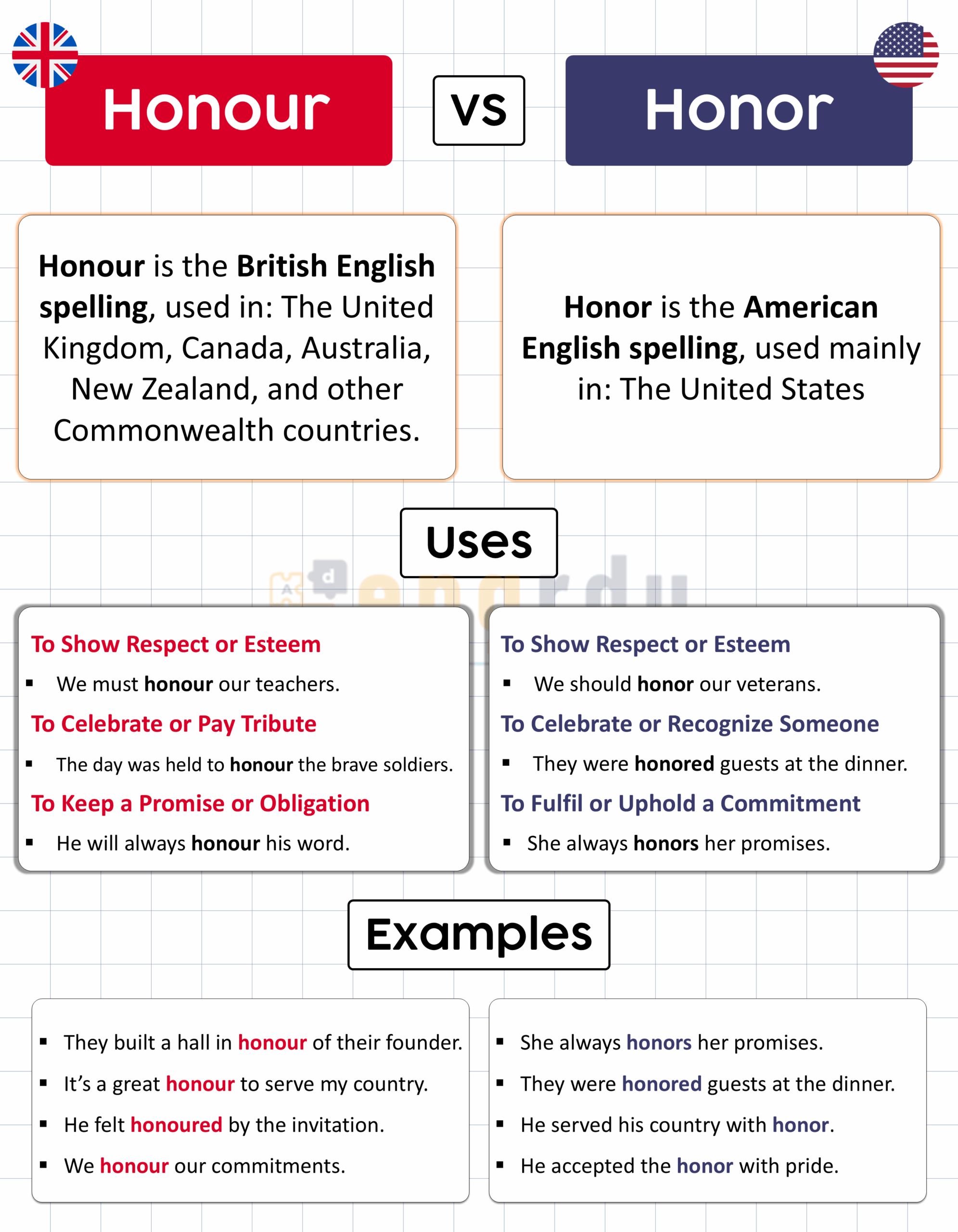
Why Are There Two Spellings?
The difference comes from historical spelling changes in English.
English evolved differently in:
- The United Kingdom
- The United States
American English simplified several word endings by removing silent letters. British English kept the older spelling style.
That’s why:
- British English keeps “u” → honour
- American English removes it → honor
This pattern appears in other words too, like:
- colour / color
- favour / favor
- behaviour / behavior
British English vs American English Usage
The spelling you choose depends on your audience or writing system.
British English
Used in:
- UK
- Australia
- New Zealand
- India (in many academic contexts)
Preferred spelling:
- honour
American English
Used in:
- United States
- Most global business communication influenced by US English
Preferred spelling:
- honor
Where Each Spelling Is Used
Different platforms and institutions follow different standards.
| Context | Preferred Spelling |
|---|---|
| UK newspapers | honour |
| US newspapers | honor |
| IELTS writing | honour |
| TOEFL writing | honor |
| British textbooks | honour |
| American websites | honor |
When to Use Honor
The word honor (American English spelling) works in two main ways: as a noun and as a verb. The meaning stays connected to respect, dignity, and recognition, but grammar changes how it functions in a sentence.
As a Noun
When honor is used as a noun, it refers to respect, privilege, or recognition someone receives.
Meaning in context:
- A feeling of respect
- A reward or recognition
- A moral value or dignity
Examples:
- It is an honor to be part of this team.
- She received an honor for her volunteer work.
- Serving your country is considered a great honor.
- He spoke with honor about his teachers.
Everyday conversation:
- “It’s such an honor meeting you in person!”
- “Winning this award is a big honor for me.”
As a Verb
When honor is used as a verb, it means to show respect, fulfill a promise, or follow a rule.
Meaning in context:
- To respect someone or something
- To keep a promise or agreement
- To follow traditions or commitments
Examples:
- We honor our parents by listening to them.
- The company honored its agreement with the employees.
- They honored the winner with a special ceremony.
- She always honors her word.
Everyday conversation:
- “I’ll honor my promise to help you.”
- “They honored her by naming the library after her.”
When to Use Honour
The word honour (British English spelling) is used in exactly the same way as honor. The only difference is spelling, not meaning or grammar.
So whether it is:
- noun → honour
- verb → honour
The usage rules stay identical to American English.
As a Noun (Honour)
Examples in real-life style sentences:
- It is an honour to attend this ceremony.
- She felt great honour representing her school.
- The medal is a symbol of honour and respect.
Everyday conversation:
- “It’s an honour to meet your family.”
- “Getting this job feels like a huge honour.”
As a Verb (Honour)
Examples:
- We honour our traditions during festivals.
- The school honoured the best students at graduation.
- They honoured the agreement without delay.
Everyday conversation:
- “We always honour our elders in our culture.”
- “I will honour my commitment to you.”
Examples of Honour and Honor in Sentences
Here are natural sentence examples for both spellings:
British English (Honour)
- It is an honour to meet the principal.
- She received an honour for her community work.
- Students showed great honour during the ceremony.
American English (Honor)
- It is an honor to meet the president.
- He was given an honor for his research.
- They acted with honor during the competition.
Common Learner Mistakes
Many learners mix both spellings in one text. This can make writing look inconsistent.
Typical mistakes include:
- Using “honour” in one paragraph and “honor” in another
- Copying spelling from different sources without checking style
- Switching between UK and US English in exams
Tip: Stick to one spelling system throughout your writing.
Comparison Table
| Feature | Honour | Honor |
|---|---|---|
| English type | British English | American English |
| Letter difference | Includes “u” | No “u” |
| Meaning | Respect, dignity | Respect, dignity |
| Usage region | UK, Commonwealth | USA |
| Writing style | Traditional spelling | Simplified spelling |
Trick to Remember the Difference
Here are memory tips that help you avoid confusion:
- “U” in Honour reminds you of UK
- “No U” in Honor matches US spelling
- Think: British English keeps extra letters
- Think: American English prefers shorter forms
These patterns appear across many English words, not just this one.
FAQs about Honor and Honour
1. What is the difference between Honour vs Honor?
Both words mean respect or dignity. “Honour” is British English, while “honor” is American English spelling.
2. Is honour correct in English?
Yes, “honour” is correct in British English and used in the UK, India, and other Commonwealth regions.
3. Is honor correct in English writing?
Yes, “honor” is correct in American English and widely used in the United States.
4. Do honour and honor have different meanings?
No, both spellings share the same meaning. The difference is only in regional spelling conventions.
5. Which spelling should I use in exams?
Use the spelling style required by the exam board, such as British English for IELTS and American English for TOEFL.
6. Why does American English remove the “u”?
American English simplified spelling to make words shorter and more consistent across written language.
7. Can I mix honour and honor in one text?
It is not recommended. Mixing both spellings can reduce clarity and consistency in writing.
8. Are there other words like honour vs honor?
Yes, examples include colour/color, favour/favor, and behaviour/behavior, which follow the same pattern.
Read More


Leave a Comment