A common noun is a general name for a person, place, thing, or idea, such as teacher, city, or book. In this Grammar lesson, learning common nouns helps you speak, write, and understand English more clearly. Using them correctly makes your sentences complete and meaningful. In this blog post, you will explore the definition, uses, and examples of common nouns to practice and use confidently in everyday English.
Common Nouns Definition and Examples
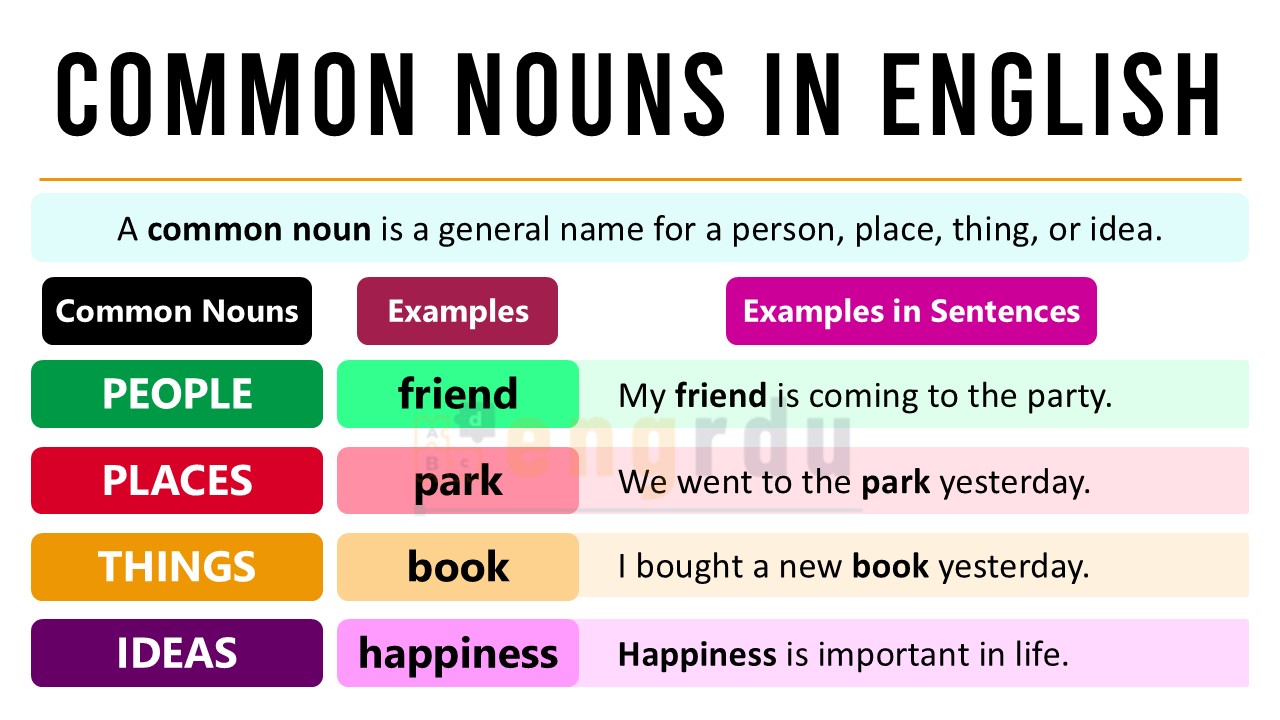
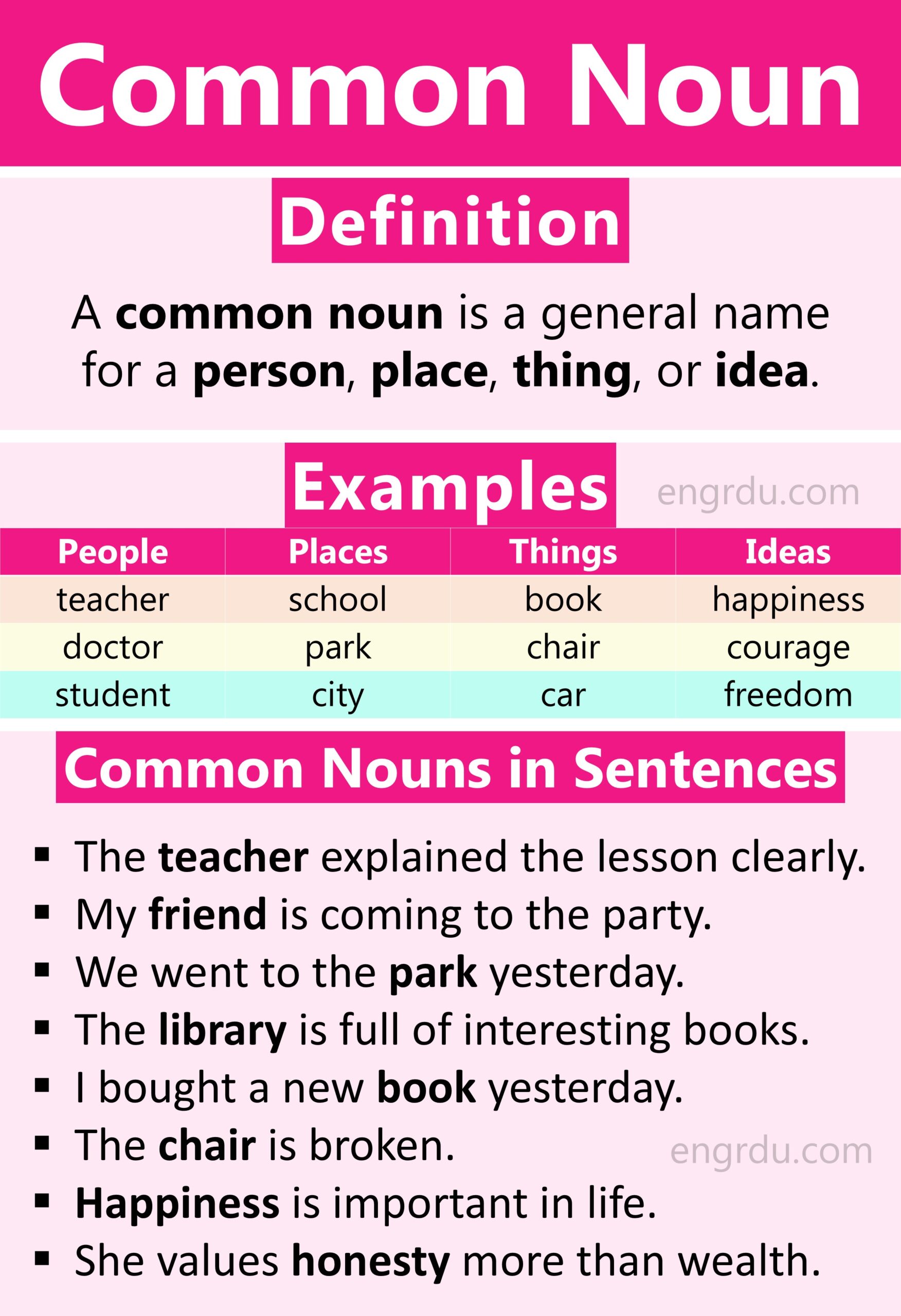
A common noun is a general name for a person, place, thing, or idea. Unlike proper nouns, which name specific people or places (like John or Paris), common nouns are general and not capitalized unless they start a sentence.
Examples:
- People: teacher, doctor, student
- Places: school, park, city
- Things: book, chair, car
- Ideas: happiness, courage, freedom
Common nouns do not refer to one unique entity but to a general class of objects, people, or concepts.
Rules and Structure of Common Nouns
Here are the basic rules to follow:
| Rule | Explanation | Examples |
|---|---|---|
| Capitalization | Do not capitalize common nouns unless they begin a sentence. | dog, city, teacher |
| Singular and Plural | Common nouns can be singular or plural. | Singular: cat, Plural: cats |
| Countable vs Uncountable | Some nouns can be counted, others cannot. | Countable: apple/apples, Uncountable: water, music |
| Articles | Common nouns often use a, an, or the. | a book, an idea, the city |
Always check if your noun is countable or uncountable, as it affects articles and verbs in your sentence.
Common Mistakes to Avoid
1. Using capital letters incorrectly
- Wrong: I saw a Dog in the park.
- Correct: I saw a dog in the park.
2. Confusing singular and plural forms
- Wrong: She has three cat.
- Correct: She has three cats.
3. Mixing countable and uncountable nouns with articles
- Wrong: I need a water.
- Correct: I need water.
4. Using proper nouns as common nouns
- Wrong: I visited London city.
- Correct: I visited the city of London.
Examples of Common Nouns in Sentences
A. People
- The teacher explained the lesson clearly.
- My friend is coming to the party.
B. Places
- We went to the park yesterday.
- The library is full of interesting books.
C. Things
- I bought a new book yesterday.
- The chair is broken.
D. Ideas
- Happiness is important in life.
- She values honesty more than wealth.
Practice Exercises
Exercise 1: Identify the common nouns in the sentences:
- The boy is playing in the garden.
- Music brings joy to many people.
- I bought a new laptop yesterday.
Exercise 2: Correct the mistakes in these sentences:
- She has three Dog.
- I need a water to drink.
- The Teacher is very kind.
Answer Key:
- Exercise 1: boy, garden, music, people, laptop
- Exercise 2: She has three dogs. / I need water to drink. / The teacher is very kind.
FAQs About Common Nouns
What is the difference between common nouns and proper nouns?
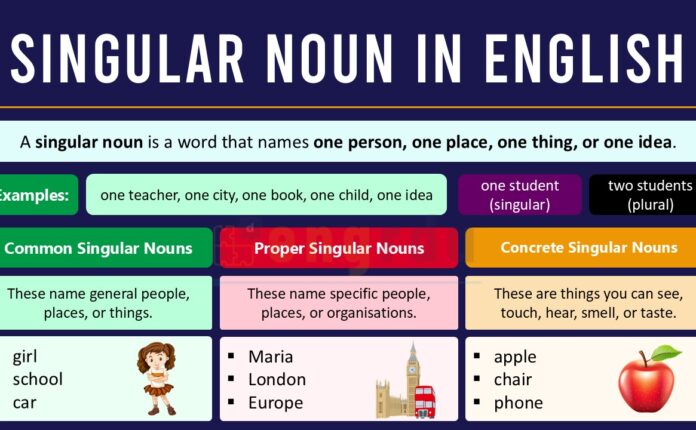
Common nouns name general people, places, or things, while proper nouns name specific ones. Example: city (common), London (proper).
Can common nouns be uncountable?
Yes. Words like water, advice, and music are common nouns but cannot be counted.
Do common nouns always need an article?
Not always. Articles depend on context: I saw a dog vs Dogs are friendly.
Are abstract ideas considered common nouns?
Yes. Abstract ideas like freedom, courage, or happiness are common nouns.
Can common nouns be pluralized?
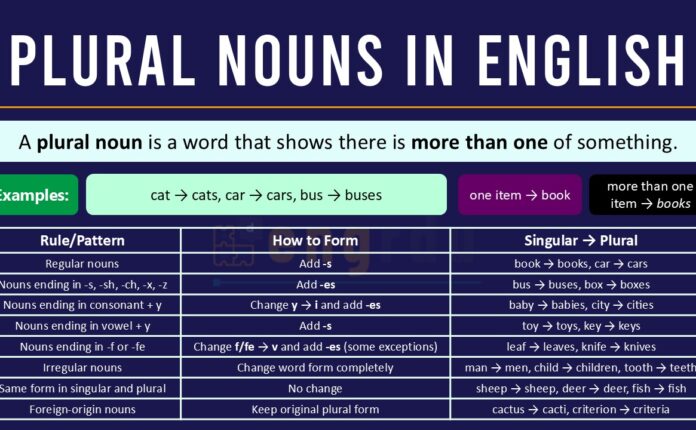
Most common nouns can be pluralized. Example: book/books, city/cities.
Conclusion
Common nouns are the building blocks of English sentences. By understanding their definition, rules, and correct usage, you can improve both your writing and speaking skills. Regular practice, reviewing mistakes, and observing nouns in real-life contexts will make you confident in using them accurately.
Start noticing common nouns around you, write simple sentences, and gradually expand your vocabulary. Mastery of common nouns is a strong step toward fluent English.
Read More