
Animals make different sounds, and learning them helps you understand and describe nature better. In this Vocabulary lesson, knowing animal sounds improves your speaking, listening, and reading skills in English. Recognizing these sounds also makes your communication about animals more lively and accurate. In this blog post, you will explore 100 animal sounds in English with pictures to practice, remember, and use them confidently.
What Are Animal Sounds?
Animal sounds are the noises or voices made by animals. Each animal has its unique sound, which helps people identify it. For example, dogs bark, cats meow, and cows moo.
- Dog → barks when it’s excited or protecting something.
- Cat → meows when it wants food or attention.
- Cow → moos to call its calf or other cows.

Why Learn Animal Sounds?
Learning animal sounds helps in:
- Improving vocabulary for describing nature.
- Understanding English stories and fables better.
- Building strong language memory through real-life examples.
Animal Sounds A to Z List
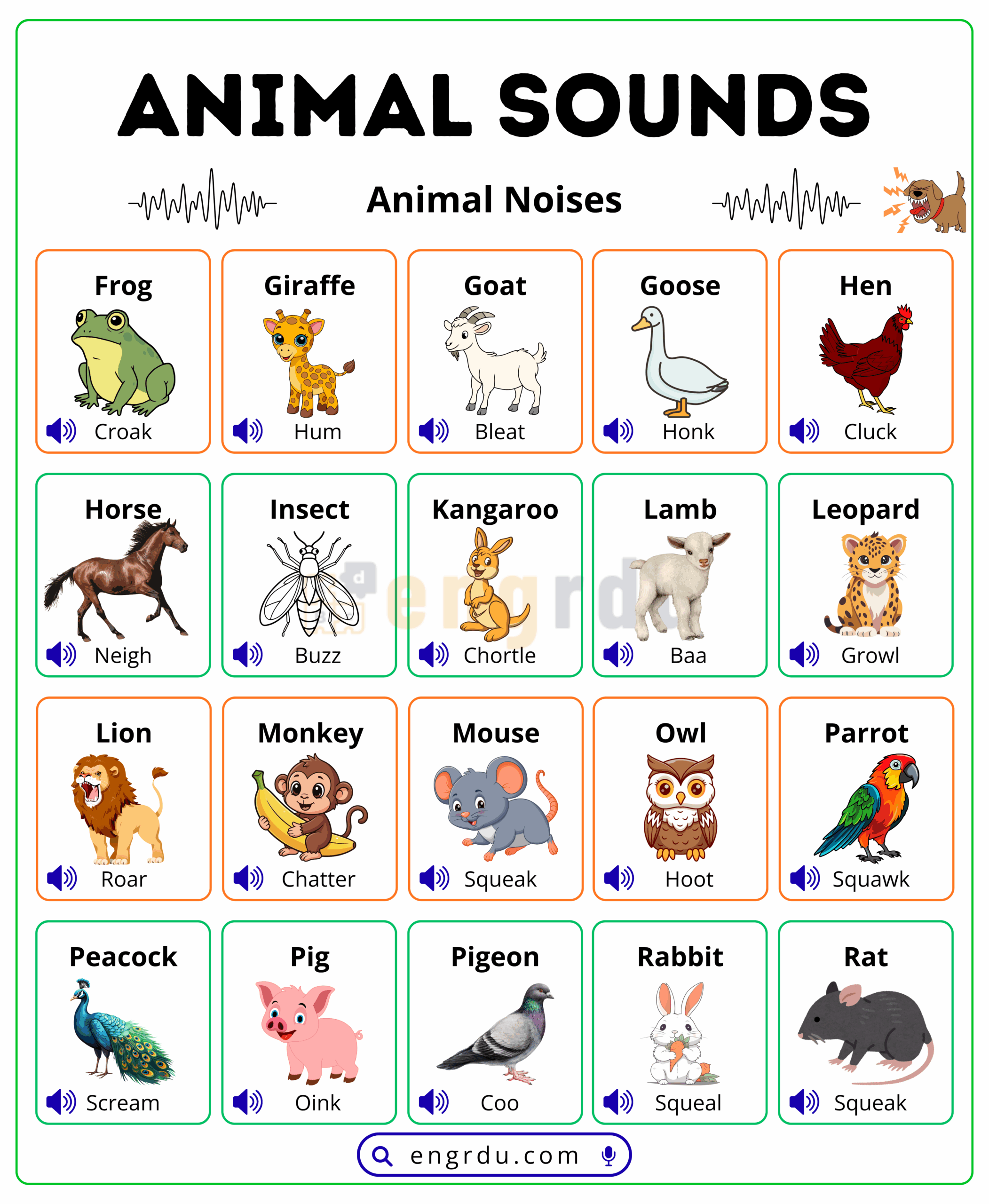
| Animal Name | Sound Name |
|---|---|
| Ant | Rustle |
| Bat | Screech |
| Bear | Growl |
| Bee | Buzz |
| Bird | Chirp |
| Buffalo | Bellow |
| Camel | Grunt |
| Cat | Meow |
| Chicken | Cluck |
| Cow | Moo |
| Crow | Caw |
| Deer | Bleat |
| Dog | Bark |
| Dolphin | Click |
| Donkey | Bray |
| Duck | Quack |
| Eagle | Screech |
| Elephant | Trumpet |
| Fish | Gulp |
| Fly | Buzz |
| Frog | Croak |
| Giraffe | Hum |
| Goat | Bleat |
| Goose | Honk |
| Hen | Cluck |
| Horse | Neigh |
| Insect | Buzz |
| Kangaroo | Chortle |
| Lamb | Baa |
| Leopard | Growl |
| Lion | Roar |
| Monkey | Chatter |
| Mouse | Squeak |
| Owl | Hoot |
| Parrot | Squawk |
| Peacock | Scream |
| Pig | Oink |
| Pigeon | Coo |
| Rabbit | Squeal |
| Rat | Squeak |
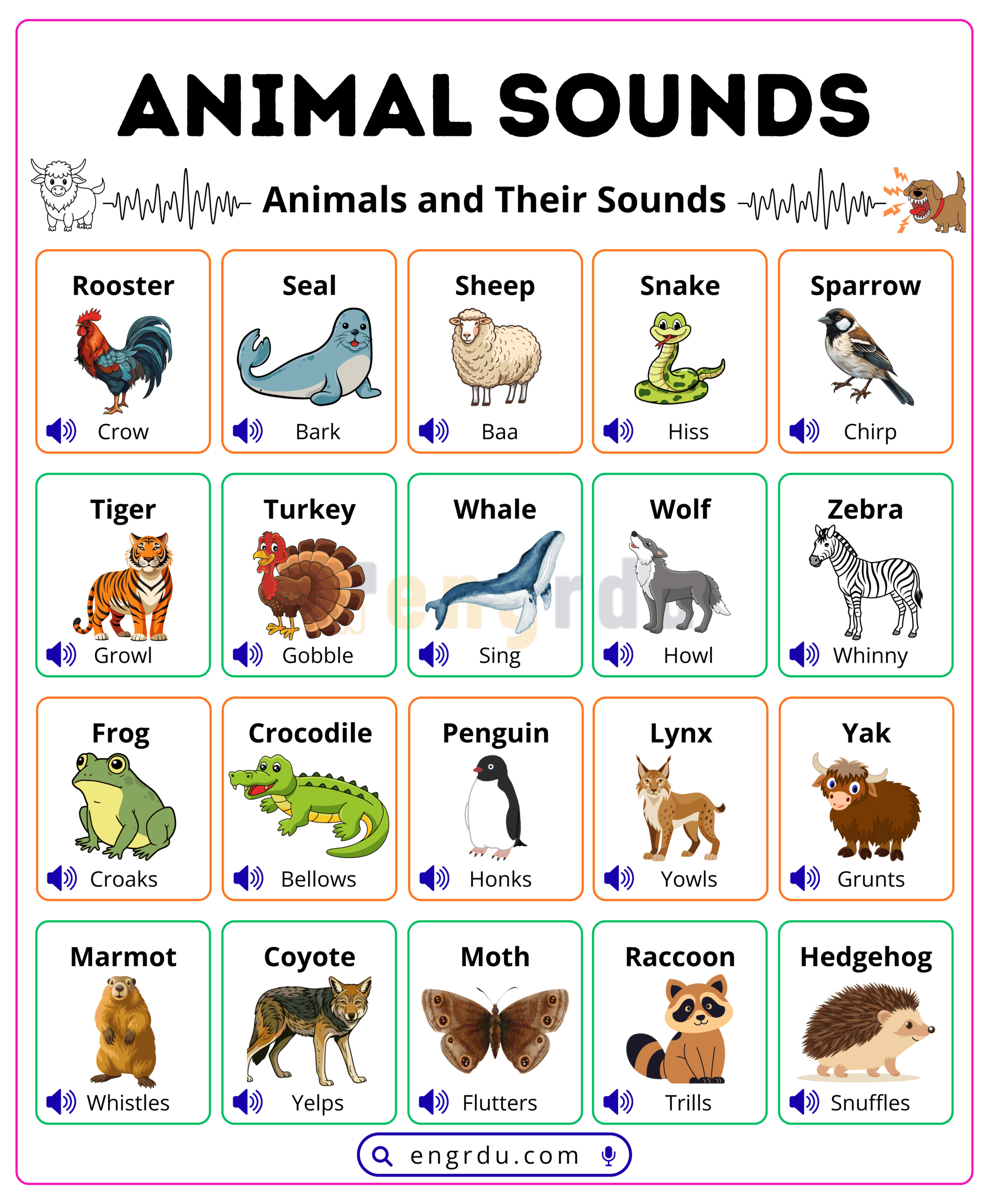
| Rooster | Crow |
| Seal | Bark |
| Sheep | Baa |
| Snake | Hiss |
| Sparrow | Chirp |
| Tiger | Growl |
| Turkey | Gobble |
| Whale | Sing |
| Wolf | Howl |
| Zebra | Whinny |
Farm Animals and Their Sounds
Farm animals are raised for food, work, or milk. Their sounds are familiar in rural areas.
- Cow – Moos: Cows moo when they are hungry or calling calves.
- Goat – Bleats: Goats bleat to communicate with others.
- Sheep – Bleats: Sheep bleat to stay close to the flock.
- Horse – Neighs: Horses neigh when they see other horses.
- Donkey – Brays: Donkeys bray loudly on farms.
- Pig – Oinks / Grunts: Pigs grunt or oink while eating.
- Duck – Quacks: Ducks quack near ponds or rivers.
- Hen – Clucks: Hens cluck when they lay eggs.
- Rooster – Crows: Roosters crow to mark the start of the day.
- Turkey – Gobbles: Turkeys gobble during feeding or gatherings.
- Rabbit – Squeaks: Rabbits squeak softly when afraid or curious.
Wild Animals and Their Sounds
Wild animals live in forests, jungles, or mountains. Their sounds help them communicate, warn, or hunt.
- Lion – Roars: Lions roar to mark their territory or call their pride.
- Tiger – Growls: Tigers growl to show anger or power.
- Elephant – Trumpets: Elephants trumpet through their trunks to express excitement or warning.
- Wolf – Howls: Wolves howl to call their pack or signal danger.
- Bear – Growls: Bears growl when angry or protecting their cubs.
- Fox – Yelps: Foxes yelp to communicate with their mates.
- Monkey – Chatters: Monkeys chatter while playing or warning others.
- Deer – Bells: Deer make soft bell-like sounds to communicate.
- Leopard – Roars: Leopards roar to show dominance.
- Zebra – Whinnies: Zebras make high-pitched whinnying sounds to contact other zebras.
- Giraffe – Bleats: Giraffes sometimes bleat softly to communicate with their young.
Pet Animals and Their Voices
Pet animals are tamed animals kept for friendship, safety, or joy. Their sounds are familiar and friendly.
- Dog – Barks: Dogs bark to protect or play.
- Cat – Meows: Cats meow softly for attention.
- Rabbit – Squeaks: Rabbits squeak when curious or afraid.
- Hamster – Squeaks: Hamsters squeak softly when excited.
- Parrot – Talks / Squawks: Parrots talk and squawk to communicate.
- Canary – Sings: Canaries sing beautiful, light songs.
- Budgie – Chirps: Budgies chirp cheerfully in cages.
- Fish – Blubs (silent): Fish make quiet blub sounds while breathing underwater.
- Turtle – Hisses: Turtles hiss when they pull into their shell.
- Guinea Pig – Whistles: Guinea pigs whistle when happy or hungry.
- Puppy – Whines: Puppies whine when they miss their owners.
Birds and Their Sounds
Birds use their voices to sing, warn, and attract mates. Each bird has its own unique sound.
- Crow – Caws: Crows caw loudly to call other crows or warn of danger.
- Sparrow – Chirps: Sparrows chirp sweetly in the morning.
- Parrot – Talks / Squawks: Parrots can imitate words and squawk when excited.
- Owl – Hoots: Owls hoot at night while hunting.
- Peacock – Screams: Peacocks scream when they see others or show off.
- Duck – Quacks: Ducks quack while swimming or calling their ducklings.
- Pigeon – Cooes: Pigeons coo softly to attract their mates.
- Eagle – Screeches: Eagles screech loudly while flying or hunting.
- Hen – Clucks: Hens cluck around their chicks.
- Rooster – Crows: Roosters crow to greet the morning.
- Turkey – Gobbles: Turkeys gobble when excited or calling others.
Sea Animals and Their Sounds
Sea animals communicate underwater using special sounds like clicks, whistles, and calls.
- Dolphin – Clicks / Whistles: Dolphins make clicking and whistling sounds to communicate and navigate.
- Whale – Sings: Whales sing long, deep songs to talk to other whales far away.
- Seal – Barks: Seals bark to attract mates or warn others.
- Sea Lion – Roars: Sea lions roar on beaches to show strength.
- Walrus – Grunts: Walruses grunt while resting or fighting.
- Fish – Grunts / Croaks: Some fish make soft grunting or croaking sounds.
- Shrimp – Clicks: Shrimps make clicking noises with their claws.
- Crab – Scratches: Crabs scratch or make clicking sounds with their shells.
- Penguin – Honks: Penguins honk to find their partners among large groups.
- Otter – Whistles: Otters whistle softly when playing or warning.
Domestic Animals and Their Sounds
Domestic animals are those that live with humans or near homes. They are often used for work, food, or companionship.
- Dog – Barks: Dogs bark when they are excited, alert, or protecting their owner.
- Cat – Meows: Cats meow to get attention or food.
- Cow – Moos: Cows moo to communicate with other cows or farmers.
- Goat – Bleats: Goats bleat when hungry or calling their young.
- Sheep – Bleats: Sheep bleat softly to stay close to their flock.
- Horse – Neighs: Horses neigh to call other horses or show emotion.
- Pig – Grunts: Pigs grunt when they eat or feel relaxed.
- Donkey – Brays: Donkeys bray loudly to communicate over long distances.
- Camel – Grunts: Camels grunt when tired or annoyed.
- Buffalo – Bellows: Buffalos bellow to warn or call their group.
- Hen – Clucks: Hens cluck when they lay eggs or gather chicks.
- Rooster – Crows: Roosters crow early in the morning.
Insects and Their Sounds
Insects make small, sharp, or buzzing sounds that we often hear in nature.
- Bee – Buzzes: Bees buzz while flying or collecting nectar.
- Mosquito – Whines: Mosquitoes whine when flying close to people.
- Cricket – Chirps: Crickets chirp at night to attract mates.
- Fly – Buzzes: Flies buzz around food or people.
- Grasshopper – Chirps: Grasshoppers chirp by rubbing their legs together.
- Cicada – Sings: Cicadas sing loudly during summer days.
- Butterfly – Flutters: Butterflies make soft fluttering sounds with their wings.
- Moth – Flutters: Moths flutter quietly around lights.
- Beetle – Clicks: Beetles click when moving or disturbed.
- Wasp – Buzzes: Wasps buzz while flying or guarding their nest.
- Ant – Rustles: Ants rustle softly when moving in groups.
Desert Animals and Their Sounds
Desert animals live in hot, dry areas and make strong or soft sounds to communicate across wide open spaces.
- Camel – Grunts: Camels grunt or groan when tired or burdened.
- Lizard – Hisses: Lizards hiss quietly when disturbed.
- Snake – Hisses: Desert snakes hiss as a warning.
- Fox (Fennec) – Whines: Fennec foxes whine or squeak softly.
- Scorpion – Clicks: Scorpions click their claws to warn predators.
- Ostrich – Booms: Ostriches make booming or hissing sounds.
- Eagle – Screeches: Eagles screech high above the sand dunes.
- Hyena – Laughs: Hyenas make laughing or giggling sounds while feeding.
- Coyote – Howls: Coyotes howl to communicate with their pack.
- Jackal – Yelps: Jackals yelp and bark at night.
- Meerkat – Chirps: Meerkats chirp to alert others of danger.

Arctic Animals and Their Sounds
Arctic animals live in very cold regions and use low or loud sounds to communicate over icy distances.
- Polar Bear – Growls: Polar bears growl to show strength or warn others.
- Seal – Barks: Seals bark loudly on ice or beaches.
- Walrus – Grunts: Walruses grunt or snort while resting.
- Penguin – Honks: Penguins honk to find their mates among thousands.
- Whale – Sings: Whales sing long, deep sounds that travel far underwater.
- Dolphin – Clicks: Dolphins make clicking and whistling sounds to talk and navigate.
- Sea Lion – Roars: Sea lions roar to show power or attract partners.
- Arctic Fox – Whines: Arctic foxes whine softly for communication.
- Snowy Owl – Hoots: Snowy owls hoot gently across snowy fields.
- Narwhal – Whistles: Narwhals whistle and click under icy waters.
- Seal Pup – Cries: Seal pups cry when calling their mothers.
Farmyard Birds and Their Sounds
Farmyard birds are common on farms and produce eggs or meat. They are active and noisy around barns.
- Hen – Clucks: Hens cluck gently after laying eggs.
- Rooster – Crows: Roosters crow to greet the morning.
- Duck – Quacks: Ducks quack while swimming.
- Goose – Honks: Geese honk loudly when disturbed.
- Turkey – Gobbles: Turkeys gobble during gatherings.
- Pigeon – Cooes: Pigeons coo to attract their mates.
- Peacock – Screams: Peacocks scream loudly during mating season.
- Ostrich – Booms: Ostriches boom to call each other.
- Guinea Fowl – Cackles: Guinea fowls cackle in groups.
- Crow – Caws: Crows caw to signal others.
- Swan – Trumpets: Swans trumpet with their long necks.
Nocturnal Animals and Their Sounds
Nocturnal animals are active at night. Their sounds are often heard in quiet or dark places.
- Owl – Hoots: Owls hoot softly while hunting.
- Bat – Screeches: Bats screech using sound waves to move in the dark.
- Cricket – Chirps: Crickets chirp during silent nights.
- Frog – Croaks: Frogs croak near ponds after sunset.
- Cat – Meows: Cats meow softly at night.
- Fox – Screams: Foxes scream in the distance.
- Moth – Flutters: Moths flutter around lights.
- Wolf – Howls: Wolves howl under the moon.
- Raccoon – Trills: Raccoons make trilling or chittering sounds.
- Hedgehog – Snuffles: Hedgehogs snuffle while searching for food.
- Coyote – Yelps: Coyotes yelp in the dark wilderness.
Aquatic and Amphibian Animals
Aquatic animals live in or near water and make unique natural sounds underwater or on land.
- Frog – Croaks: Frogs croak loudly during rain.
- Toad – Trills: Toads trill softly in ponds.
- Fish – Grunts: Some fish make low grunting sounds.
- Dolphin – Whistles: Dolphins whistle to talk underwater.
- Whale – Sings: Whales sing deep songs across oceans.
- Seal – Barks: Seals bark playfully on rocks.
- Otter – Whistles: Otters whistle when happy.
- Crocodile – Bellows: Crocodiles bellow during mating.
- Alligator – Roars: Alligators roar near water banks.
- Penguin – Honks: Penguins honk to call their chicks.
- Duck – Quacks: Ducks quack gently near ponds.
Animals That Produce No Sound
Some animals are naturally silent. They do not have vocal cords or sound organs, so they cannot make any clear noise like barking, roaring, or chirping.
Giraffe – Silent Communication:
Giraffes do not roar or make noise. They use body language and low-frequency vibrations that humans cannot hear.
Snail – Soundless Movement:
Snails move slowly and silently. They communicate by touch and chemical scents called pheromones.
Jellyfish – No Sound:
Jellyfish are completely soundless because they have no brain, lungs, or vocal cords. They send signals by pulsing or glowing.
Worm – Silent Underground:
Worms make no sound at all. They sense vibrations in the soil to detect food or danger.
Turtle – Very Quiet Reptile:
Turtles rarely make sounds. They sometimes hiss softly when frightened but mainly use touch or movement.
Starfish – Silent Sea Animal:
Starfish are completely quiet. They have no organs to make sound and communicate through chemical signals.
Butterfly – No Vocal Sound:
Butterflies are silent while flying. They use wing colours and patterns to attract mates or warn predators.
Octopus – Colour Communication:
Octopuses make no sound. They change colour and shape to express feelings or hide from enemies.
Sea Urchin – Soundless Creature:
Sea urchins are quiet ocean animals. They use touch and movement to sense their surroundings.
Crab – Mostly Silent:
Most crabs do not make sounds, though some click their claws. They mainly communicate with body gestures.
Sloth – Quiet Mammal:
Sloths move very slowly and rarely make any sound. They use scent and slow actions to connect with others.
Seahorse – Silent Swimmer:
Seahorses live in the sea and make no sound. They use vibrations and body movement to interact.
Ant – No Sound:
Ants are silent insects. They talk using pheromones (chemical signals) and touch their antennae.
Squid – Soundless Underwater:
Squids swim quietly and use colour changes or ink clouds to communicate.
Snake (Some Species) – Silent Reptiles:
Many snakes are silent because they have no vocal cords. They sense vibrations and heat instead of using sound.

Learning animal sounds in English helps you understand daily conversations, stories, and nature better. It improves your vocabulary, listening skills, and makes English learning more natural.
Animal Sounds PDF
Get a free PDF book of 100 A to Z Animals and their Sounds name in English:
FAQs about Animals and Their Sounds
What are the sounds of all animals from A to Z?
The sounds of animals from A to Z include words like Ant – rustle, Bear – growl, Cat – meow, Dog – bark, Elephant – trumpet, Lion – roar, Sheep – baa, and Wolf – howl. Each animal has a unique sound that helps it communicate. You can learn the complete A to Z list of animal sounds in English to improve your vocabulary and pronunciation.
Which animal sound is called a roar?
A roar is the sound made by large wild animals like lions, tigers, and bears. It is a deep, loud sound used to show power or warn others.
What animal sounds like a woman screaming?
Some wild animals, especially foxes, cougars, and peacocks, make noises that sound like a woman screaming. The red fox is most known for this — its scream or shriek is used to call mates or warn others. This sound can be surprising at night because it closely resembles a human scream.
What is the sound of a cow called?
A cow makes a sound called a “moo.” It’s a gentle, long sound that cows use to call their calves or express hunger.
What is the bull sound called?
A bull usually bellows or moos loudly. The word bellow means a deep, roaring sound made to show anger or call other cattle. For example:
The bull bellowed when it saw another bull nearby.
Both bulls and cows can moo, but the bull’s sound is deeper and stronger.
What sound does a sheep make?
A sheep makes a sound called a “bleat.” It is a soft baaing sound used to call other sheep or lambs.
What is the animal sound for kids?
Animal sounds for kids are simple words used to help children learn about animals. For example:
Dog – bark
Cat – meow
Cow – moo
Duck – quack
Sheep – baa
These sounds make learning fun and easy for children, especially when used in songs or stories.
What sound does a cat make?
A cat makes different sounds like meow, purr, hiss, or growl. The meow is used to talk to humans, while purring shows comfort or happiness.
What sound does a fox make?
A fox makes a sharp, high-pitched sound called a “scream” or “howl.” It sounds like a loud cry or yelp, especially at night. Foxes use this sound to communicate and mark territory.
Read More