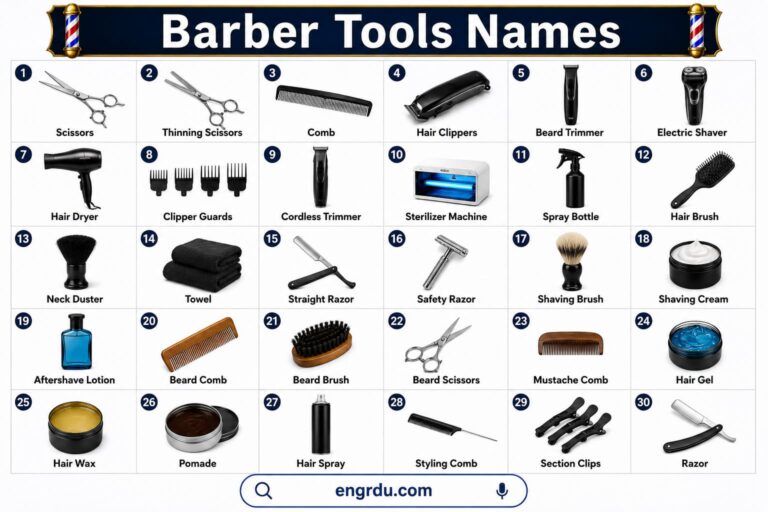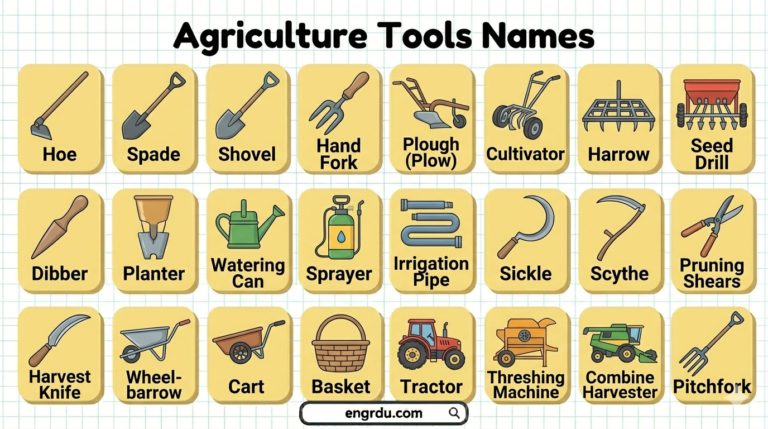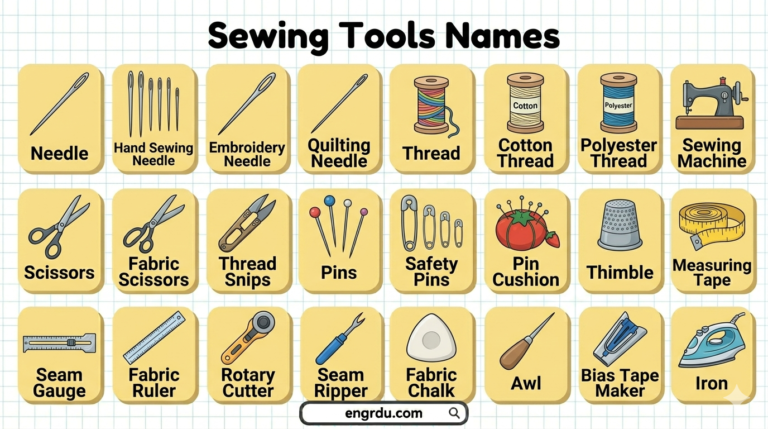
Painting tools help people put color on paper, walls, canvas, wood, and many other surfaces. Each tool has its own use. Some tools spread paint, some mix colors, and some help make lines, shapes, or small details. This lesson teaches painting tools names and uses in English in a simple way, with picture ideas to make each word easy to remember. Learners can use these words in art class, at home, or while talking about painting work. Common painting tools include paintbrush, paint roller, and palette.
What are Painting Tools?
Painting tools are the items we use to paint, color, and create art. Common tools include a brush, roller, palette, easel, and paint tray. Each tool has a special use and helps us paint easily and neatly.
Common Painting Tools Names and Uses
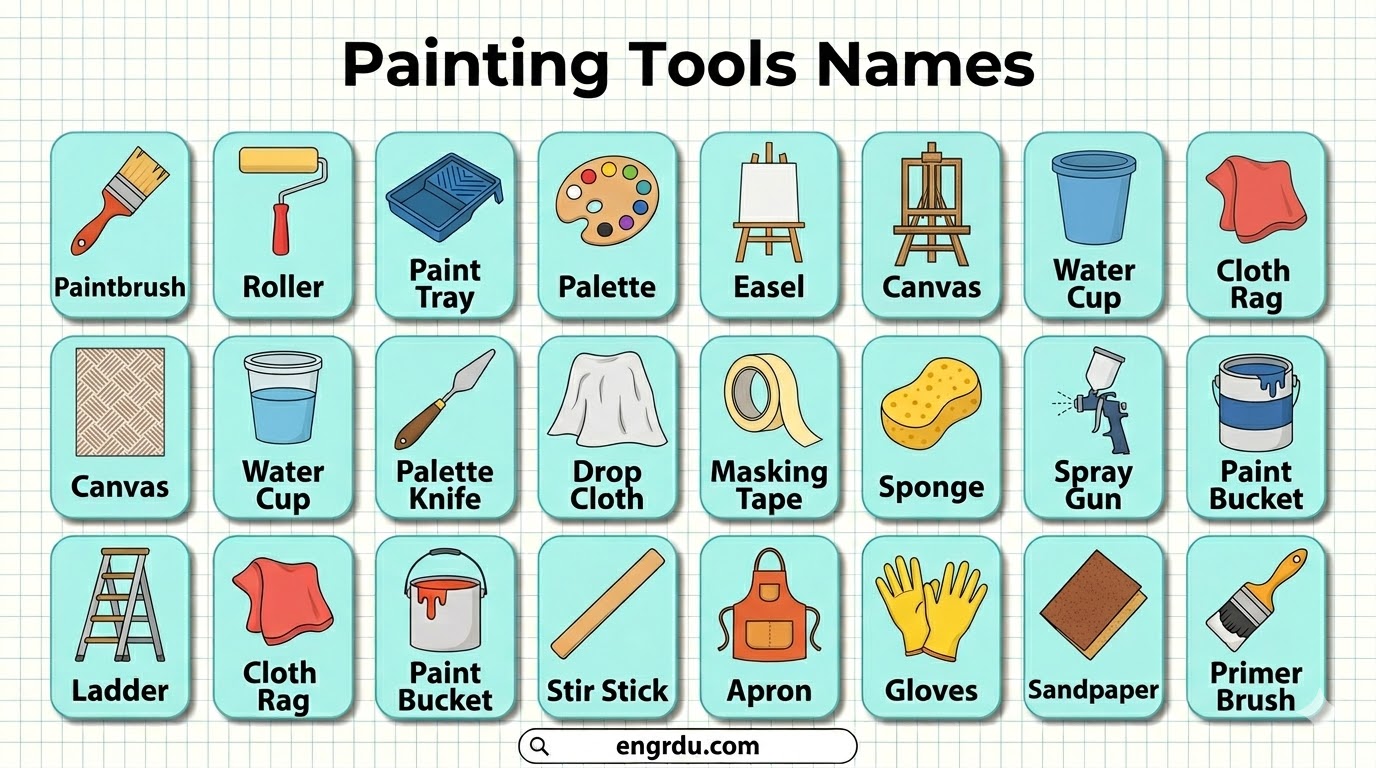
Here are 20 important painting tools with uses and pictures:
- Paintbrush – Used to apply paint on a surface
- Roller – Used for painting large areas like walls
- Paint Tray – Holds paint for easy use with a roller
- Palette – Used to mix different colors
- Easel – Holds the canvas while painting
- Canvas – A cloth surface for painting
- Water Cup – Used to clean brushes
- Palette Knife – Used to mix or spread thick paint
- Drop Cloth – Protects the floor from paint
- Masking Tape – Covers edges for clean lines
- Sponge – Creates special textures
- Spray Gun – Sprays paint evenly
- Paint Bucket – Stores paint
- Ladder – Helps reach high places
- Cloth Rag – Cleans spills or brushes
- Stir Stick – Mixes paint in a container
- Apron – Protects clothes
- Gloves – Protect hands
- Sandpaper – Smooths surfaces before painting
- Primer Brush – Applies base coat before painting
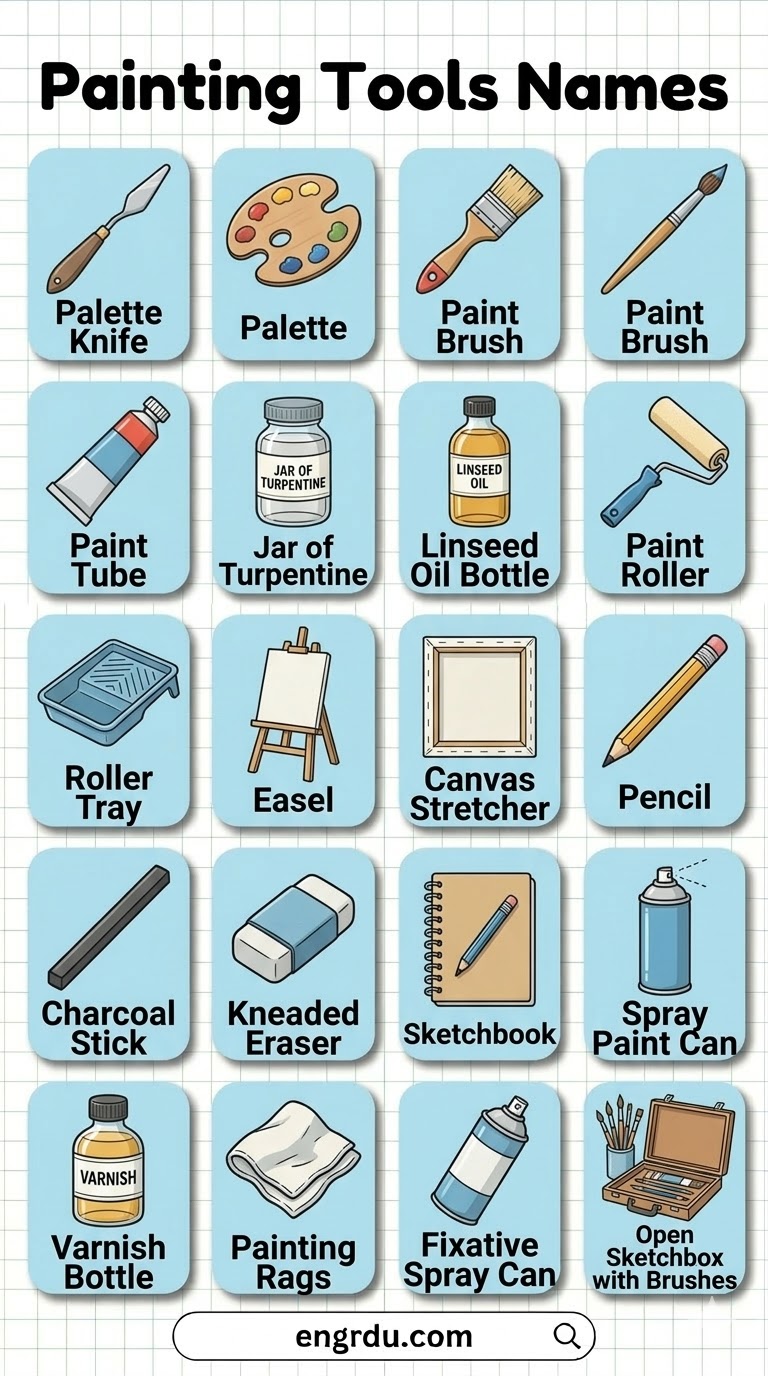
Types of Painting Tools with Names
1. Basic Tools
These are used by beginners:
- Brush
- Palette
- Canvas
- Water cup
2. Wall Painting Tools
Used for house painting:
- Roller
- Paint tray
- Ladder
- Masking tape
3. Artist Tools
Used by painters and artists:
- Easel
- Palette knife
- Sponge
- Spray gun
4. Safety and Support Tools
These keep you safe and clean:
- Gloves
- Apron
- Drop cloth
- Rag
Daily Use Sentences with Painting Tools
- I clean my paintbrush after painting.
- The roller paints the wall quickly.
- She mixes colors on the palette.
- He puts the canvas on the easel.
- Use a drop cloth to protect the floor.
Quick Learning Tips
- Learn 5 words daily and repeat them
- Look at pictures and say the names aloud
- Use the words in simple sentences
- Practice with real tools if possible
FAQs
What are painting tools?
Painting tools are items used to apply, mix, or manage paint, such as brushes, rollers, palettes, and trays. They help create neat, smooth, and controlled painting results.
What are the most common painting tools names and uses?
Common painting tools include paintbrush for detail work, roller for large areas, palette for mixing colors, and paint tray for holding paint during use.
What is a paintbrush and how is it used?
A paintbrush is a tool with bristles used to apply paint on surfaces. It is ideal for detailed work, edges, and small areas in art and wall painting.
What is the difference between a roller and a paintbrush?
A roller covers large areas quickly with even paint, while a paintbrush is better for small details, corners, and precise lines. Both tools are used together.
What is a palette and why do artists use it?
A palette is a flat surface where artists mix colors. It helps create new shades and keeps paints organized during painting work.
Which painting tools are used for wall painting?
Wall painting tools include roller, paint tray, ladder, masking tape, and drop cloth. These tools help paint large surfaces safely, cleanly, and efficiently.
Related Articles:
Conclusion
Painting tools names are simple but very useful English words. When you learn these tools, you can talk about art with confidence. Start with basic tools, then learn more step by step. Practice daily, and your vocabulary will grow quickly.