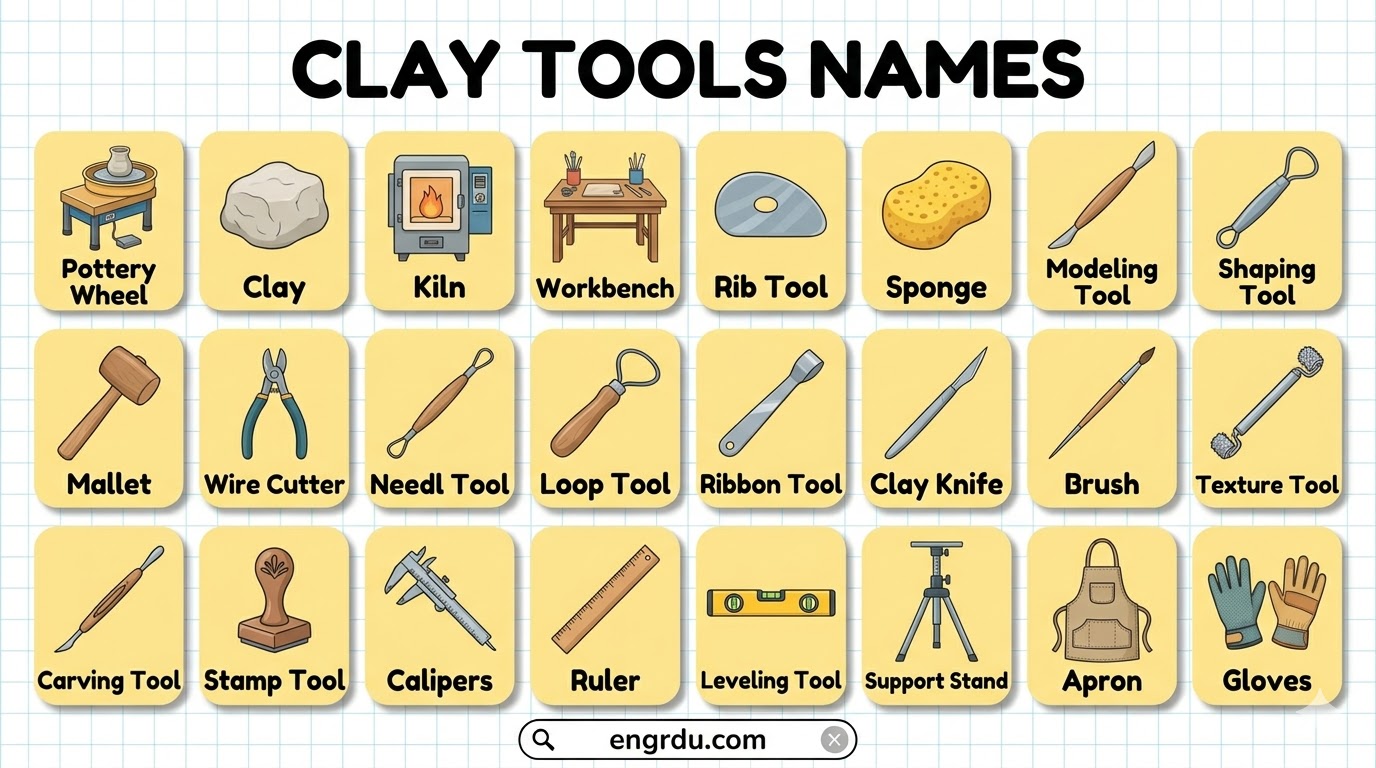
In this blog post, you will learn clay tools names, their uses, and how to understand them with pictures. This vocabulary is useful for students, artists, and beginners who want to improve their English in real-life situations. Clay tools are used to shape, cut, and design clay into different objects like pots and figures.
When you learn these words, you improve your speaking, reading, writing, and listening skills. You can understand instructions in art classes and talk about your work with confidence. Learning these tools step by step helps you build strong English vocabulary and better understanding of creative work.
What Are Clay Tools?
Clay tools are small hand tools and equipment used to shape, cut, and design clay. Artists and potters use them to make pots, figures, plates, and other clay objects.
Why Learn Clay Tools Vocabulary?
Learning these words helps you:
- Understand art instructions
- Speak about tools in English
- Improve reading and listening skills
- Describe your creative work clearly
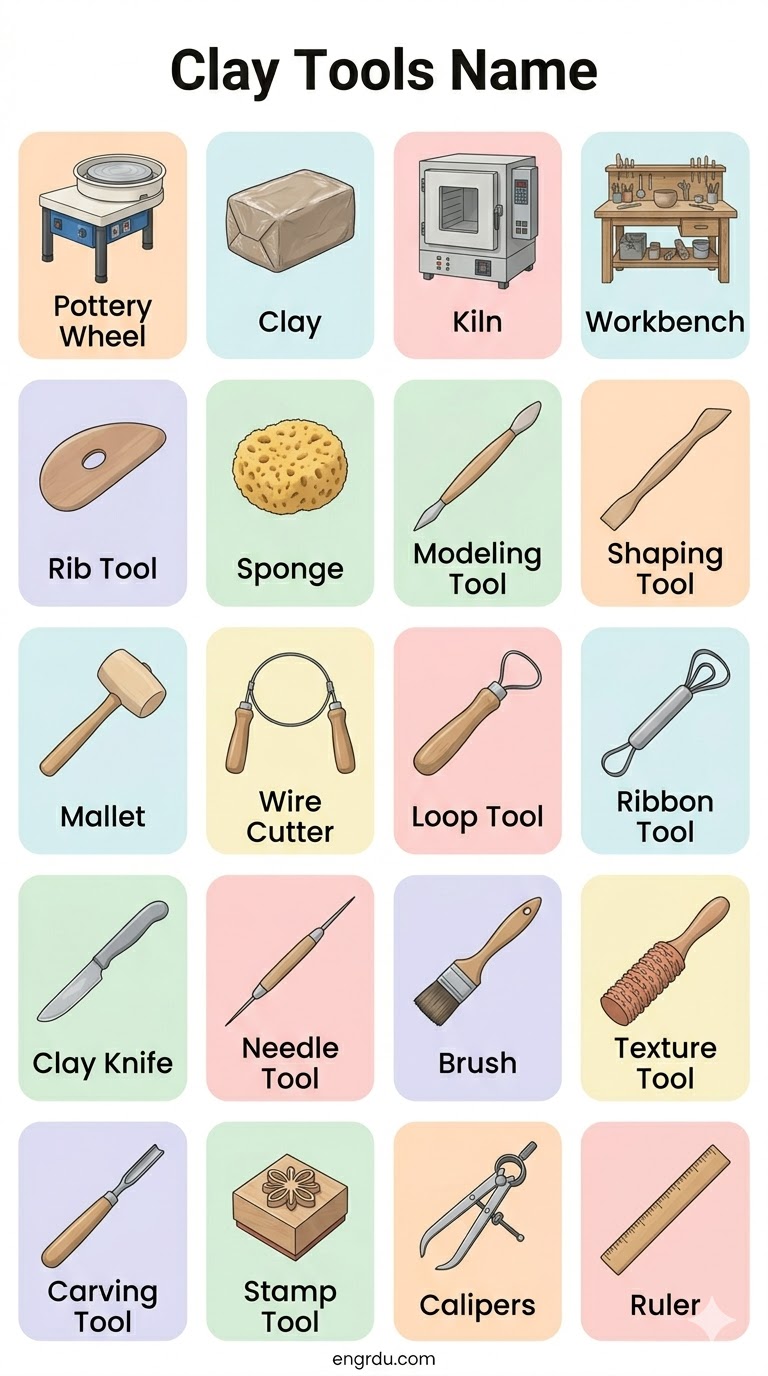
List of Clay Tools and Their Pictures
- Pottery Wheel
- Clay
- Kiln
- Workbench
- Rib Tool
- Sponge
- Modeling Tool
- Shaping Tool
- Mallet
- Wire Cutter
- Loop Tool
- Ribbon Tool
- Clay Knife
- Needle Tool
- Brush
- Texture Tool
- Carving Tool
- Stamp Tool
- Calipers
- Ruler
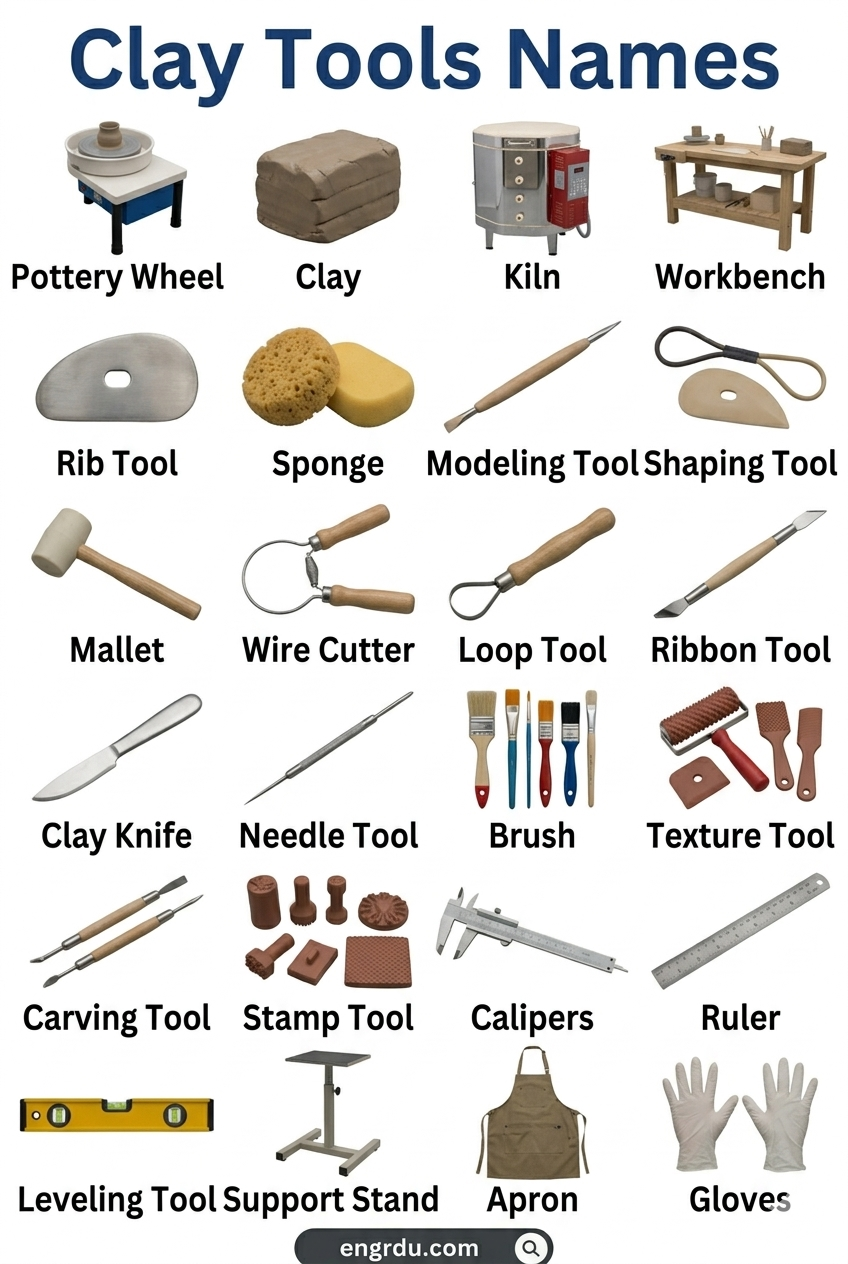
- Leveling Tool
- Support Stand
- Apron
- Gloves
- Cleaning Sponge
- Water Container
Basic Clay Tools Names and Uses
- Pottery Wheel – Spins clay to help shape round objects
- Clay – Soft material used to make pottery
- Kiln – A special oven that hardens clay using heat
- Workbench/Table – Surface where clay work is done
Shaping Tools for Clay
These tools help shape and form clay:
- Rib Tool – Smooths and shapes clay surfaces
- Sponge – Adds or removes water and smooths clay
- Modeling Tool – Shapes and details clay
- Shaping Tool Set – Different tools for forming clay
- Mallet – Helps press or shape clay gently
Cutting and Trimming Tools
Used to cut and remove extra clay:
- Wire Cutter – Cuts clay blocks into pieces
- Loop Tool – Removes extra clay and creates shapes
- Ribbon Tool – Cuts and trims clay details
- Clay Knife – Cuts and shapes clay edges
Finishing and Decorating Tools
Used for final touches:
- Needle Tool – Makes fine lines and small details
- Brush – Applies water or decoration
- Texture Tool – Creates patterns on clay
- Carving Tool – Carves designs into clay
- Stamp Tool – Prints designs on clay
Measuring and Supporting Tools
Used for accuracy and support:
- Calipers – Measure the size of clay objects
- Ruler – Measures length
- Leveling Tool – Keeps surfaces even
- Support Stand – Holds clay pieces while working
Safety and Cleaning Tools
Important for safe work:
- Apron – Protects clothes from clay
- Hand Gloves – Protect hands from dirt
- Cleaning Sponge – Cleans tools and surfaces
- Water Container – Keeps clay soft and workable
Daily Use Clay Vocabulary
- Shape – Form of an object
- Smooth – Even and soft surface
- Cut – Separate into parts
- Press – Push to form shape
- Dry – Remove water from clay
Example:
“I use a loop tool to shape the clay.”
FAQs about Clay Tools
What are clay tools?
Clay tools are instruments used to shape, cut, and design clay. Artists and students use them to make pottery, models, and art pieces with accuracy and creativity.
What are the most common clay tools names?
Common clay tools include pottery wheel, rib tool, wire cutter, loop tool, needle tool, sponge, and clay knife. These tools help shape, cut, and finish clay work.
What is the use of a pottery wheel?
A pottery wheel spins clay to help create round shapes like bowls and pots. It is an important tool for shaping clay evenly and smoothly.
Which tools are used to cut clay?
Tools like wire cutter, clay knife, and loop tool are used to cut clay. They help divide clay into pieces and remove extra material.
What tools are used for finishing clay work?
Tools such as sponge, needle tool, and brush are used for finishing. They smooth surfaces, add details, and improve the final look of clay work.
Related Articles:
Conclusion
Learning clay tools names helps you understand art work and communicate better in English. These words are useful in classrooms, workshops, and creative projects. Practice these terms regularly to build strong vocabulary and improve your English skills step by step.