
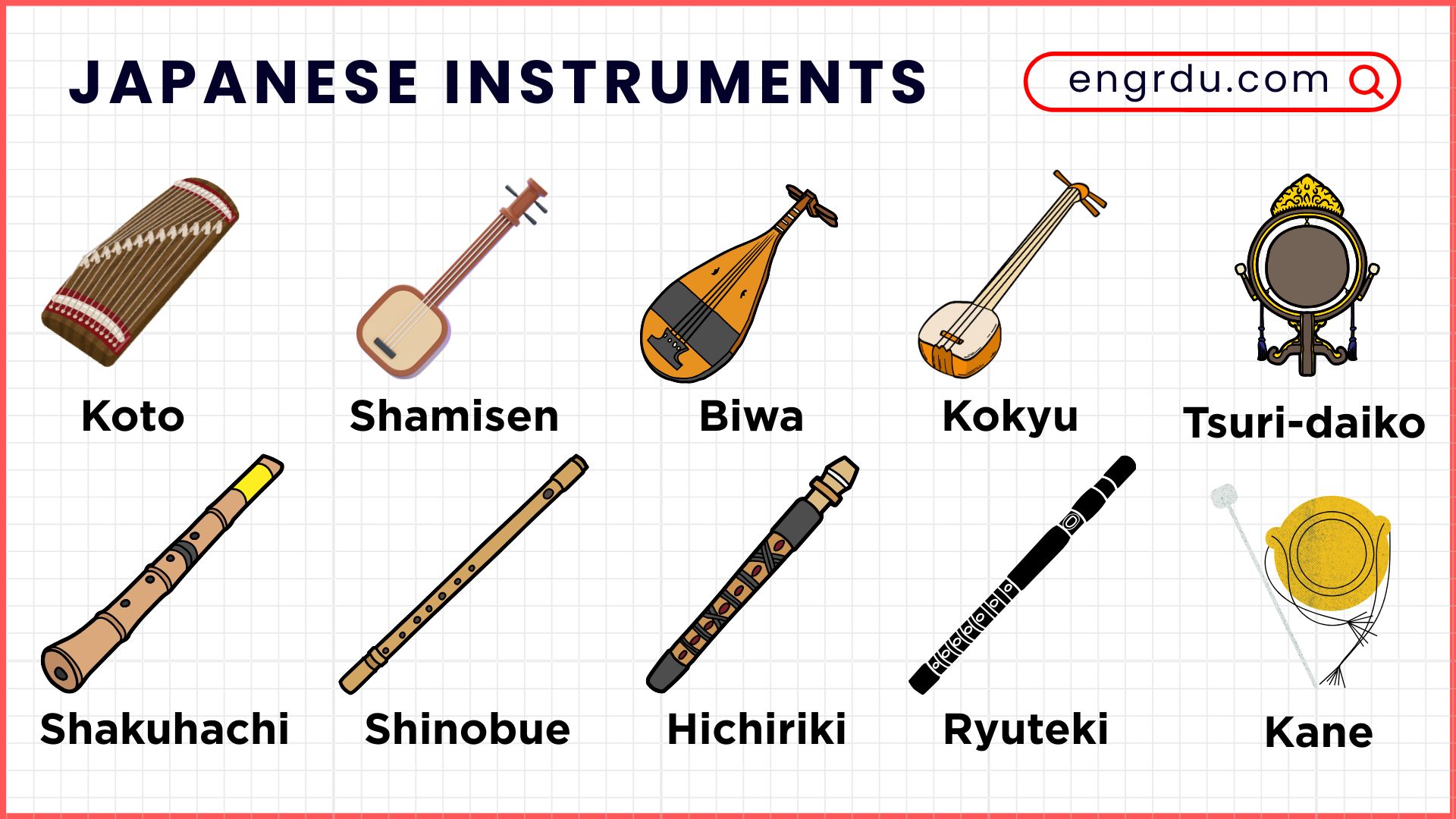

In this blog post, you will learn important Japanese instruments names, their uses, and how they look in pictures. These words belong to music and culture vocabulary that often appears in books, lessons, and discussions about world music. When English learners understand these instrument names, they can speak about music more confidently and recognize these terms while reading or listening. Knowing words like koto, shamisen, and taiko also helps students write better descriptions and understand cultural topics more easily. By studying these instrument names and their uses, learners gradually master useful English vocabulary connected to music and traditional arts.
What Are Japanese Musical Instruments?
Japanese musical instruments are tools used to produce sound in traditional and modern Japanese music. Musicians play them in concerts, theater, festivals, and cultural ceremonies.
These instruments belong to different groups such as string, wind, and percussion instruments. Each instrument has a special shape, playing method, and sound.
Learning these words helps learners talk about music, culture, and art more confidently in English.
Why Learning Instrument Vocabulary Is Useful
Learning musical vocabulary provides several benefits:
- It improves English word knowledge related to music and culture.
- It helps learners understand international traditions.
- It supports reading, listening, and speaking skills.
- It builds confidence when discussing music and performances.
Students often encounter these terms in books, documentaries, and cultural lessons.
List of Japanese Instruments Names with Pictures
Here are 18 important Japanese instrument names for learners:
- Koto
- Shamisen
- Biwa
- Kokyu
- Shakuhachi
- Shinobue
- Hichiriki
- Ryuteki
- Taiko
- Tsuzumi
- Kakko
- Tsuri-daiko
- Sho
- Horagai
- Den-den Daiko
- Kane
- Taiko Drum
- Bamboo Flute
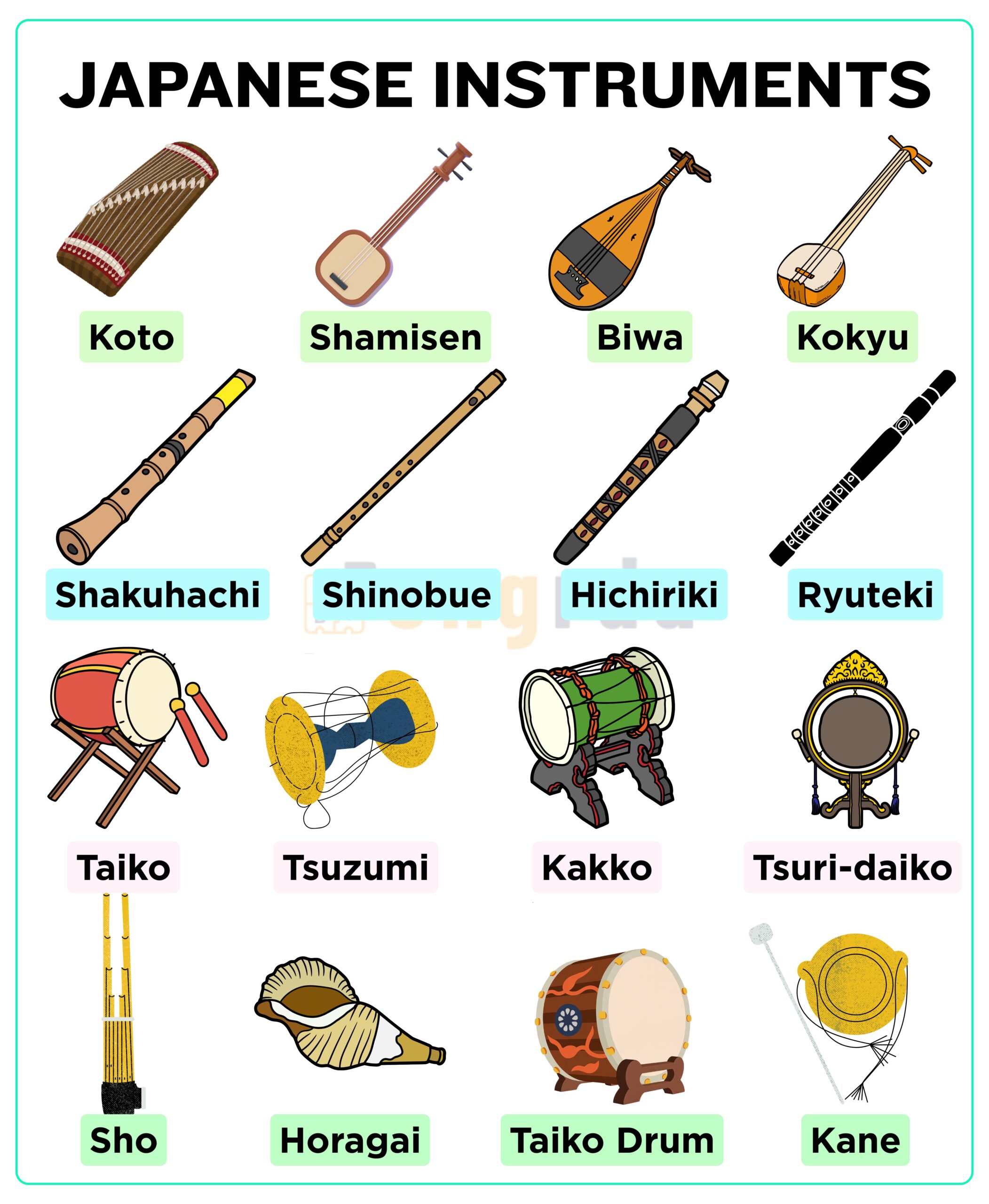
Japanese Instruments Names
These words appear in music classes, cultural studies, and international art discussions.
Japanese Instruments Names and Uses
Below are important traditional Japanese instruments. Each description explains what the instrument is and how people use it.
1. Japanese String Instruments
String instruments create sound when players pluck or bow the strings.
Koto
A long wooden instrument with 13 strings. Musicians pluck the strings using finger picks. It produces a calm and elegant sound.
Shamisen
A three-string instrument played with a large pick called a bachi. It often appears in Japanese theater and folk music.
Biwa
A short-necked lute played with a plectrum. Storytellers traditionally used it to accompany historical tales.
Kokyu
A bowed instrument similar to a violin. The player moves a bow across the strings to produce sound.
2. Japanese Wind Instruments
Wind instruments produce sound when the player blows air into them.
Shakuhachi
A vertical bamboo flute. It creates soft, deep sounds and often appears in meditation music.
Shinobue
A small bamboo flute used in festivals and folk music.
Hichiriki
A double-reed instrument with a powerful sound. Musicians use it in traditional court music.
Ryuteki
A transverse flute used in ancient Japanese court orchestras.
3. Japanese Percussion Instruments
Percussion instruments create sound when players strike or shake them.
Taiko
A large drum played with wooden sticks. It produces strong and energetic rhythms during festivals and performances.
Tsuzumi
A small hand drum with cords that control the tension of the drum skin.
Kakko
A small drum used in Japanese court music ensembles.
Tsuri-daiko
A large drum that hangs from a frame and is played with sticks.
4. Unique Japanese Instruments
Some Japanese instruments do not fit into common Western categories.
Sho
A mouth organ made of bamboo pipes. Musicians blow and inhale air to create soft chord sounds.
Horagai
A conch shell horn used by monks and mountain priests.
Den-den Daiko
A small toy drum often used in festivals and children’s events.
Kane
A metal percussion instrument similar to a bell, commonly used in temples and traditional music.
Tips for Learning Musical Vocabulary
Students can remember these words more easily with simple learning strategies:
- Look at pictures while learning the names.
- Listen to recordings of each instrument.
- Practice saying the words aloud.
- Connect the words with music videos or cultural performances.
Visual learning and sound recognition make vocabulary easier to remember.
Conclusion
Japanese musical instruments represent centuries of culture and artistic tradition. Each instrument has a unique design, sound, and role in music.
When English learners study these Japanese instrument names, they build useful vocabulary while exploring global music traditions. This knowledge improves language skills and makes learning more interesting and meaningful.
FAQs
What is a Japanese instrument?
A Japanese instrument is a musical tool used in traditional Japanese music. Common examples include the koto, shamisen, taiko drum, and shakuhachi flute, which produce unique sounds in cultural performances.
What are some traditional Japanese instruments?
Some traditional Japanese instruments include the koto, shamisen, biwa, taiko, shakuhachi, and shinobue. These instruments appear in festivals, theater, classical music, and traditional cultural ceremonies in Japan.
Is the koto a Japanese instrument?
Yes, the koto is a famous Japanese string instrument. It has thirteen strings and musicians pluck them with finger picks to create soft, elegant sounds used in classical Japanese music.
What instruments are used in traditional Japanese music?
Traditional Japanese music often uses instruments such as the koto, shamisen, shakuhachi flute, biwa lute, and taiko drum. These instruments create melody, rhythm, and harmony in cultural performances.
What is a Japanese stringed instrument called?
A Japanese stringed instrument is commonly called a koto or shamisen. These instruments create sound when players pluck or strike strings and are widely used in traditional Japanese music.
What is a Japanese double reed instrument?
The hichiriki is a Japanese double reed instrument used in traditional court music called gagaku. It produces a strong, expressive sound and plays an important role in classical Japanese ensembles.
Which Japanese instrument is called the dragon flute?
The ryuteki is the Japanese instrument known as the dragon flute. It is a bamboo flute used in gagaku court music and produces bright, high-pitched melodic sounds.
What are the most popular Japanese musical instruments?
Popular Japanese musical instruments include the koto, shamisen, taiko drum, shakuhachi flute, and biwa. These instruments represent traditional Japanese culture and appear in music, festivals, and theater.
Related Articles:



Leave a Comment