
Understanding modal verbs for permission helps you express approval, requests, and allowance clearly in English. In this Grammar lesson, learning these modals improves your speaking, writing, and reading skills. Using them correctly makes your sentences polite and precise when asking for or giving permission. In this blog post, you will explore the types, uses, and examples of modal verbs for permission to practice and use confidently in everyday English.
What Are Modal Verbs for Permission?
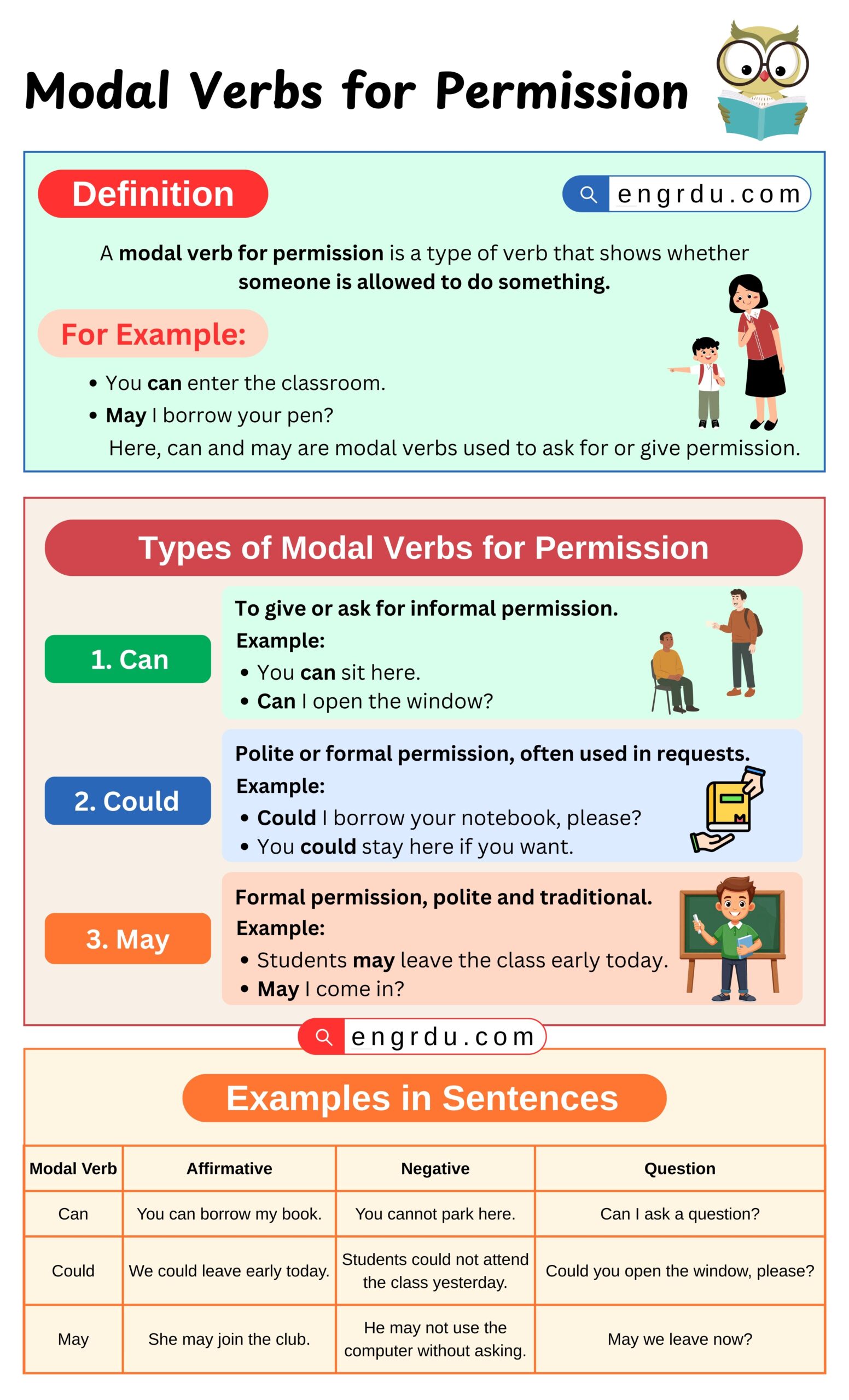
A modal verb for permission is a type of verb that shows whether someone is allowed to do something. Unlike normal verbs, modal verbs do not change form for different subjects. They are always followed by the base form of the main verb.
Example:
- You can enter the classroom.
- May I borrow your pen?
Here, can and may are modal verbs used to ask for or give permission.
Types of Modal Verbs for Permission
There are a few common modal verbs used for permission. Each has a slightly different meaning and level of politeness.
1. Can
To give or ask for informal permission.
Example:
- You can sit here.
- Can I open the window?
2. Could
Polite or formal permission, often used in requests.
Example:
- Could I borrow your notebook, please?
- You could stay here if you want.
3. May
Formal permission, polite and traditional. Common in schools, offices, and official situations.
Example:
- Students may leave the class early today.
- May I come in?
4. Might
Rarely used for permission today, but sometimes shows very polite or tentative permission.
Example:
- You might join us if there is space.
Rules for Using Modal Verbs for Permission
1. Modal verbs are always followed by the base form of the main verb.
- Correct: You can go now.
- Incorrect: You can goes now.
2. No ‘s’ or ‘ed’ endings on modal verbs.
- Correct: She may leave early.
- Incorrect: She mays leave early.
3. Forming questions is simple: modal + subject + base verb.
- Example: Can I help you?
4. Negatives use ‘not’ after the modal.
- Example: You may not enter without permission.
5. Politeness matters:
- “Can I?” is informal.
- “May I?” or “Could I?” is more polite.
Examples of Modal Verbs for Permission
Here are practical examples for daily use:
Affirmative Sentences
- You can borrow my book.
- She may join the club.
- We could leave early today.
Negative Sentences
- You cannot park here.
- He may not use the computer without asking.
- Students could not attend the class yesterday.
Questions
- Can I ask a question?
- May we leave now?
- Could you open the window, please?
These examples show how modal verbs change the tone from informal to polite.
Common Mistakes to Avoid
Even intermediate learners often make mistakes with permission modals. Here are the most common ones:
1. Using the wrong modal for politeness
- Incorrect: Can I leave early? (too informal in school or official situations)
- Correct: May I leave early?
2. Adding extra verbs after modal verbs
- Incorrect: You can to go.
- Correct: You can go.
3. Confusing permission with ability
- Incorrect: You may swim very fast. (may does not show ability)
- Correct: You can swim very fast.
4. Using modals in past tense incorrectly
- Incorrect: He caned borrow the book.
- Correct: He could borrow the book.
Comparing Modal Verbs for Permission
| Modal Verb | Politeness Level | Usage Example | Notes |
|---|---|---|---|
| Can | Informal | You can sit here. | Everyday situations, friends |
| Could | Polite | Could I borrow your pen? | Requests, slightly formal |
| May | Formal/Polite | You may leave now. | Schools, offices, formal writing |
| Might | Very Polite/ Tentative | You might join if there is space. | Rarely used in modern English |
Tips for Learners
- Remember the tone: Choose “can” for friends and “may” or “could” for formal situations.
- Practice questions and negatives: These are often tricky for learners.
- Use real-life situations: Ask for permission at home, in class, or with friends.
- Listen and read: Pay attention to how native speakers use modals in conversations.
- Avoid overthinking: Once you know the basic rules, modals are simple to use.
Conclusion
Modal verbs for permission are essential in English. They help you ask politely, give approval, or set limits. Remember:
- Can = informal, everyday
- Could = polite requests
- May = formal permission
- Might = very polite or tentative
Use them correctly in questions, affirmatives, and negatives. Practise often in real-life situations. With time, your English will sound natural and respectful.
Frequently Asked Questions
What are the 10 examples of permission?
- You can sit here.
- May I borrow your pen?
- She could join the club.
- You may leave early today.
- Can I open the window?
- Students may not enter without permission.
- He could use my notebook.
- You cannot park here.
- May we start the lesson now?
- You might come to the meeting if you want.
What are 5 sentences for permission?
- You can borrow my book.
- May I come in?
- Students may leave the class early.
- Could I use your phone, please?
- You cannot eat in the classroom.
What is an example of modal permission may?
- May I leave the room now?
- Students may submit their homework tomorrow.
What is the modal for starting to get permission?
- The modals can, may, and could are commonly used to start asking for permission politely.
- Example: Can I join you? or May I ask a question?
What is the difference between can and may for permission?
- Can is informal and used for everyday permission.
- May is formal or polite, often used in schools, offices, or official situations.
- Example: Can I borrow your pen? (informal) vs. May I borrow your pen? (polite)
How do you form negative permission sentences with modal verbs?
Place not after the modal verb.
Examples:
You cannot enter without permission.
Students may not use mobile phones in class.
Read More
