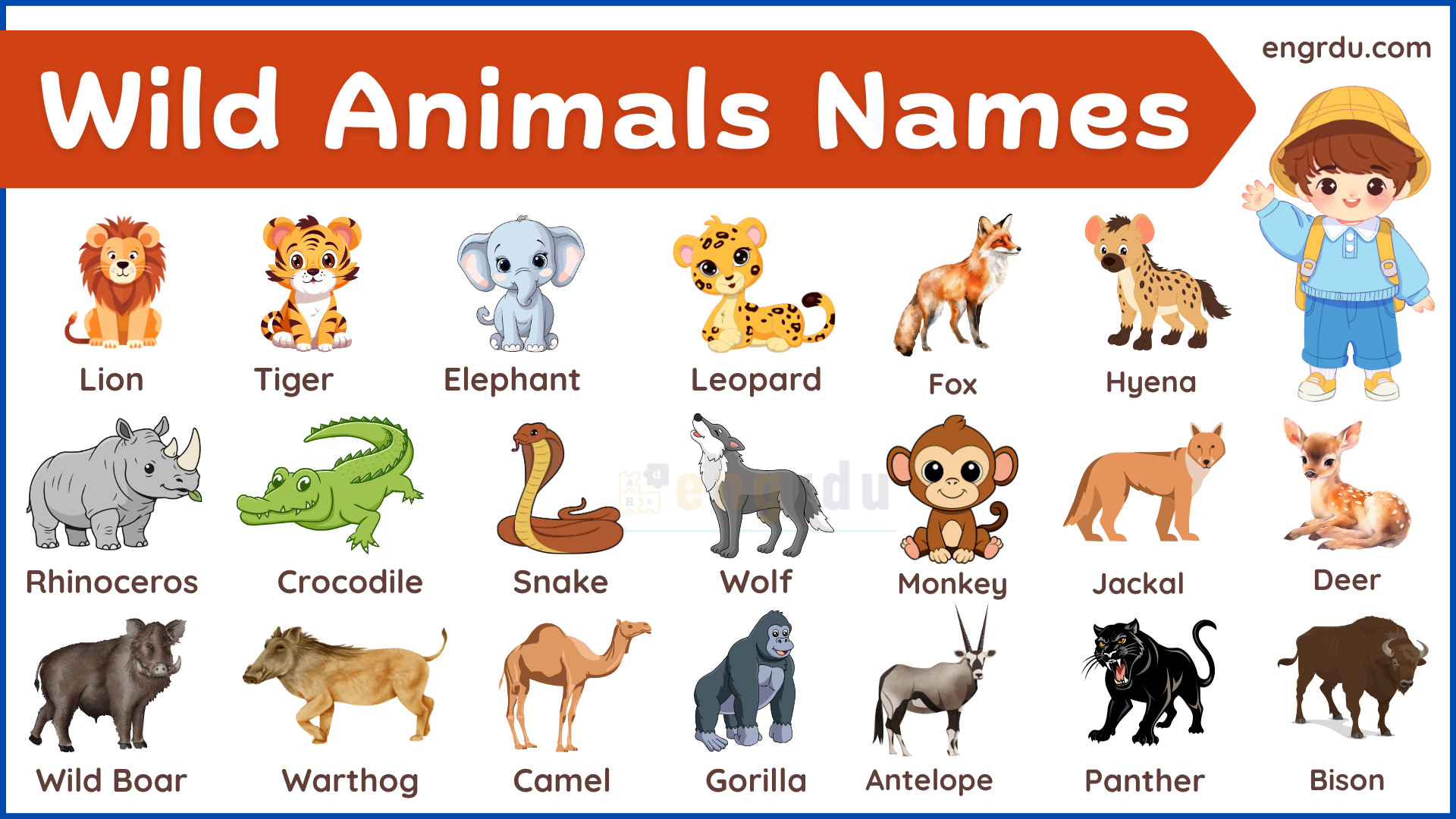
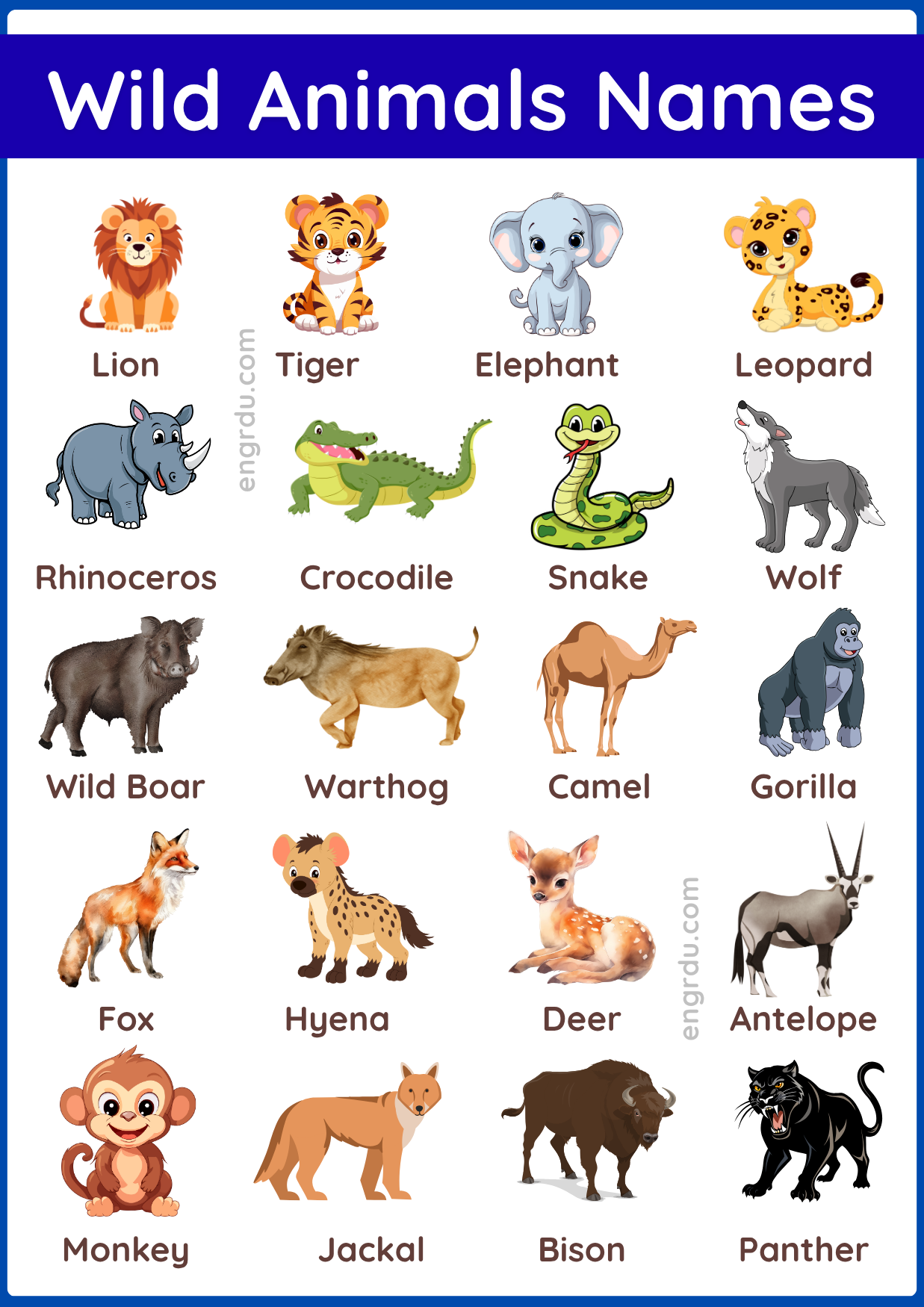
Wild animals live freely in forests, jungles, and deserts. In this Vocabulary lesson, you will learn the names of wild animals along with their types, pictures, and a PDF for easy reference. Knowing these names helps you describe wildlife, read about animals, and speak more confidently in English. In this blog post, you will explore 100+ wild animals with types and pictures to practice identifying and using their names accurately in sentences.
What Are Wild Animals?
Wild animals are those that live freely in nature without direct human care. They depend on their instincts to survive, find food, and adapt to their environment. Unlike domestic animals, they are not trained or tamed, and they thrive in forests, deserts, oceans, or mountains.
List of Wild Animals Name
| Lion | Tiger | Elephant | Leopard |
| Cheetah | Jaguar | Panther | Cougar |
| Bear | Wolf | Fox | Hyena |
| Zebra | Giraffe | Deer | Bison |
| Buffalo | Rhinoceros | Hippopotamus | Wild Boar |
| Camel | Antelope | Gazelle | Kangaroo |
| Koala | Panda | Sloth | Gorilla |
| Chimpanzee | Baboon | Orangutan | Monkey |
| Lemur | Meerkat | Warthog | Hedgehog |
| Beaver | Porcupine | Raccoon | Skunk |
| Otter | Badger | Weasel | Mole |
| Rabbit | Hare | Squirrel | Chipmunk |
| Elk | Moose | Reindeer | Caribou |
| Polar Bear | Arctic Fox | Walrus | Seal |
| Penguin | Puffin | Snow Leopard | Mountain Goat |
| Yak | Ibex | Lynx | Ocelot |
| Wild Dog | Jackal | Dingo | Fossa |
| Crocodile | Alligator | Snake | Lizard |
| Tortoise | Chameleon | Komodo Dragon | Iguana |
| Frog | Toad | Salamander | Newt |
| Eagle | Falcon | Hawk | Owl |
| Vulture | Peacock | Parrot | Macaw |
| Toucan | Crow | Raven | Pigeon |
| Dove | Sparrow | Swan | Flamingo |
| Ostrich | Emu | Kiwi | Secretary Bird |
| Woodpecker | Kingfisher | Hornbill | Stork |
| Pelican | Heron | Crane | Egret |
| Cuckoo | Nightjar | Swift | Finch |
| Ant | Bee | Butterfly | Beetle |
| Grasshopper | Dragonfly | Wasp | Moth |
| Termite | Firefly | Spider | Scorpion |
| Centipede | Millipede | Earthworm | Snail |
| Armadillo | Anteater | Pangolin | Bat |
| Possum | Tasmanian Devil | Hyrax | Civet |
| Oryx | Okapi | Springbok | Saiga |
| Lemming | Vole | Prairie Dog | Groundhog |
| Tapir | Capybara | Agouti | Coati |
| Rhea | Cassowary | Albatross | Goshawk |
| Condor | Harrier | Kestrel | Buzzard |
| Maned Wolf | Red Panda | Snowshoe Hare | Arctic Hare |
| Black Bear | Grizzly Bear | Sun Bear | Sloth Bear |
| Mule Deer | White-Tailed Deer | Axis Deer | Water Buffalo |
| Booby | Frigatebird | Spoonbill | Ibis |
| Lynx | Caracal | Serval | Margay |
| Gaur | Nilgai | Takin | Banteng |
| Eland | Wildebeest | Hartebeest | Impala |
| Cobra | Viper | Python | Anaconda |
| Rattlesnake | Coral Snake | Boa | King Cobra |
Types of Wild Animals
Every habitat supports unique wildlife adapted to its climate, vegetation, and geography.
Forest Wild Animals Namme
Forests are home to some of the most diverse species:
- Lion
- Tiger
- Elephant
- Monkey
- Deer
- Leopard
- Bear
- Fox
Desert Wild Animals
Deserts have extreme temperatures and limited water. Yet, animals survive through special adaptations:
- Camel
- Fennec Fox
- Desert Snake
- Scorpion
- Meerkat
Mountain Wild Animals Name
Mountain wildlife has thick fur and strong limbs to survive cold and rocky conditions:
- Snow Leopard
- Mountain Goat
- Yak
- Ibex
- Himalayan Tahr
Arctic and Polar Wild Animals
In icy habitats, animals depend on blubber and thick fur:
- Polar Bear
- Walrus
- Seal
- Arctic Fox
- Penguin
Grassland and Savannah Wild Animals
Grasslands are full of grazing herbivores and powerful predators:
- Zebra
- Giraffe
- Buffalo
- Cheetah
- Rhinoceros
Wild Animals Based on Diet
Wild animals are also classified by what they eat.
Herbivorous Wild Animals
They feed on plants, leaves, and fruits.
Examples: Elephant, Deer, Giraffe, Zebra.
Carnivorous Wild Animals
They hunt and eat other animals.
Examples: Lion, Tiger, Leopard, Cheetah.
Omnivorous Wild Animals
They eat both plants and meat.
Examples: Bear, Raccoon, Pig, Chimpanzee.
Insectivorous Wild Animals
They primarily feed on insects.
Examples: Anteater, Armadillo, Hedgehog.
Wild Animals Based on Regions
Asian Wild Animals
Asia is home to diverse climates, from jungles to mountains:
- Bengal Tiger
- Giant Panda
- Indian Elephant
- Red Panda
African Wild Animals
Africa is known for its iconic wildlife:
- Lion
- Giraffe
- Zebra
- Hippopotamus
- Rhino
American Wild Animals
North and South America host a wide range of species:
- Bison
- Cougar
- Grizzly Bear
- Jaguar
Australian Wild Animals
Australia has many unique animals not found anywhere else:
- Kangaroo
- Koala
- Emu
- Tasmanian Devil
Endangered Wild Animals
Due to habitat loss, poaching, and climate change, many wild animals are endangered:
- Tiger
- Panda
- Rhino
- Orangutan
- Snow Leopard
Conservation organizations like the World Wildlife Fund (WWF) work globally to protect these species.
Wild Animals by Classification
| Type | Examples |
|---|---|
| Mammals | Lion, Tiger, Elephant, Giraffe |
| Birds | Eagle, Owl, Parrot, Peacock |
| Reptiles | Snake, Lizard, Crocodile, Tortoise |
| Amphibians | Frog, Toad, Salamander |
| Insects | Butterfly, Bee, Ant, Beetle |
Fun Facts About Wild Animals
- A lion’s roar can be heard up to 5 miles away.
- Elephants are the largest land mammals.
- Giraffes have the same number of neck bones as humans.
- Penguins are birds that cannot fly but can swim fast.
- Tigers have unique stripe patterns like fingerprints.
Wild animals are vital to our planet’s survival. They maintain natural harmony, support ecosystems, and inspire human curiosity. Understanding their types and names helps us respect and protect them for future generations.
FAQs about Wild Animals Name
What are wild animals?
Wild animals are species that live naturally in forests, deserts, or other habitats without human control.
How many types of wild animals exist?
There are millions of wild species categorized by habitat, diet, and classification.
What are examples of wild animals?
Examples include lion, elephant, tiger, zebra, and giraffe.
Why are wild animals important?
They help maintain food chains and biodiversity, essential for ecosystem balance.
What makes an animal wild?
Living independently in natural habitats and relying on instincts makes them wild.
How can we protect wild animals?
Avoid deforestation, reduce pollution, and support wildlife conservation programs.
Read More

Abdul Manan is an author at engrdu.com. He is passionate about making English language learning accessible and fun. From mastering grammar to expanding vocabulary and understanding the nuances of different accents, our goal is to provide learners with practical tools for real-world communication. If you’re looking to improve comprehension or sharpen your daily conversation skills, our easy-to-follow guides, worksheets, and picture-based learning make it simple for everyone to succeed.