
The Present Perfect Continuous Tense is used to show actions that started in the past and are still continuing or were recently completed. In this Grammar lesson, learning this tense helps you speak, write, and understand English more accurately. Using it correctly makes your sentences more precise when describing ongoing activities or experiences. In this blog post, you will explore the present perfect continuous tense with a chart and examples to practice and use confidently in English.
To read more about the 12 tenses in one place, visit our 12 Tenses Chart.
Definition of Present Perfect Continuous
The Present Perfect Continuous tense shows:
- An action started in the past and continues now.
- The duration of an activity.
- Recent actions that have results in the present.
Example:
I have been studying English for two hours. (You started studying two hours ago and may still be studying.)
Structure of Present Perfect Continuous
Structure:
Subject + have/has + been + verb(-ing)
- I/You/We/They have been working.
- He/She/It has been working.
When to use:
- Ongoing actions: She has been studying English all morning.
- Actions with present results: It has been raining, so the streets are wet.
- Duration emphasis: We have been waiting for the bus for 30 minutes.
Sentence Types with Structure and Examples
| Sentence Type | Structure | Example |
|---|---|---|
| Affirmative | Subject + have/has + been + verb(-ing) | She has been reading for an hour. |
| Negative | Subject + have/has + not + been + verb(-ing) | He has not been sleeping well lately. |
| Yes/No Question | Have/Has + subject + been + verb(-ing)? | Have you been practising piano? |
| Wh-Question | Wh-word + have/has + subject + been + verb(-ing)? | How long have they been working here? |
Examples in Real Life
- I have been learning English since 2020.
- They have been playing football for two hours.
- He has been feeling tired lately.
- We have not been watching TV this week.
- Have you been waiting long?
Common Mistakes
Using simple past instead:
❌ I learned English for two hours.
✅ I have been learning English for two hours.
Forgetting ‘been’:
❌ She has studying English.
✅ She has been studying English.
Using with short completed actions (use Present Perfect instead):
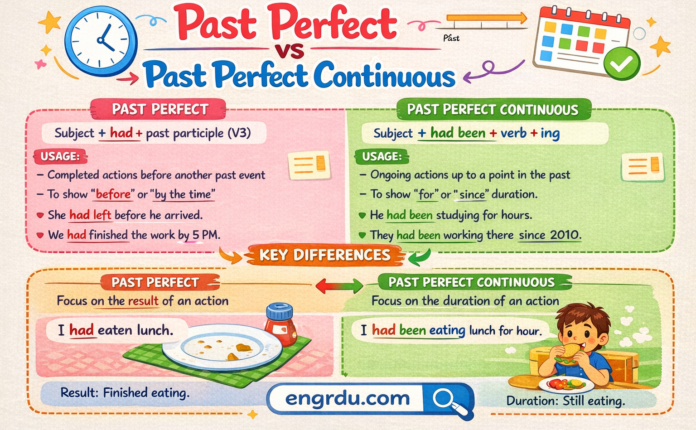
❌ I have been eating lunch. (if lunch is already finished)
✅ I have eaten lunch.
Comparison with Other Tenses
| Tense | Structure | Usage / Focus | Example |
|---|---|---|---|
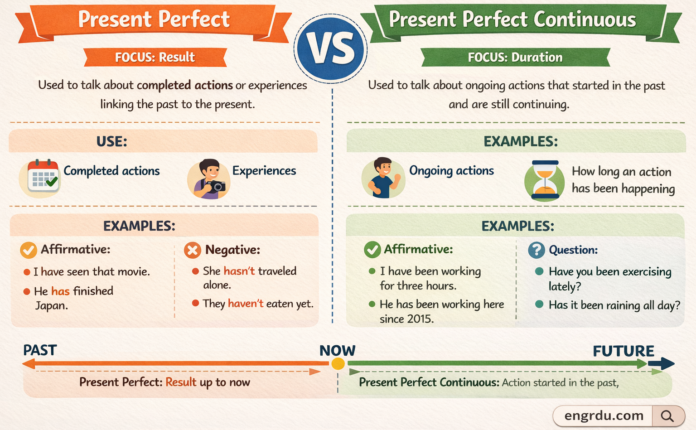
| Present Perfect Continuous | have/has + been + verb(-ing) | Duration, ongoing action | I have been reading for two hours. |
| Present Perfect | have/has + past participle | Completed action, result in present | I have read the book. |
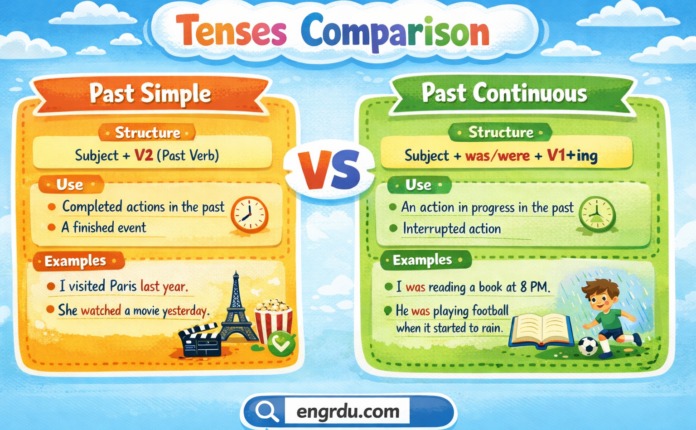
| Past Continuous | was/were + verb(-ing) | Action in progress at a specific past time | I was reading when you called. |
| Simple Present Continuous | am/is/are + verb(-ing) | Current ongoing action | I am reading now. |
| Simple Past | verb in past form | Completed past action at specific time | I read the book yesterday. |
Tips for Learners
- Look for duration words: for, since, lately, recently.
- Remember have/has + been + verb-ing.
- Use it for actions linking past and present.
- Avoid using it for very short completed actions; use Present Perfect instead.

FAQs
What is the Present Perfect Continuous tense and when do we use it?
The Present Perfect Continuous tense shows actions that started in the past and are still happening now or have recently stopped. It is used to emphasise duration or ongoing activity.
Example: I have been studying English for two hours.
How do you form the Present Perfect Continuous tense?
The structure is: Subject + have/has + been + verb(-ing).
Example: She has been reading all morning.
What are some common mistakes learners make with the Present Perfect Continuous tense?
Common mistakes include using the simple past instead, forgetting ‘been’, or using it for short completed actions instead of the Present Perfect.
Example of mistake:
❌ I learned English for two hours.
✅ I have been learning English for two hours.
How is the Present Perfect Continuous different from the Present Perfect tense?
Present Perfect Continuous focuses on duration and ongoing action, while Present Perfect focuses on completed actions or results.
Example:
- Present Perfect Continuous: I have been reading for two hours.
- Present Perfect: I have read the book.
Can you give examples of Present Perfect Continuous sentences?
Yes, here are some examples:
- I have been learning English since 2020.
- They have been playing football for two hours.
- He has been feeling tired lately.
How do you make negative sentences and questions in the Present Perfect Continuous tense?
Negative: Subject + have/has + not + been + verb(-ing)
Example: He has not been sleeping well.
Yes/No Question: Have/Has + subject + been + verb(-ing)?
Example: Have you been practising piano?
Wh-Question: Wh-word + have/has + subject + been + verb(-ing)?
Example: How long have they been working here?
What tips can help learners use the Present Perfect Continuous tense correctly?
Focus on duration words like for, since, lately, and recently. Remember the structure have/has + been + verb-ing, and use it for actions linking past and present rather than short completed actions.
Read More