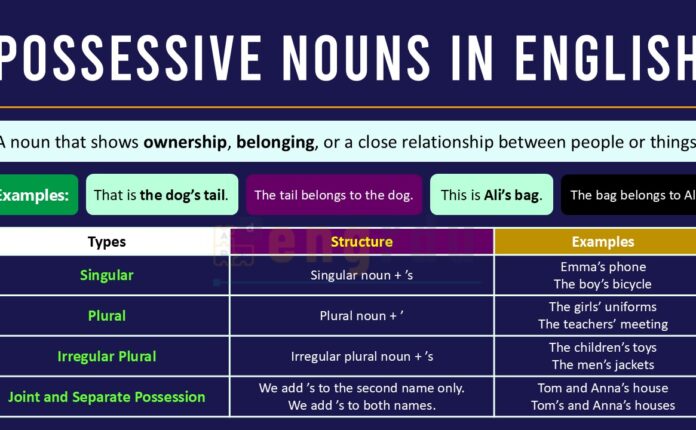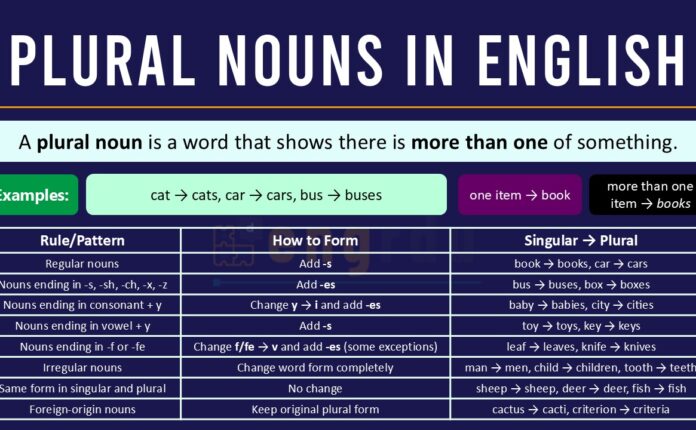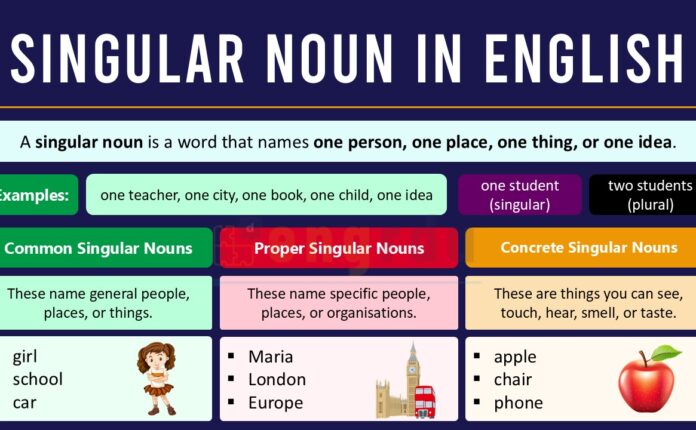

Learning nouns, verbs, adjectives, and adverbs is a key step in mastering English. These parts of speech help you name, describe, and act in sentences. In this blog post, you will explore 250 examples of nouns, verbs, adjectives, and adverbs with clear illustrations. By studying these examples, you will improve your speaking, writing, reading, and listening skills, and build a strong vocabulary that makes your English more accurate and expressive.
What Are Nouns, Verbs, Adjectives and Adverbs?
Let’s understand them one by one with definition, types, and examples.
1. Nouns
Nouns are naming words. They tell the name of a person, place, thing, or idea.
Examples:
- Alex is my friend.
- The sun is bright.
- She loves music.
- Paris is a beautiful city.
Common types of nouns:
| Type | Example |
|---|---|
| Person | Teacher, Doctor |
| Place | School, Park |
| Thing | Book, Table |
| Idea | Love, Honesty |
2. Verbs
Verbs are action words. They show what someone does or what happens.
Examples:
- He runs fast.
- They play football.
- She writes neatly.
- Birds fly in the sky.
Verbs tell action or state:
| Type | Example |
|---|---|
| Action Verb | Jump, Eat, Read |
| State Verb | Be, Feel, Have |
3. Adjectives
Adjectives are describing words. They tell more about nouns.
Examples:
- She is a beautiful girl.
- It’s a big house.
- He bought a red car.
- The smart boy won the prize.
Adjectives describe:
- What kind? | beautiful, tall, short
- How many? | two, many, several
- Which one? | this, that, those
4. Adverbs
Adverbs describe verbs, adjectives, or other adverbs. They often tell how, when, where, or how often something happens.
Examples:
- He runs quickly.
- She sings beautifully.
- They arrived early.
- I study daily.
Adverbs tell:
| Type | Example |
|---|---|
| Manner (How?) | Slowly, Carefully |
| Time (When?) | Today, Yesterday |
| Place (Where?) | Here, There |
| Frequency (How often?) | Always, Never |
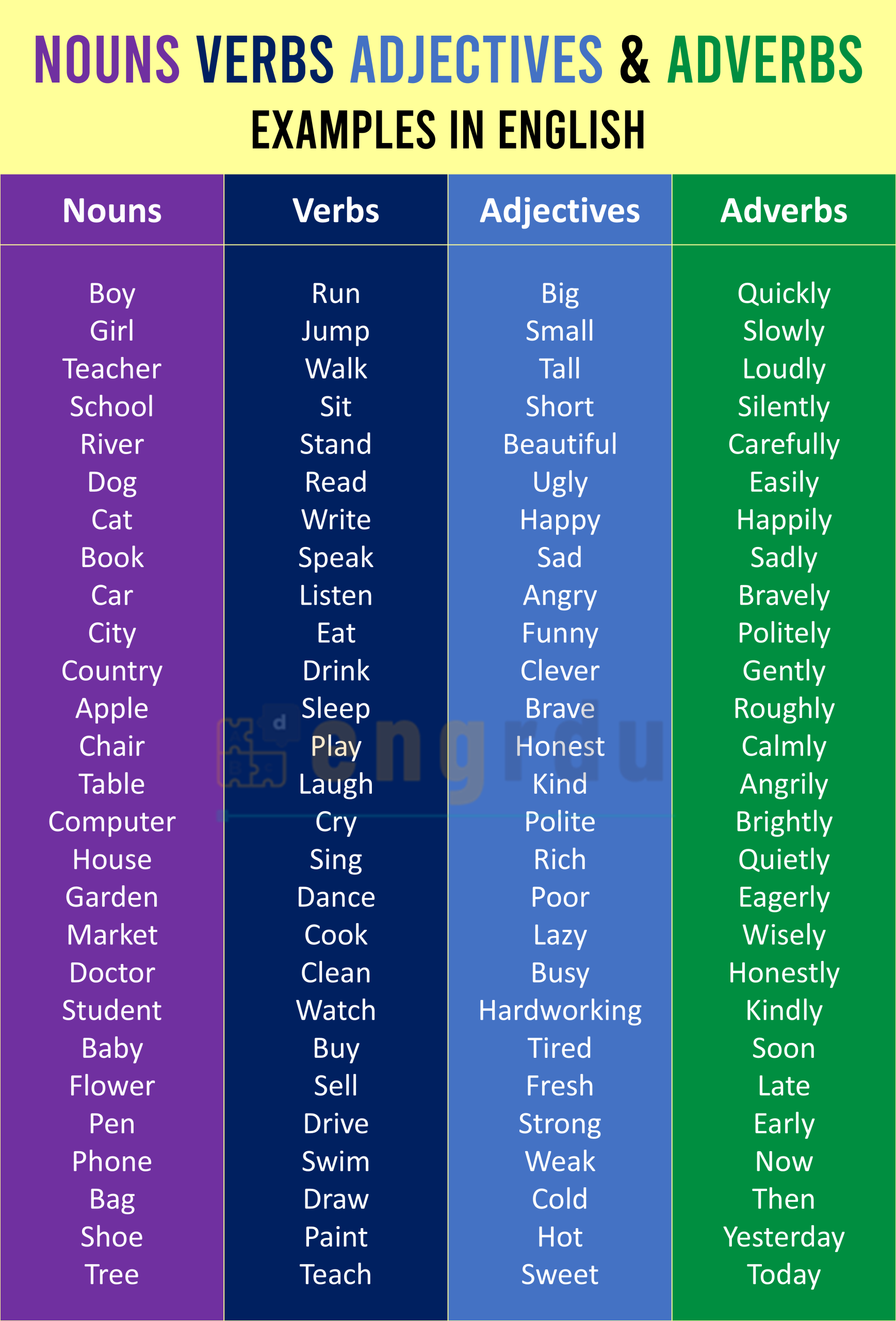
Nouns, Verbs, Adjectives and Adverbs Examples
Let’s look at a complete list of 250 easy examples. Each group includes simple and useful English words for learners.
| Nouns Examples | Verbs Examples | Adjectives Examples | Adverbs Examples |
| Boy Girl Teacher School River Dog Cat Book Car City Country Apple Chair Table Computer House Garden Market Doctor Student Baby Flower Pen Phone Bag Shoe Tree Mountain Ocean Beach Bird Fish Clock Bed Family Friend Game Shop Music Film Bus Train Road Hotel Room Cup Plate Schoolbag Laptop Newspaper | Run Jump Walk Sit Stand Read Write Speak Listen Eat Drink Sleep Play Laugh Cry Sing Dance Cook Clean Watch Buy Sell Drive Swim Draw Paint Teach Learn Study Open Close Talk Help Work Build Cut Push Pull Catch Throw Smile Shout Travel Visit Wait Call Fix Grow Enjoy Save | Big Small Tall Short Beautiful Ugly Happy Sad Angry Funny Clever Brave Honest Kind Polite Rich Poor Lazy Busy Hardworking Tired Fresh Strong Weak Cold Hot Sweet Bitter Long Short Fast Slow Good Bad Young Old Heavy Light Clean Dirty Friendly Rude Calm Loud Lovely Soft Hard Bright Dark Sharp | Quickly |
Frequently Asked Questions
What are the 4 main types of words in English?
Nouns, Verbs, Adjectives, and Adverbs.
How can I identify a verb in a sentence?
Look for the action word that shows what someone is doing.
Can an adverb describe an adjective?
Yes! Example: very beautiful — here “very” describes “beautiful”.
What is the difference between adjective and adverb?
An adjective describes a noun, while an adverb describes a verb, adjective, or another adverb.
Why are these four word types important in English?
They form the structure of all English sentences and help you write and speak correctly.
Read More