In this blog post, you will learn the names and uses of electrical tools that electricians use in daily work. Electrical tools are special tools used to cut wires, test electricity, fix switches, and install circuits. Knowing these words helps English learners understand technical conversations, safety instructions, and work-related texts. When you understand electrical tools vocabulary, it becomes easier to speak about tools, read manuals, write about repair tasks, and follow spoken instructions at work or in training. Each tool name also shows how the tool works in real situations. By learning tool names, you build practical vocabulary that improves speaking, reading, writing, and listening skills in everyday English.
What Are Electrical Tools?
Electrical tools are tools used to work with electricity and electrical wiring.
Electricians use them to:
- install wires
- connect circuits
- test electricity
- repair electrical systems
- ensure safety
Some tools are simple hand tools, while others are advanced testing or power tools.
Why Learn Electrical Tools Vocabulary?
Learning these words improves technical English skills.
It also helps you:
- understand electrical work instructions
- communicate with technicians and electricians
- read tool manuals and guides
- improve job-related English vocabulary
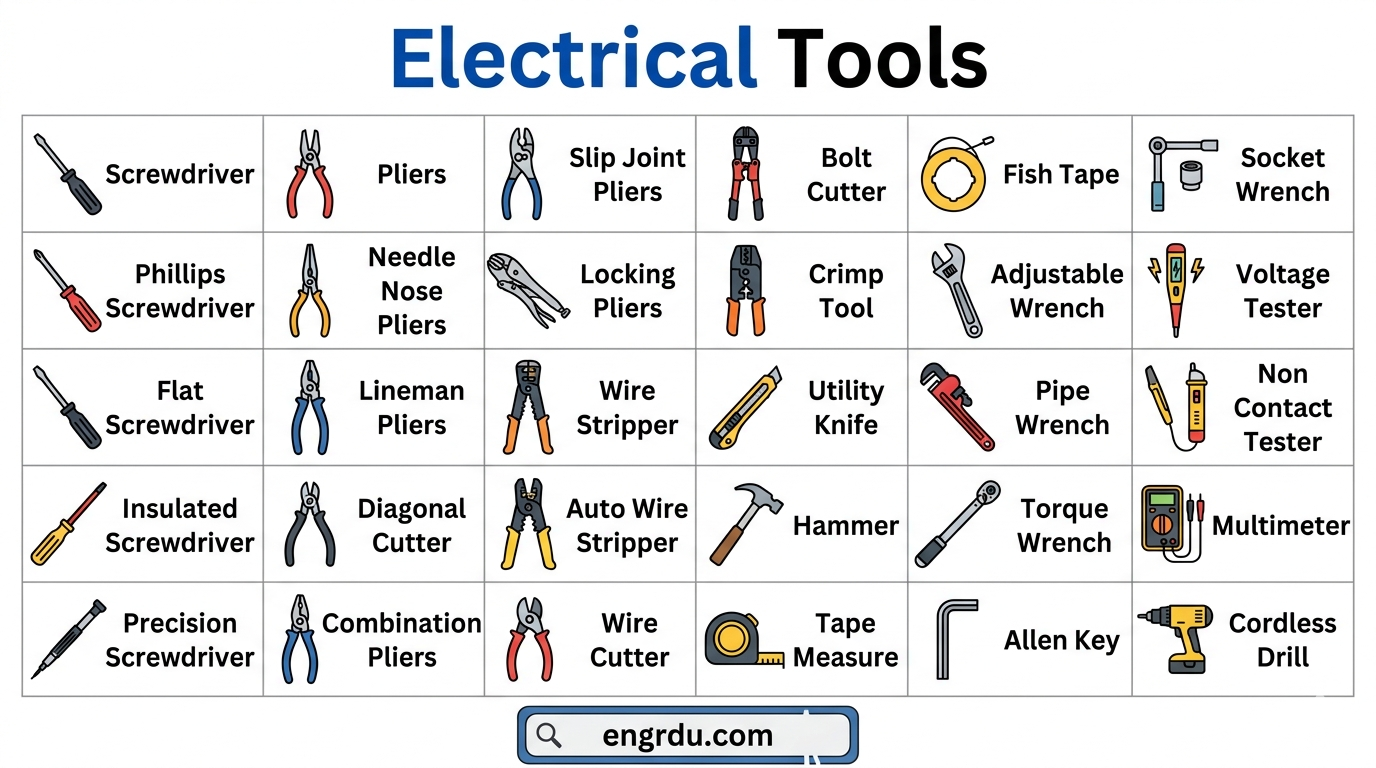
Basic Electrical Tools Name with Pictures
These are basic tools that electricians use almost every day.
Screwdriver
A screwdriver is used to tighten or loosen screws in electrical switches, outlets, and panels.
Example: “Use the screwdriver to tighten the screw on the switch.”
Phillips Screwdriver
A Phillips screwdriver is used for screws that have a cross-shaped head.
Example: “This screw is cross-shaped, so use the Phillips screwdriver.”
Flathead Screwdriver
A flathead screwdriver is used for screws that have a straight slot.
Example: “Open the outlet cover with the flathead screwdriver.”
Lineman’s Pliers
Lineman’s pliers are used to cut, twist, and bend electrical wires.
Example: “Twist the wires together with the lineman’s pliers.”
Needle-Nose Pliers
Needle-nose pliers are used to hold small wires and work in narrow spaces.
Example: “Hold the small wire with the needle-nose pliers.”
Wire Cutter
A wire cutter is used to cut electrical wires cleanly.
Example: “Cut the extra wire with the wire cutter.”
Wire Stripper
A wire stripper is used to remove insulation from electrical wires.
Example: “Strip the wire before connecting it using the wire stripper.”
Voltage Tester
A voltage tester is used to check if electricity is present in a wire or outlet.
Example: “Check the wire with a voltage tester before touching it.”
Multimeter
A multimeter is used to measure voltage, current, and resistance.
Example: “I will test the voltage using the multimeter.”
Electrical Tape
Electrical tape is used to cover and protect electrical wire connections.
Example: “Wrap the wire joint with electrical tape.”
Cable Cutter
A cable cutter is used to cut thick electrical cables.
Example: “Use the cable cutter to cut this heavy cable.”
Crimping Tool
A crimping tool is used to attach connectors to the end of wires.
Example: “Fix the terminal using the crimping tool.”
Fish Tape
Fish tape is used to pull wires through walls or electrical conduits.
Example: “Push the fish tape through the pipe to pull the wire.”
Electric Drill
An electric drill is used to make holes in walls for wiring installation.
Example: “Drill a hole in the wall with the electric drill.”
Heat Gun
A heat gun is used to shrink heat-shrink tubing around wires.
Example: “Use the heat gun to seal the wire covering.”
Clamp Meter
A clamp meter is used to measure electrical current safely.
Example: “Check the current in the wire with the clamp meter.”
Utility Knife
A utility knife is used to cut cable insulation or other materials.
Example: “Cut the cable cover carefully with the utility knife.”
Measuring Tape
A measuring tape is used to measure the distance for wiring installation.
Example: “Measure the wall distance using the measuring tape.”
Conduit Bender
A conduit bender is used to bend metal pipes that protect electrical wires.
Example: “Bend the conduit pipe using the conduit bender.”
Circuit Tester
A circuit tester is used to check whether a circuit or outlet is working properly.
Example: “Test the socket with the circuit tester.”
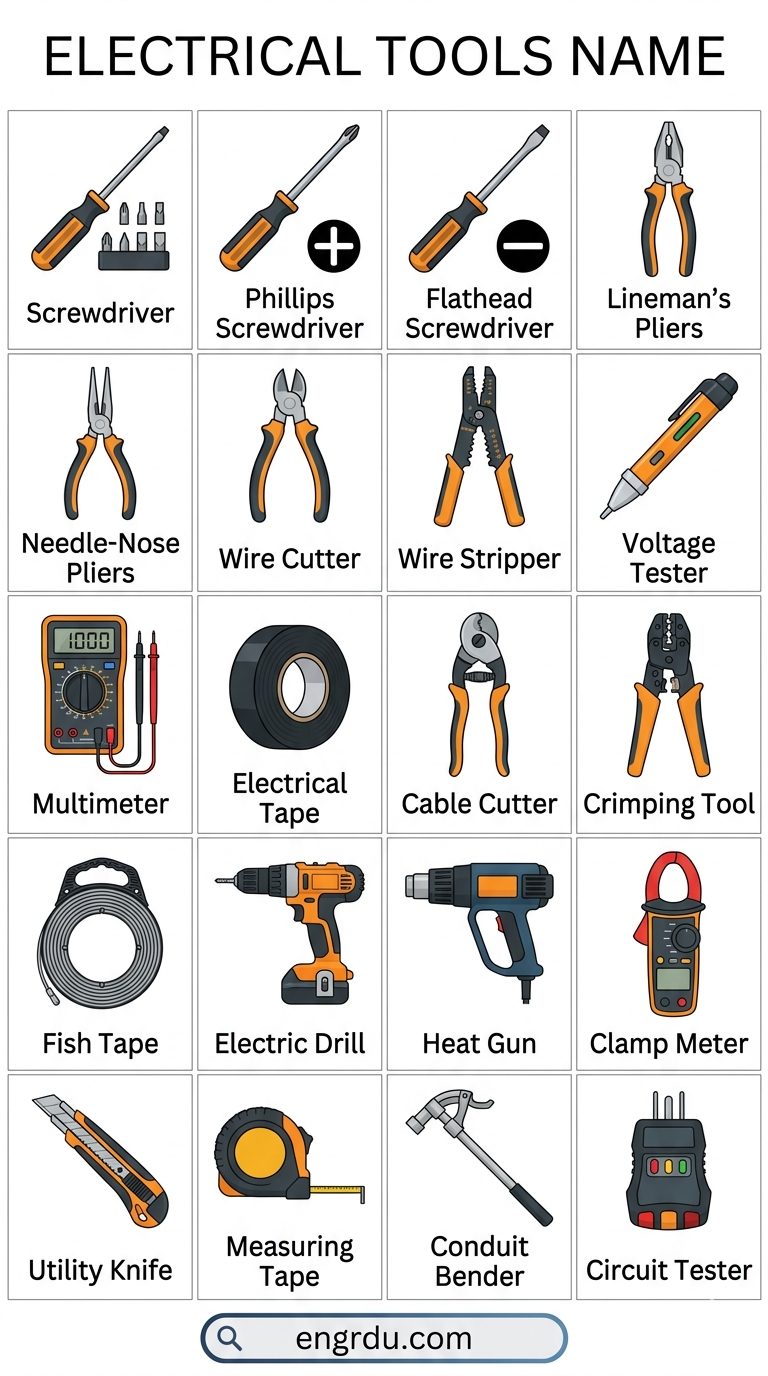
These tools form the basic toolkit of every electrician.
Types of Electrical Tools with Their Uses
Electrical tools generally fall into several categories:
| Type | Examples |
|---|---|
| Hand Tools | Pliers, screwdrivers, wrench |
| Measuring Tools | Multimeter, voltmeter |
| Power Tools | Drill, impact driver |
| Wire Tools | Wire stripper, crimping tool |
| Testing Tools | Voltage tester, socket tester |
| Safety Tools | Gloves, goggles |
Electrical Hand Tools
Hand tools are manual tools that do not use electricity.
- Needle-Nose Pliers – Long and thin pliers used in small spaces.
- Lineman’s Pliers – Strong pliers used to cut and twist wires.
- Diagonal Cutting Pliers – Cuts wires precisely.
- Flathead Screwdriver – Used for flat screws.
- Phillips Screwdriver – Used for cross-shaped screws.
- Nut Driver – Tightens nuts and bolts.
- Adjustable Wrench – Tightens or loosens bolts of different sizes.
- Allen Key (Hex Key) – Used for hexagonal screws.
- Cable Cutter – Cuts thick electrical cables.
- Fish Tape – Pulls wires through walls or conduits.
Electrical Measuring Tools
Electricians must measure electricity accurately. These tools help check voltage, current, and resistance.
- Multimeter – Measures voltage, current, and resistance.
- Clamp Meter – Measures current without touching the wire directly.
- Voltmeter – Measures electrical voltage.
- Ammeter – Measures electrical current.
- Ohmmeter – Measures electrical resistance.
- Circuit Tester – Checks if a circuit works properly.
- Continuity Tester – Tests if electricity can pass through a wire.
Power Electrical Tools
Power tools use electricity or batteries to make work faster and easier.
- Electric Drill – Makes holes in walls for wires and fixtures.
- Impact Driver – Tightens screws with strong power.
- Rotary Hammer – Drills into concrete or hard walls.
- Angle Grinder – Cuts metal or electrical conduits.
- Heat Gun – Shrinks heat-shrink tubing around wires.
- Power Screwdriver – Quickly tightens screws.
- Cable Pulling Machine – Pulls heavy cables through long conduits.
Wire Cutting and Stripping Tools
These tools prepare wires for installation.
- Automatic Wire Stripper – Removes insulation automatically.
- Cable Stripper – Strips thick electrical cables.
- Crimping Tool – Attaches connectors to wires.
- Cable Shears – Cuts large cables easily.
- Terminal Crimper – Fixes wire terminals securely.
Safety Electrical Tools
Safety tools protect electricians from electric shock and accidents.
- Insulated Gloves – Protect hands from electric shock.
- Insulated Screwdriver – Safe for working with live circuits.
- Safety Goggles – Protect eyes from sparks and debris.
- Rubber Mat – Prevents electric current from passing through the body.
- Hard Hat – Protects the head at construction sites.
Electrical Testing Tools
Testing tools help identify electrical problems quickly.
- Non-Contact Voltage Tester – Detects voltage without touching wires.
- Socket Tester – Checks if a wall outlet works correctly.
- Phase Tester – Identifies the live wire in a circuit.
- Insulation Tester (Megger) – Tests insulation quality of wires.
- Earth Tester – Measures grounding resistance.
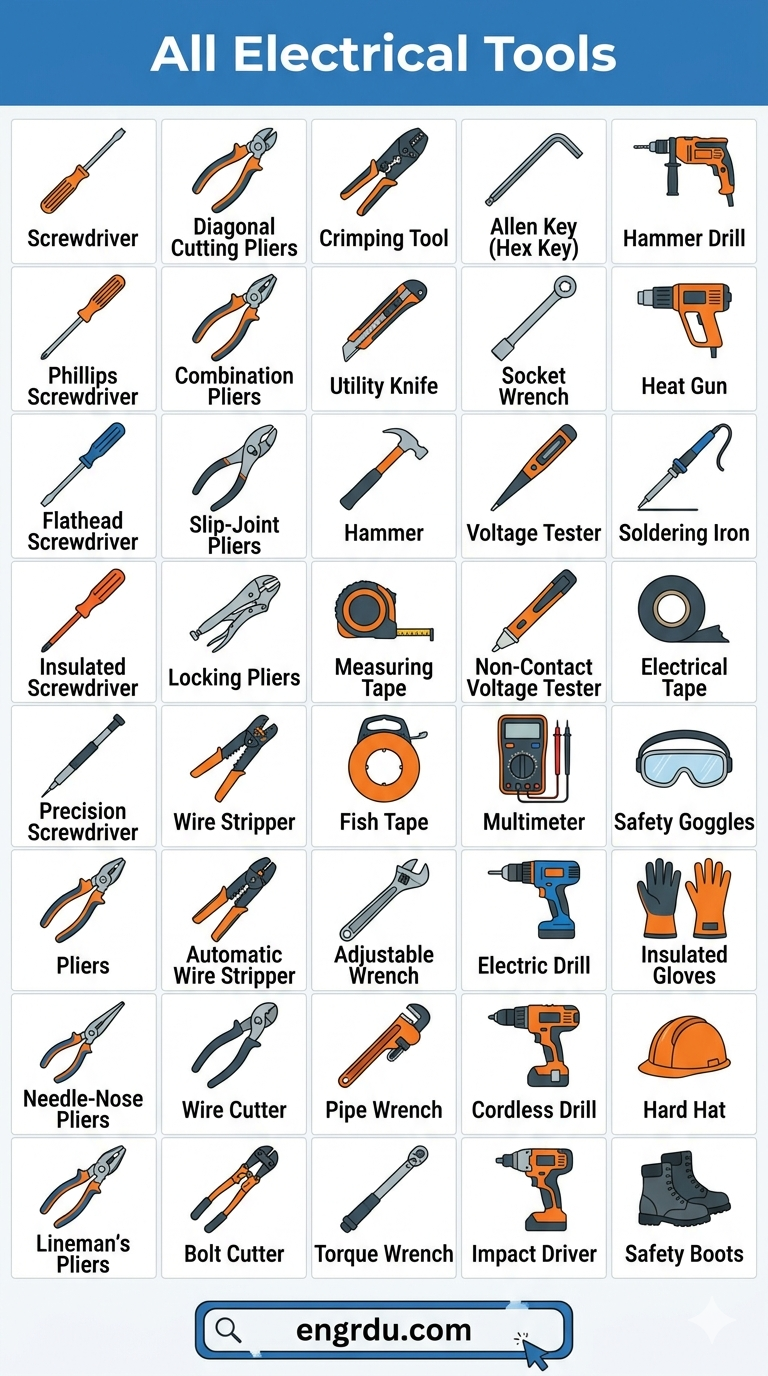
List of All Electrical Tools Name
| Screwdriver | Phillips Screwdriver | Flathead Screwdriver |
| Insulated Screwdriver | Precision Screwdriver | Power Screwdriver |
| Pliers | Needle-Nose Pliers | Lineman’s Pliers |
| Diagonal Cutting Pliers | Combination Pliers | Slip-Joint Pliers |
| Long Nose Pliers | Locking Pliers | Crimping Pliers |
| Wire Cutter | Cable Cutter | Bolt Cutter |
| Wire Stripper | Automatic Wire Stripper | Cable Stripper |
| Terminal Crimper | Crimping Tool | Ferrule Crimper |
| Utility Knife | Electrician Knife | Cable Knife |
| Hammer | Rubber Mallet | Claw Hammer |
| Measuring Tape | Steel Ruler | Folding Rule |
| Fish Tape | Cable Puller | Cable Pulling Grip |
| Conduit Bender | Pipe Bender | Hand Bender |
| Adjustable Wrench | Pipe Wrench | Torque Wrench |
| Allen Key (Hex Key) | Socket Wrench | Nut Driver |
| Voltage Tester | Non-Contact Voltage Tester | Phase Tester |
| Circuit Tester | Socket Tester | Outlet Tester |
| Multimeter | Digital Multimeter | Analog Multimeter |
| Clamp Meter | Ammeter | Voltmeter |
| Ohmmeter | Continuity Tester | Insulation Tester |
| Earth Tester | Megger Tester | Circuit Analyzer |
| Electric Drill | Cordless Drill | Impact Driver |
| Rotary Hammer | Hammer Drill | Angle Grinder |
| Heat Gun | Soldering Iron | Desoldering Pump |
| Soldering Station | Wire Twister | Cable Tie Gun |
| Cable Tie Tool | Label Maker | Wire Marker |
| Electrical Tape | Heat Shrink Tubing | Cable Sleeves |
| Insulated Gloves | Safety Goggles | Rubber Mat |
| Hard Hat | Safety Boots | Face Shield |
| Circuit Breaker Finder | Wire Tracker | Tone Generator |
Tips to Remember Electrical Tools Names
Learning tool vocabulary becomes easier with these tips:
- Group tools by function
- Practice with real tools or pictures
- Repeat the tool name and its use
- Use the words in simple sentences
Example:
- The electrician uses a wire stripper to remove insulation.
FAQs about Electrical Tools
What are electrical tools?
Electrical tools are special tools used to install, repair, test, and maintain electrical wiring, circuits, and equipment. Electricians use them to work safely with wires, outlets, switches, and electrical systems.
What are the 10 electrical tools?
Ten common electrical tools include screwdriver, wire stripper, pliers, voltage tester, multimeter, cable cutter, crimping tool, electric drill, fish tape, and electrical tape. Electricians use these tools for wiring, testing, and repairing electrical systems.
What are the most common electrical tools names and uses?
Common electrical tools include screwdriver, wire stripper, pliers, voltage tester, multimeter, cable cutter, crimping tool, and electric drill. Each tool helps electricians install, connect, measure, or repair electrical wiring.
What is a wire stripper used for in electrical work?
A wire stripper removes the plastic insulation from electrical wires without damaging the metal conductor. Electricians use it to prepare wires before connecting them to switches, outlets, or terminals.
What are 5 electrical tools?
Five basic electrical tools are screwdriver, pliers, wire cutter, wire stripper, and voltage tester. These tools help electricians cut wires, remove insulation, tighten screws, and safely check electrical current.
What does a multimeter measure in electrical tools?
A multimeter measures electrical voltage, current, and resistance. Electricians use it to test circuits, identify electrical problems, and check whether electrical devices are working correctly.
What are 10 power tools?
Ten common power tools include electric drill, impact driver, angle grinder, rotary hammer, circular saw, jigsaw, heat gun, electric screwdriver, power sander, and power nailer.
What is the difference between electrical hand tools and power tools?
Electrical hand tools operate manually, such as pliers or screwdrivers. Power tools use electricity or batteries, such as electric drills or impact drivers, to complete electrical work faster and with less effort.
Related Articles:
- 42 Plumbing Tools Names with Pictures
- Welding Tools Names and Pictures
- 100+ Workshop Tools Names in English
Final Summary
Electrical tools help electricians install, repair, test, and maintain electrical systems safely.
In this guide, you learned many electrical tools names in English, including:
- Basic tools
- Hand tools
- Measuring tools
- Power tools
- Wire tools
- Safety tools
- Testing tools
Understanding these words improves technical vocabulary, workplace communication, and practical English skills.