A concrete noun is a word that names a person, place, or thing that can be seen, touched, or measured, such as apple, dog, or house. In this Grammar lesson, learning concrete nouns helps you speak, write, and understand English more clearly. Using them correctly makes your sentences precise and easy to understand. In this blog post, you will explore the definition, uses, and examples of concrete nouns to practice and use confidently in everyday English.
Concrete Nouns Definition and Examples
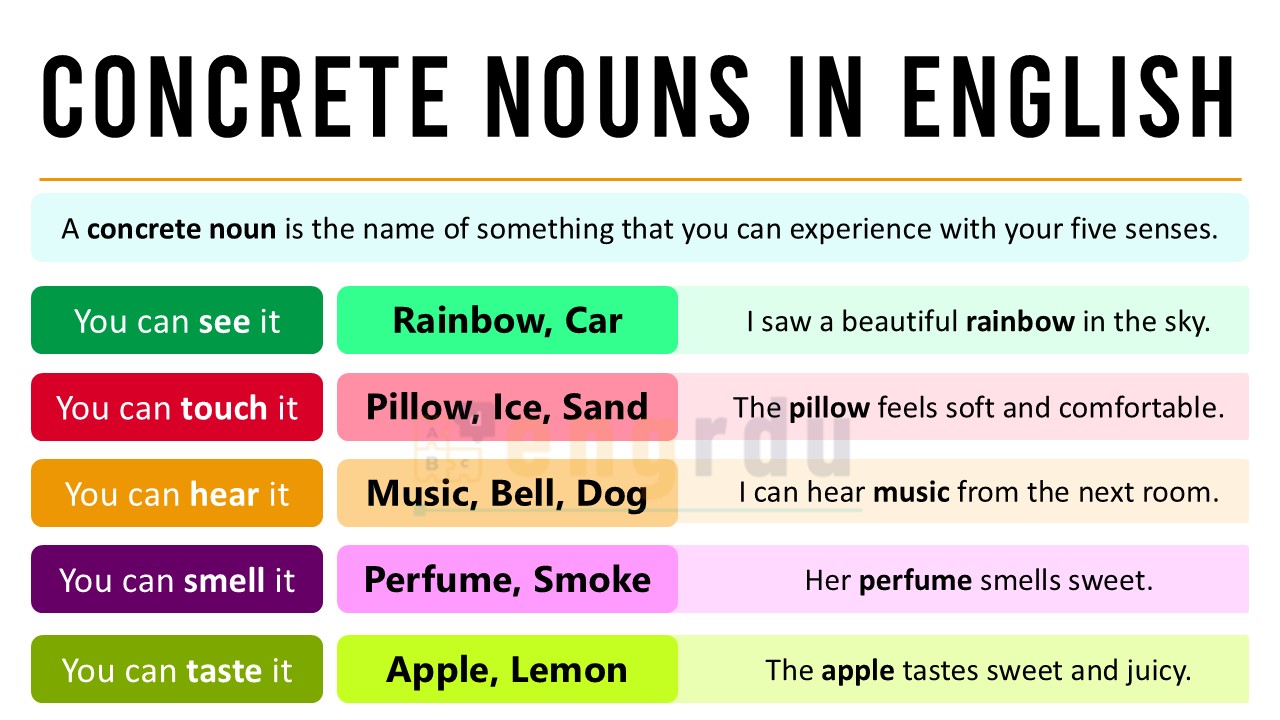
A concrete noun is the name of something that you can experience with your five senses:
1. You can see it:
| Sense | Concrete Noun | Example Sentence |
|---|---|---|
| See | Rainbow | I saw a beautiful rainbow in the sky. |
| Book | The book is on the table. | |
| Flower | The flower is bright yellow. | |
| Car | A red car is parked outside the house. | |
| Mountain | The mountain looks tall and majestic. |
2. You can touch it:
| Sense | Concrete Noun | Example Sentence |
|---|---|---|
| Touch | Pillow | The pillow feels soft and comfortable. |
| Ice | The ice is very cold to touch. | |
| Sand | The sand feels warm under my feet. | |
| Blanket | She wrapped herself in a warm blanket. | |
| Stone | The stone felt rough in my hand. |
3. You can hear it:
| Sense | Concrete Noun | Example Sentence |
|---|---|---|
| Hear | Music | I can hear music from the next room. |
| Bell | The bell rang loudly at school. | |
| Thunder | Thunder shook the windows. | |
| Dog | The dog barked loudly at night. | |
| Alarm | The alarm woke me up early. |
4. You can smell it:
| Sense | Concrete Noun | Example Sentence |
|---|---|---|
| Smell | Perfume | Her perfume smells sweet. |
| Smoke | I smelled smoke in the kitchen. | |
| Flower | The flower smells fresh and lovely. | |
| Coffee | The coffee smells strong and rich. | |
| Bread | Fresh bread smells delicious. |
5. You can taste it:
| Sense | Concrete Noun | Example Sentence |
|---|---|---|
| Taste | Apple | The apple tastes sweet and juicy. |
| Lemon | The lemon tastes sour. | |
| Chocolate | The chocolate tastes creamy. | |
| Soup | The soup tastes spicy. | |
| Ice cream | The ice cream tastes cold and sweet. |
In simple words:
A concrete noun is a real, physical thing.
Examples:
- apple – you can see and taste it
- dog – you can see and touch it
- music – you can hear it
- rose – you can see and smell it
- coffee – you can taste and smell it
If you can sense it with your body, it is usually a concrete noun.

Types of Concrete Nouns
Concrete nouns can be grouped into different types. This makes them easier to understand.
a) People
These nouns name real persons.
Examples:
- teacher
- doctor
- child
- mother
- friend
Sentence:
The teacher explained the lesson clearly.
b) Animals
These nouns name living creatures.
Examples:
- cat
- horse
- bird
- elephant
- fish
Sentence:
The bird is singing in the tree.
c) Places
These nouns name real locations.
Examples:
- school
- park
- city
- kitchen
- beach
Sentence:
We met in the park after school.
d) Objects / Things
These nouns name physical items.
Examples:
- table
- phone
- book
- chair
- car
Sentence:
My phone is on the table.
e) Food and Drink
These nouns name things you eat or drink.
Examples:
- bread
- rice
- milk
- tea
- chocolate
Sentence:
She likes milk in the morning.
f) Natural Things
These nouns name things from nature.
Examples:
- sun
- rain
- river
- mountain
- tree
Sentence:
The river looks beautiful at sunset.
Uses of Concrete Nouns
Here are simple rules and tips for using concrete nouns correctly.
Use articles (a, an, the) with singular concrete nouns
- Use a before a consonant sound:
a book, a dog, a car - Use an before a vowel sound:
an apple, an umbrella, an hour - Use the when the listener knows which thing you mean:
the book on the table
Example:
I saw a cat. The cat was very small.
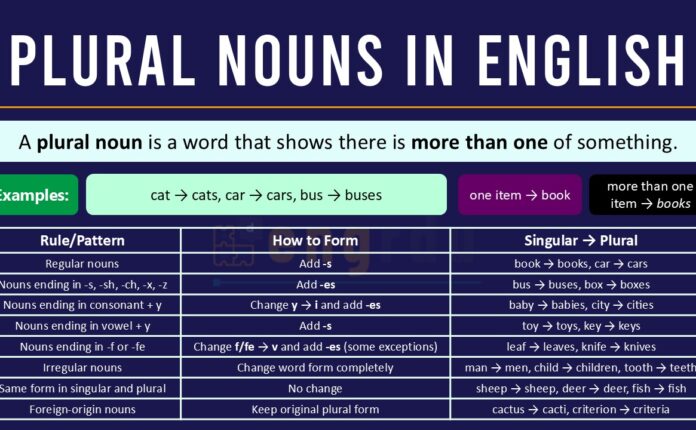
Use plural forms for more than one
Most concrete nouns become plural with -s or -es.
- one book → two books
- one box → two boxes
Example:
There are three chairs in the room.
Use concrete nouns as subjects or objects
Subject:
The boy is running.
Object:
She opened the door.
Use adjectives with concrete nouns
You can describe concrete nouns easily.
Examples:
- a big house
- a red apple
- a cold drink
Sentence:
She bought a new bag.
List of Concrete Nouns in English
Here’s the list of concrete nouns that used in the English language:
| Book | Phone | Chair | Water |
| Dog | Apple | Bag | Car |
| Table | School | Pen | Window |
| Bread | Shirt | Bus | Bottle |
| Door | Plate | Laptop | River |
| Flower | Clock | Spoon | Room |
| Teacher | Child | Market | Shoe |
| Milk | Tree | House | Garden |
| Road | City | Park | Beach |
| Cup | Bed | Mirror | Key |
| Ball | Box | Computer | Paper |
| Light | Camera | Watch | Wallet |
| Pencil | Notebook | Radio | TV |
| Train | Station | Ticket | Map |
| Hat | Coat | Gloves | Scarf |
Examples of Concrete Nouns
| Concrete Noun | Sentence |
|---|---|
| Book | I borrowed a book from the library. |
| Phone | My phone is charging on the table. |
| Chair | Please sit on this chair. |
| Water | She drank cold water after the walk. |
| Dog | The dog is sleeping near the door. |
| Apple | I ate an apple for breakfast. |
| Bag | He left his bag in the classroom. |
| Car | Their car is parked outside the house. |
| Table | The keys are on the table. |
| School | The children go to school every morning. |
| Pen | I need a pen to write this note. |
| Window | Open the window for fresh air. |
| Bread | We bought fresh bread from the shop. |
| Shirt | His shirt is clean and ironed. |
| Bus | She takes the bus to work. |
| Bottle | Fill the bottle with water. |
| Door | Close the door when you leave. |
| Plate | Put the food on the plate. |
| Laptop | My laptop is in my backpack. |
| River | The river flows behind the village. |
| Flower | She picked a red flower from the garden. |
| Clock | The clock shows ten o’clock. |
| Spoon | Use a spoon for the soup. |
| Room | This room is very quiet. |
| Teacher | The teacher explained the lesson clearly. |
| Child | The child is playing in the yard. |
| Market | We went to the market yesterday. |
| Shoe | His shoe is under the bed. |
| Milk | She poured milk into the glass. |
| Tree | The tree gives shade in summer. |
Common Mistakes with Concrete Nouns
Many learners make small mistakes with concrete nouns. Let’s fix them.
Confusing abstract and concrete nouns
Wrong:
I can see freedom.
Correct:
I can feel freedom. (freedom is abstract)
Forgetting articles
Wrong:
I bought book.
Correct:
I bought a book.
Wrong plural form
Wrong:
Two childs are here.
Correct:
Two children are here.
Using a/an incorrectly
Wrong:
She ate a apple.
Correct:
She ate an apple.
Using abstract nouns as if they were physical
Wrong:
He carried happiness in his bag.
Correct:
He carried a gift in his bag.
Concrete vs Abstract Nouns
Concrete nouns are often confused with abstract nouns. Let’s compare them.
| Feature | Concrete Nouns | Abstract Nouns |
|---|---|---|
| Can you see it? | Yes | No |
| Can you touch it? | Yes | No |
| Examples | book, dog, chair, water | love, fear, honesty, freedom |
| Experience with senses | Yes | No |
| Real object | Yes | No |
Tips for Learners
Here are simple ways to improve your use of concrete nouns:
- Look around your room and name five things in English.
- Touch an object and say its name aloud.
- Write five sentences every day using real objects.
- Read short stories and underline concrete nouns.
- Use pictures to learn new nouns faster.
- Practise with flashcards of real-life items.
- Speak about your daily routine using real things.
These habits build strong vocabulary and confidence.
Conclusion
Concrete nouns help you talk about the real world. They name people, places, animals, food, and things you can experience with your senses. You now know their meaning, types, rules, examples, and common mistakes. You also learned how they are different from abstract nouns. Use concrete nouns when you describe your life, your home, your school, and your daily activities. Keep practising every day, and your English will become clearer, stronger, and more natural.
Frequently Asked Questions
What is a concrete noun and examples?
A concrete noun is the name of something you can see, touch, hear, smell, or taste. It refers to a real, physical thing. For example: book, dog, apple, chair, water, teacher, car, and flower. These words help learners talk clearly about the real world.
What are 10 concrete examples?
Ten common concrete nouns are: book, phone, chair, apple, dog, car, school, water, table, and tree. Each one names a real object, person, place, or thing that you can experience with your senses. These words are useful for daily speaking and writing in simple, clear English.
What is the difference between Concrete and Abstract Nouns?
Concrete nouns name physical things you can sense, like book, child, or milk. Abstract nouns name ideas or feelings you cannot touch or see, like love, happiness, or freedom. In short, concrete nouns are real and visible, while abstract nouns are mental and emotional.
Can you give a list of Concrete Nouns?
Yes. A simple list of concrete nouns includes: book, pen, bag, chair, table, phone, apple, water, milk, dog, cat, teacher, school, car, bus, tree, flower, river, room, and door. These words help learners describe real people, places, and objects.
Read More