Interjection: Definition, Types, Uses, and Examples
An interjection is a word or phrase that expresses strong emotion, surprise, or reaction, like Wow!, Oops!, or Hurray!. In this Grammar lesson, learning…
Read lesson →Grammar is the foundation of effective English communication. This category covers all essential topics including tenses, parts of speech, sentence structure, punctuation, and common grammar rules. Each lesson provides simple explanations, examples, and exercises to help learners write, speak, and understand English correctly. Whether you are a beginner or looking to polish your skills, this category makes mastering grammar easy, practical, and enjoyable.
An interjection is a word or phrase that expresses strong emotion, surprise, or reaction, like Wow!, Oops!, or Hurray!. In this Grammar lesson, learning…
Read lesson →A conjunction is a word that connects words, phrases, or clauses, such as and, but, and because. In this Grammar lesson, learning conjunctions helps…
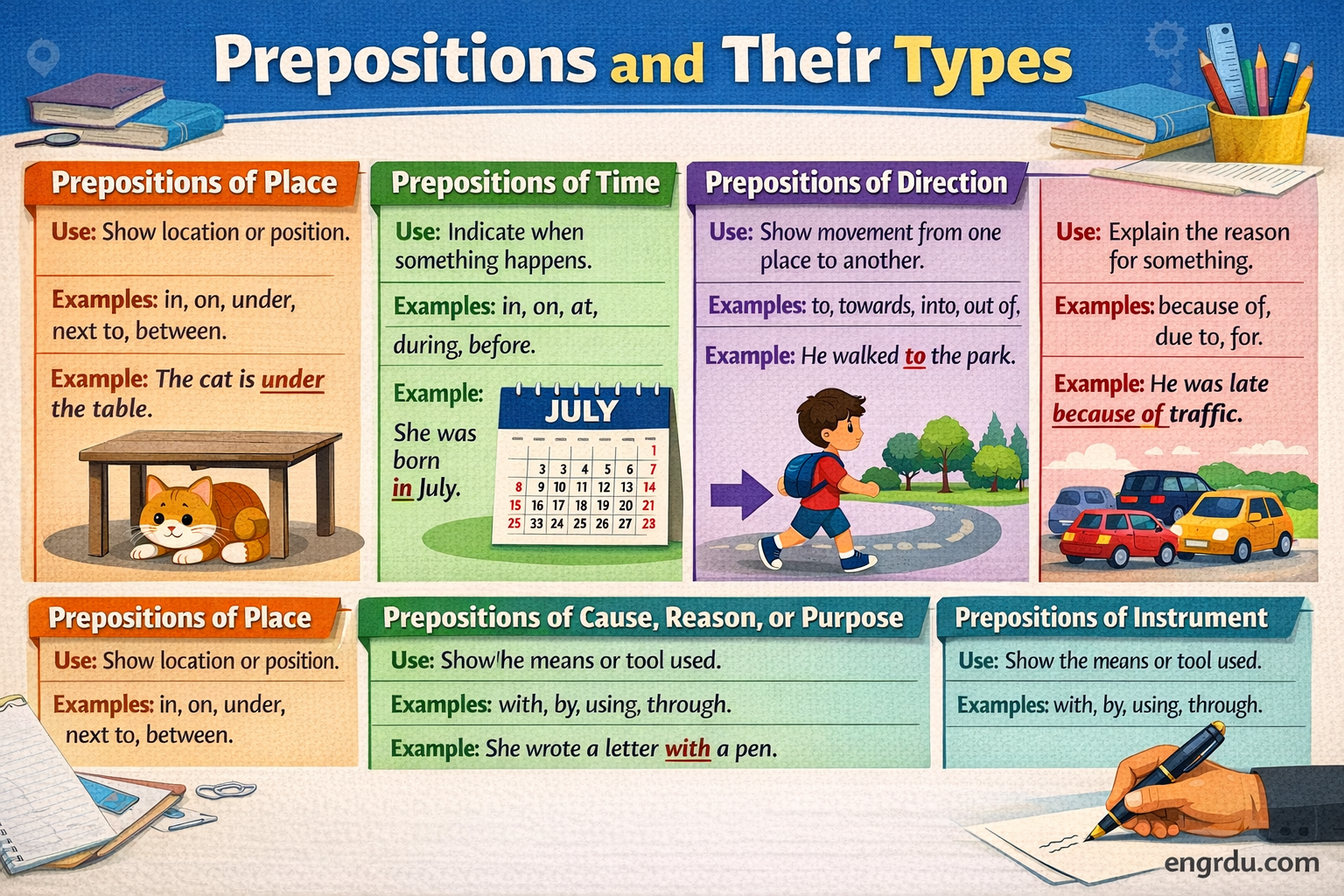
Read lesson →A preposition is a word that shows the relationship between a noun or pronoun and other words in a sentence, such as in, on,…
Read lesson →An adjective is a word that describes a noun or pronoun, giving more information about its quality, quantity, or state, such as beautiful, tall,…
Read lesson →An adverb is a word that describes a verb, adjective, or another adverb, showing how, when, where, or to what extent something happens, like…
Read lesson →A verb is a word that expresses an action, occurrence, or state of being, such as run, eat, or exist. In this Grammar lesson,…
Read lesson →A pronoun is a word that replaces a noun to avoid repetition, such as he, she, it, or they. In this Grammar lesson, learning…
Read lesson →A noun is a word that names a person, place, thing, or idea, such as teacher, city, book, or freedom. In this Grammar lesson,…
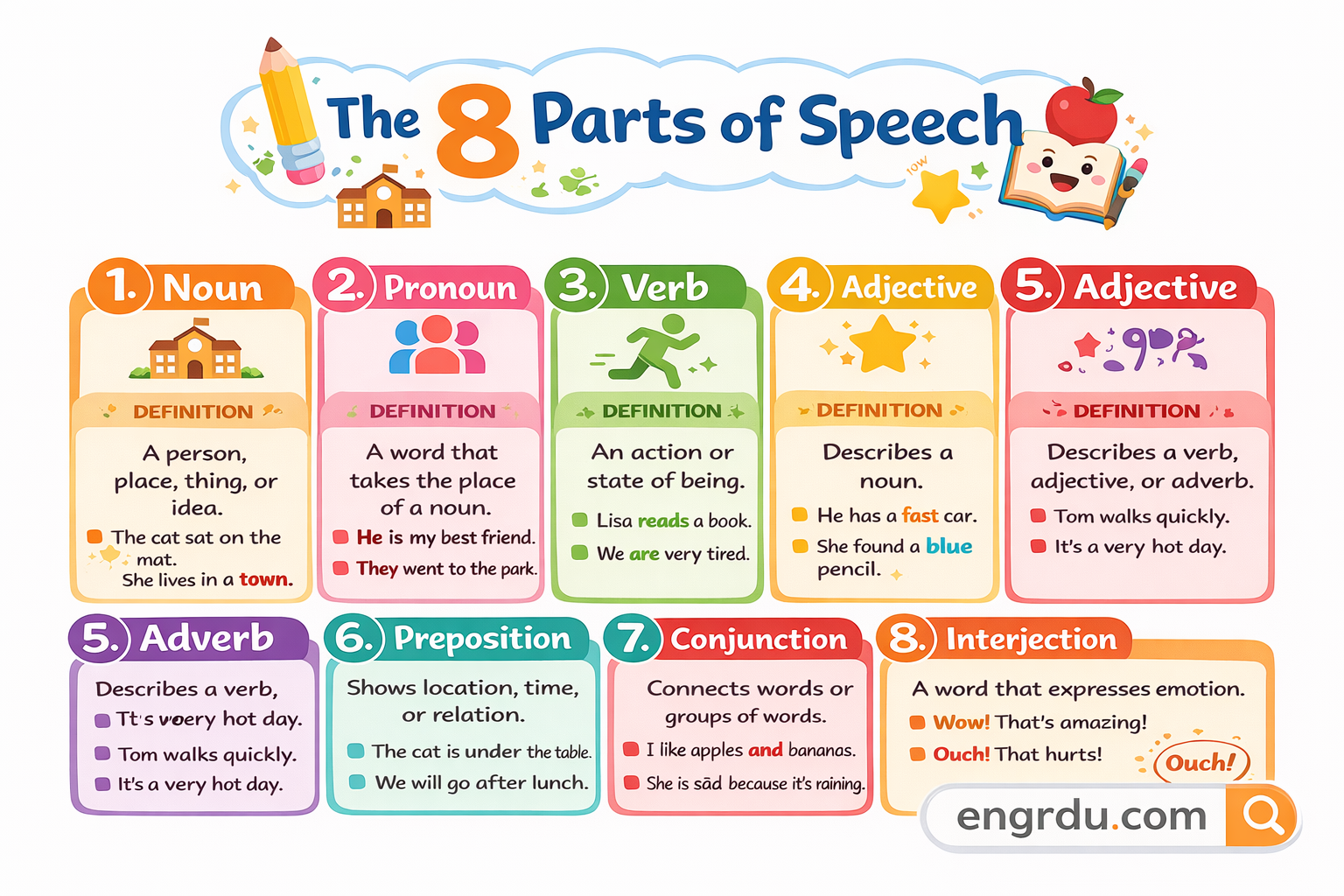
Read lesson →English has 8 parts of speech, and each plays an important role in forming sentences. These include nouns, pronouns, verbs, adjectives, adverbs, prepositions, conjunctions,…
Read lesson →The Present Perfect Continuous Tense is used to show actions that started in the past and are still continuing or were recently completed. In…
Read lesson →Talking about the future in English can feel like a trap. If you say, “I will visit my mother this weekend,” native speakers will…
Read lesson →If you have ever felt like you are flipping a coin when choosing between “may” and “might,” you are not alone. These two words…
Read lesson →