
Some nouns cannot be seen or touched, but we can feel and experience them. A Abstract Noun names ideas, emotions, qualities, and states such as love, honesty, and freedom. In this Vocabulary lesson, you will learn how these important words are used in real sentences. Understanding abstract nouns helps you express thoughts and feelings more deeply in English. In this blog post, you will explore 100+ abstract noun examples in sentences to improve your vocabulary and sentence-building skills step by step.
What is an Abstract Noun?
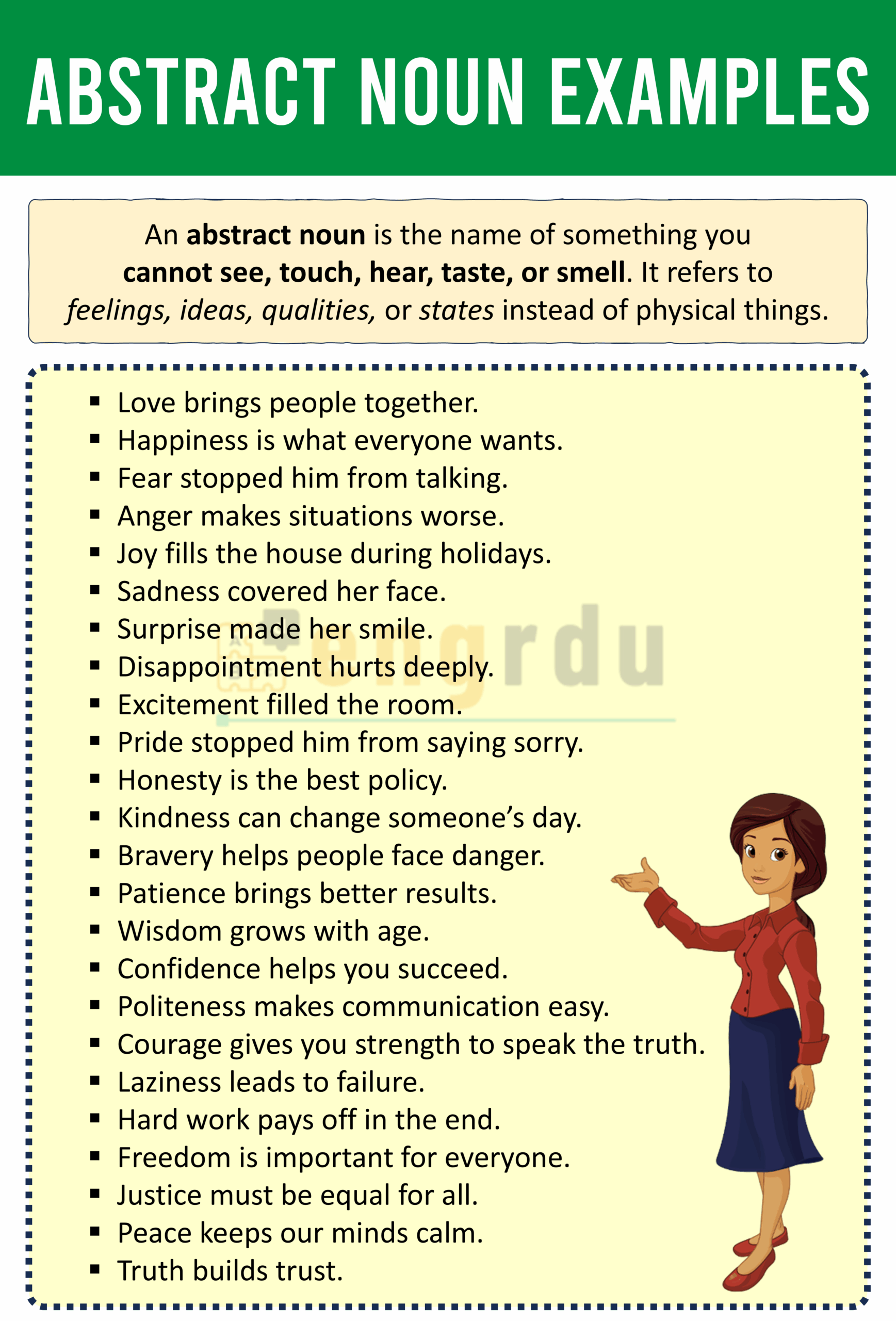
An abstract noun is the name of something you cannot see, touch, hear, taste, or smell. It refers to feelings, ideas, qualities, or states instead of physical things.
Example:
Love, happiness, freedom, and honesty are abstract nouns because we cannot touch or see them.
Abstract Noun Definition
Abstract nouns describe things we feel or think, not things we can see or hold.
How to Identify an Abstract Noun
You can easily identify an abstract noun by asking yourself:
- Can I touch or see it?
If no, it’s an abstract noun. - Does it describe a feeling, idea, or state?
If yes, it’s an abstract noun.
Abstract Noun Categories
| Category | Examples |
|---|---|
| Feelings / Emotions | Love, Anger, Fear, Joy, Happiness |
| Qualities | Honesty, Bravery, Kindness, Wisdom |
| Ideas | Freedom, Peace, Justice, Truth |
| States | Sleep, Childhood, Poverty, Tiredness |
| Time | Youth, Age, Moment, Future |
100+ Abstract Noun Examples in Sentences
1. Abstract Nouns of Feelings
- Love brings people together.
- Happiness is what everyone wants.
- Fear stopped him from talking.
- Anger makes situations worse.
- Joy fills the house during holidays.
- Sadness covered her face.
- Surprise made her smile.
- Disappointment hurts deeply.
- Excitement filled the room.
- Pride stopped him from saying sorry.
2. Abstract Nouns of Qualities
- Honesty is the best policy.
- Kindness can change someone’s day.
- Bravery helps people face danger.
- Patience brings better results.
- Wisdom grows with age.
- Confidence helps you succeed.
- Politeness makes communication easy.
- Courage gives you strength to speak the truth.
- Laziness leads to failure.
- Hard work pays off in the end.
3. Abstract Nouns of Ideas
- Freedom is important for everyone.
- Justice must be equal for all.
- Peace keeps our minds calm.
- Truth builds trust.
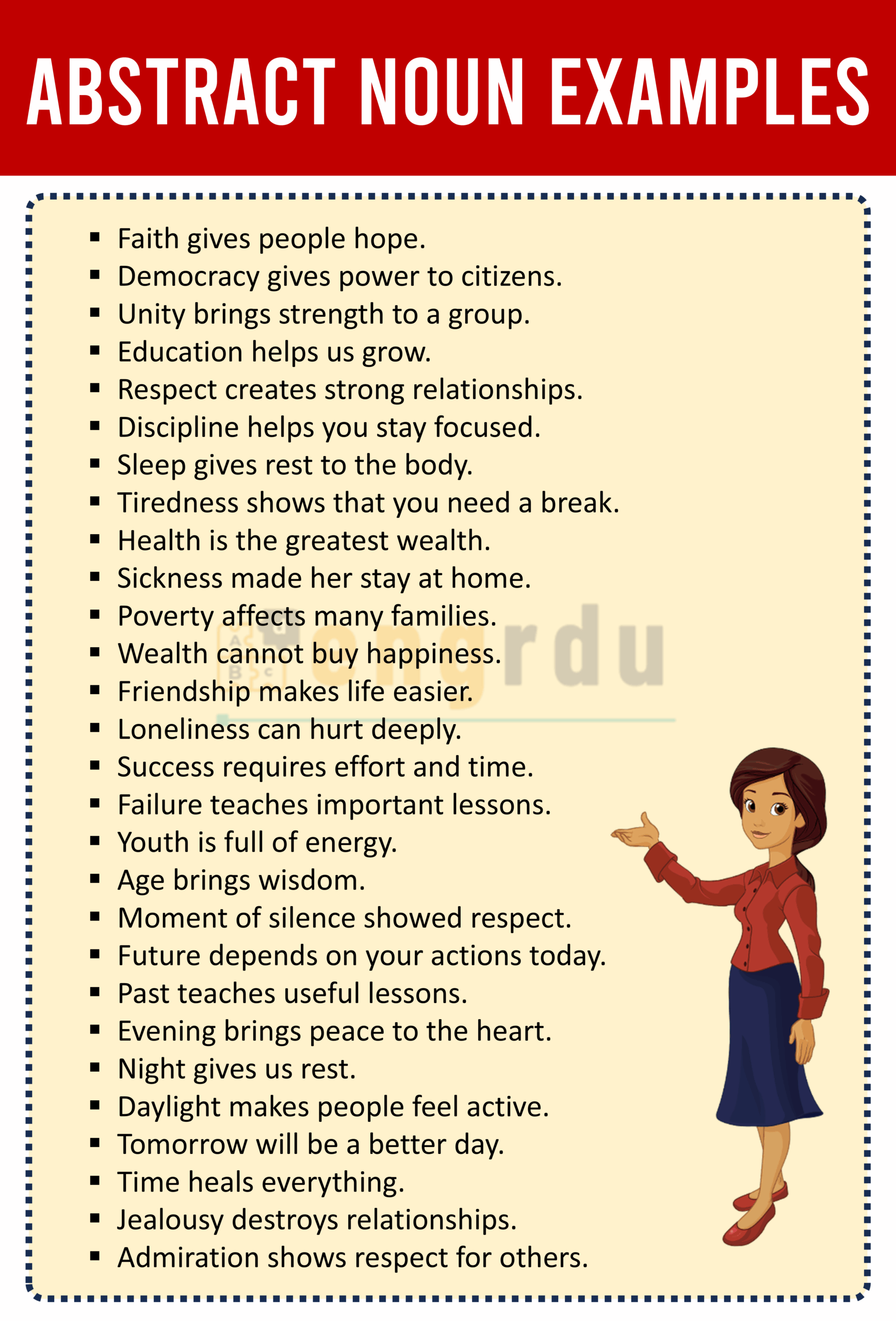
- Faith gives people hope.
- Democracy gives power to citizens.
- Unity brings strength to a group.
- Education helps us grow.
- Respect creates strong relationships.
- Discipline helps you stay focused.
4. Abstract Nouns of States or Conditions
- Sleep gives rest to the body.
- Tiredness shows that you need a break.
- Health is the greatest wealth.
- Sickness made her stay at home.
- Poverty affects many families.
- Wealth cannot buy happiness.
- Friendship makes life easier.
- Loneliness can hurt deeply.
- Success requires effort and time.
- Failure teaches important lessons.
5. Abstract Nouns of Time
- Youth is full of energy.
- Age brings wisdom.
- Moment of silence showed respect.
- Future depends on your actions today.
- Past teaches useful lessons.
- Evening brings peace to the heart.
- Night gives us rest.
- Daylight makes people feel active.
- Tomorrow will be a better day.
- Time heals everything.
6. Abstract Nouns of Emotions and Reactions
- Jealousy destroys relationships.
- Admiration shows respect for others.
- Anguish was written on his face.
- Relief came after hearing the news.
- Gratitude makes life more beautiful.
- Regret cannot change the past.
- Curiosity leads to learning.
- Hope keeps us moving forward.
- Forgiveness brings peace of mind.
- Trust is the base of friendship.
7. Abstract Nouns of Qualities in People
- Honour is more valuable than money.
- Generosity wins people’s hearts.
- Humility makes you respected.
- Faithfulness builds strong bonds.
- Loyalty is rare but precious.
- Creativity makes work interesting.
- Politeness opens doors.
- Sincerity shows real character.
- Cleverness helped her find a quick solution.
- Responsibility makes you reliable.
8. Abstract Nouns of Life Experiences
- Adventure brings excitement to life.
- Change is a part of living.
- Growth happens slowly.
- Failure is not the end.
- Learning never stops.
- Progress takes time.
- Decision affects your future.
- Dreams inspire us to work harder.
- Memory keeps old moments alive.
- Loss teaches the value of love.
9. Abstract Nouns of Knowledge and Thought
- Knowledge gives you power.
- Imagination creates ideas.
- Understanding builds good relationships.
- Belief keeps hope alive.
- Awareness helps you make better choices.
- Judgment must be fair.
- Focus brings success.
- Wisdom comes through experience.
- Thought changes action.
- Doubt weakens confidence.
10. Abstract Nouns in Common Daily Situations
- Silence filled the classroom.
- Noise disturbed everyone.
- Traffic causes stress.
- Luck helped him get the job.
- Weather affects our mood.
- Beauty attracts everyone.
- Comfort makes life easy.
- Safety is very important.
- Joy filled the house during the party.
- Calmness makes the mind peaceful.
Abstract Nouns Used in Different Contexts
Emotion and Quality
Love as an emotion: Love makes people happy.
Love as a quality: Her love for animals is strong.
State and Idea
Peace as a state: The peace of the village was broken.
Peace as an idea: Everyone dreams of peace in the world.
Thought and Feeling
Hope as a feeling: Hope keeps us strong.
Hope as an idea: The hope of success inspires many people.
Now you’ve seen more than 100 abstract noun examples in everyday sentences. Try to use these words in your daily speaking and writing to express thoughts, emotions, and ideas more clearly.

FAQs about Abstract Noun Example Sentences
What is an abstract noun with an example sentence?
An abstract noun names an idea, feeling, or quality that cannot be seen or touched. Example: Honesty builds trust.
How do you identify an abstract noun in a sentence?
If the word names something you cannot see, touch, or hear—like love or peace—it’s an abstract noun.
What are 5 common examples of abstract nouns?
Common examples include happiness, freedom, kindness, love, and wisdom.
How are abstract nouns used in daily conversation?
They express emotions and ideas. Example: Patience helps us make better decisions.
Why are abstract nouns important in English grammar?
They help describe feelings, states, and ideas clearly, improving communication and expression in both speech and writing.
Read More