In this blog post, you will learn welding tools names and uses and how to understand them with pictures. This type of vocabulary helps you learn the real words used in workshops, factories, and technical work. When you study these terms, you build strong knowledge of English used in practical situations. It helps you speak more confidently when talking about tools and work tasks. You also improve your reading skills by understanding manuals and instructions. At the same time, it strengthens your writing and listening skills because you recognize these words in real conversations. By learning these tools step by step, you can understand how welding works and use English in real life with confidence.
What Are Welding Tools?
Welding tools are machines and hand tools used to heat and join metal parts. Workers use them to build gates, cars, pipes, and many metal structures.
Why Learn Welding Vocabulary?
Learning welding tool names helps you:
- Understand instructions easily
- Speak clearly in technical settings
- Improve reading and listening skills
- Build strong English vocabulary
Common Welding Tools Names and Uses
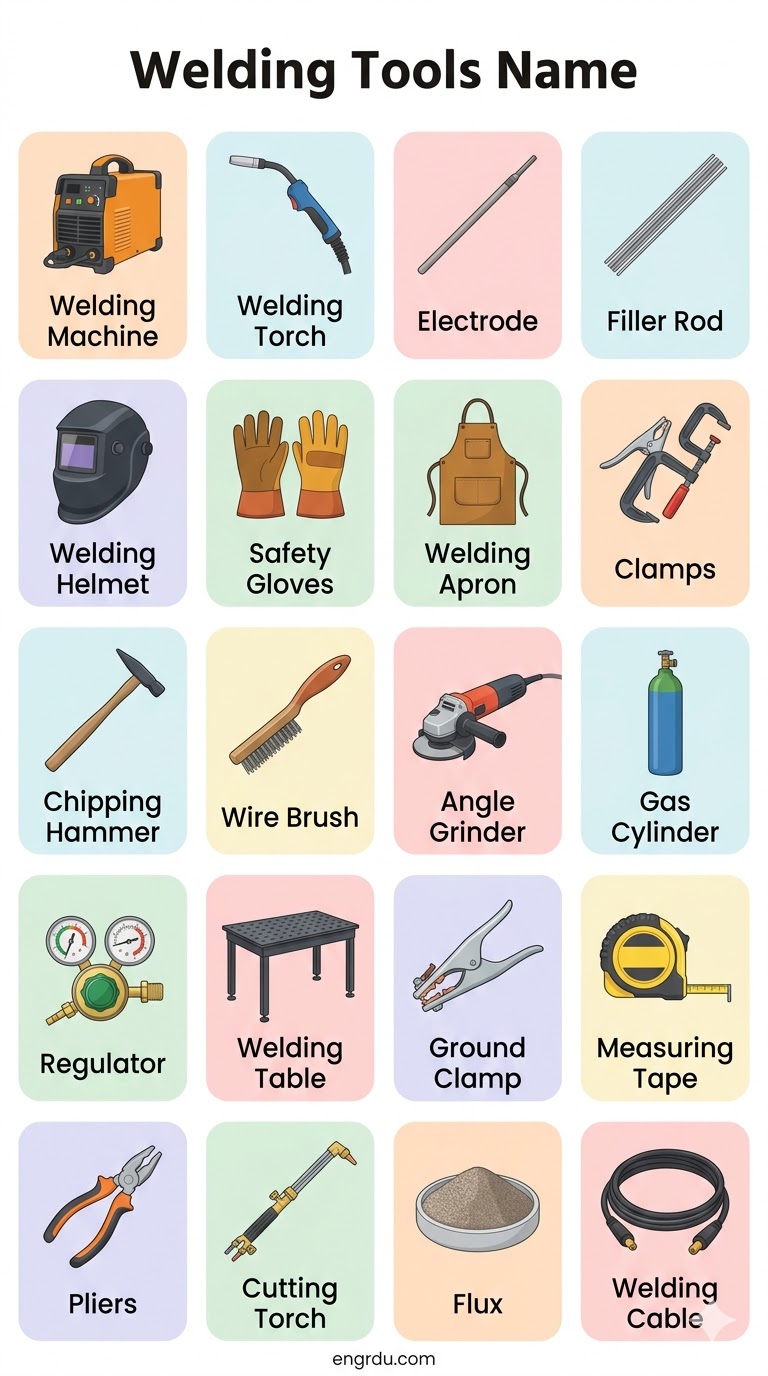
Here are 20 important welding tools with simple meanings:
- Welding Machine – A device that provides power to join metals
- Welding Torch – A tool that produces heat or flame for welding
- Electrode – A metal rod that melts to join two pieces
- Filler Rod – Extra metal added to make joints stronger
- Welding Helmet – A protective helmet for the eyes and face
- Safety Gloves – Gloves that protect hands from heat and sparks
- Welding Apron – A protective cover worn on the body
- Clamps – Tools used to hold metal pieces tightly
- Chipping Hammer – Used to remove slag after welding
- Wire Brush – Cleans the metal surface
- Angle Grinder – A machine used to cut and smooth metal
- Gas Cylinder – Stores gas used in welding
- Regulator – Controls the flow of gas
- Welding Table – A strong table used for welding work
- Ground Clamp – Connects the welding machine to metal
- Measuring Tape – Measures the length of metal
- Pliers – Used to hold or move hot metal
- Cutting Torch – Used to cut metal using heat
- Flux – A material that helps clean and protect the weld
- Welding Cable – Carries electricity from the machine
Types of Welding Equipment
Different welding jobs need different tools:
1. Electric Welding Tools
- Welding machine
- Electrode holder
- Welding cable
2. Gas Welding Tools
- Gas cylinder
- Regulator
- Welding torch
3. Cutting and Finishing Tools
- Angle grinder
- Cutting torch
- Wire brush
List of Welding Tools Names and Uses
Main Welding Machines and Power Tools
These tools produce heat and power for welding:
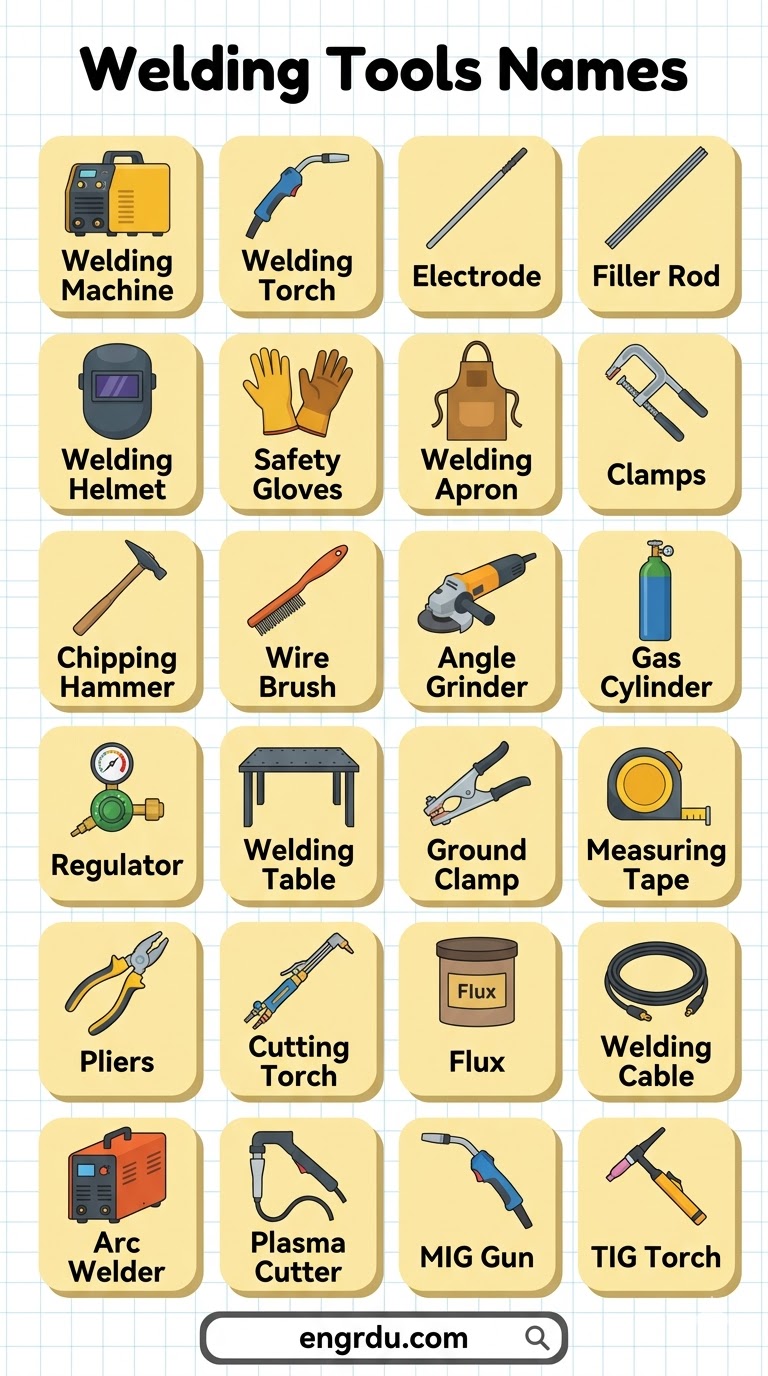
- Welding Machine – Supplies electric power for welding
- Arc Welder – Joins metal using electric arc
- MIG Welder (GMAW Machine) – Uses wire and gas for welding
- TIG Welder (GTAW Machine) – Uses tungsten electrode for clean welding
- Spot Welding Machine – Joins thin metal sheets
- Plasma Cutter – Cuts metal using hot plasma
- Inverter Welder – Lightweight modern welding machine
- Generator (Portable Power Source) – Provides electricity where needed
Welding Torch and Hand Tools
Used directly by the welder:
- Welding Torch – Produces heat/flame
- Cutting Torch – Cuts metal with flame
- Electrode Holder (Stinger) – Holds the electrode rod
- MIG Gun – Feeds wire and gas in MIG welding
- TIG Torch – Holds tungsten electrode
- Filler Rod – Adds metal to the joint
- Electrode (Welding Rod) – Melts to join metals
- Contact Tip – Guides the wire in MIG welding
- Nozzle – Controls gas flow
Gas Welding Equipment
Used in gas welding systems:
- Oxygen Cylinder – Stores oxygen gas
- Acetylene Cylinder – Stores fuel gas
- Gas Regulator – Controls gas pressure
- Flow Meter – Measures gas flow
- Flashback Arrestor – Prevents fire from going backward
- Gas Hose – Carries gas to the torch
Clamping and Holding Tools
Used to hold metal pieces in place:
- Ground Clamp – Connects welding circuit
- C-Clamp – Holds metal tightly
- Locking Pliers (Vice Grips) – Strong grip on metal
- Magnetic Welding Holder – Holds metal at angles
- Bench Vise – Holds workpiece on table
Measuring and Marking Tools
Used for accuracy:
- Measuring Tape – Measures length
- Steel Ruler – Straight measurement tool
- Square Tool – Checks 90° angle
- Chalk/Marker – Marks metal
- Scriber – Scratches lines on metal
Cleaning and Finishing Tools
Used before and after welding:
- Chipping Hammer – Removes slag
- Wire Brush – Cleans weld surface
- Angle Grinder – Cuts and smooths metal
- Grinding Disc – Used with grinder
- Flap Disc – Smooth finishing
- Sandpaper – Polishes surface
- Needle Scaler – Removes rust and slag
Safety Equipment
Protects the welder:
- Welding Helmet – Protects eyes and face
- Auto-Darkening Helmet – Adjusts light automatically
- Safety Glasses – Protects eyes from dust
- Face Shield – Extra face protection
- Welding Gloves – Heat-resistant gloves
- Welding Jacket – Protects upper body
- Welding Apron – Covers front body
- Safety Boots – Protects feet
- Ear Protection (Earplugs) – Protects hearing
- Respirator Mask – Protects from fumes
Welding Table and Work Area Tools
- Welding Table – Strong surface for work
- Fire Blanket – Prevents fire spread
- Tool Box – Stores tools
- Extension Cable – Supplies electricity
- Cable Connector – Joins cables
Advanced and Supporting Tools
- Welding Positioner – Rotates workpiece
- Welding Cart – Holds machine and tools
- Cooling System – Prevents overheating
- Fume Extractor – Removes harmful smoke
- Laser Welder – High-precision welding tool
Daily Use Welding Vocabulary
Here are some simple words used every day:
- Weld – to join metal
- Spark – small fire particles
- Heat – high temperature
- Metal – hard material like iron
- Joint – where two pieces meet
Example:
“I use a welding torch to join metal pieces.”
Tips to Remember Tool Names
- Learn 3–5 words daily
- Use pictures to remember tools
- Practice speaking the words
- Watch videos of welding work
- Repeat words in sentences
FAQs
What are welding tools?
Welding tools are equipment and instruments used to join two or more metal pieces together using heat, pressure, or both. These tools help melt the metal and create a strong, permanent bond. Common examples include a welding machine, torch, electrode, and protective gear like a helmet and gloves.
What are the most common welding tools names and uses?
Common welding tools include welding machine, torch, electrode, helmet, gloves, and clamp. Each tool helps in heating, joining, holding, or protecting during the welding process.
Which tools are needed for basic welding work?
Basic welding requires a welding machine, electrode holder, welding rods, ground clamp, helmet, and gloves. These tools allow a beginner to weld safely and correctly.
What safety tools are used in welding?
Welding safety tools include helmet, gloves, apron, safety boots, and goggles. These protect the welder from heat, sparks, harmful light, and dangerous fumes.
What is the use of a welding machine?
A welding machine provides electric power to create heat. This heat melts metal and joins two pieces together, making it the most important tool in welding.
What is the difference between MIG, TIG, and arc welding tools?
MIG uses wire and gas, TIG uses a tungsten electrode, and arc welding uses a coated rod. Each tool works differently but joins metal effectively.
What tools are used to clean and finish welds?
Tools like chipping hammer, wire brush, and angle grinder are used. They remove slag, clean the surface, and smooth the weld for a neat finish.
Related Articles:
Conclusion
Welding tools names and uses are important for anyone learning technical English. These words help you understand real work situations and communicate better. Start with common tools, practice daily, and slowly build your vocabulary. With time, you will speak and understand welding terms with confidence.