Knowing drink names in Spanish helps you speak, read, and understand conversations at restaurants, cafes, and markets. In this Vocabulary lesson, you will learn the names of drinks in Spanish along with English translations and pictures to remember them easily. Using these words correctly makes ordering and talking about beverages much easier. In this blog post, you will explore 30+ drink names in Spanish with English and pictures to practice and use them confidently in everyday situations.
Names of Drinks in Spanish
Drinks in Spanish are called “bebidas”. The word bebidas includes any liquid you can drink. Drinks are often used in different situations, such as:
- At home – drinking water or juice
- At a café – ordering coffee or tea
- At a party – enjoying soft drinks or cocktails
Knowing drink names helps you speak Spanish naturally and understand menus or conversations.
Types of Drinks
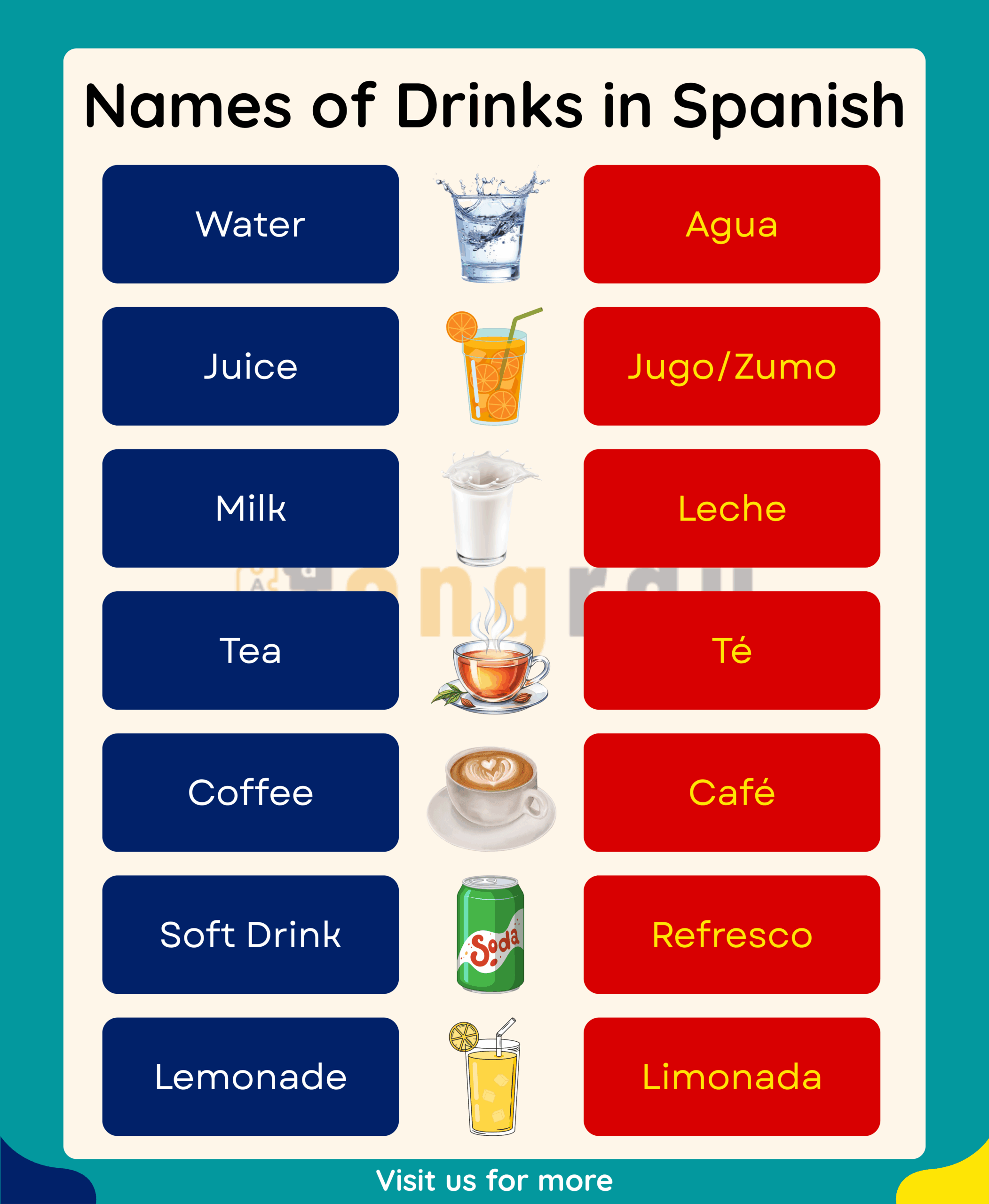
Non-Alcoholic Drinks
These are drinks you can enjoy anytime without alcohol.
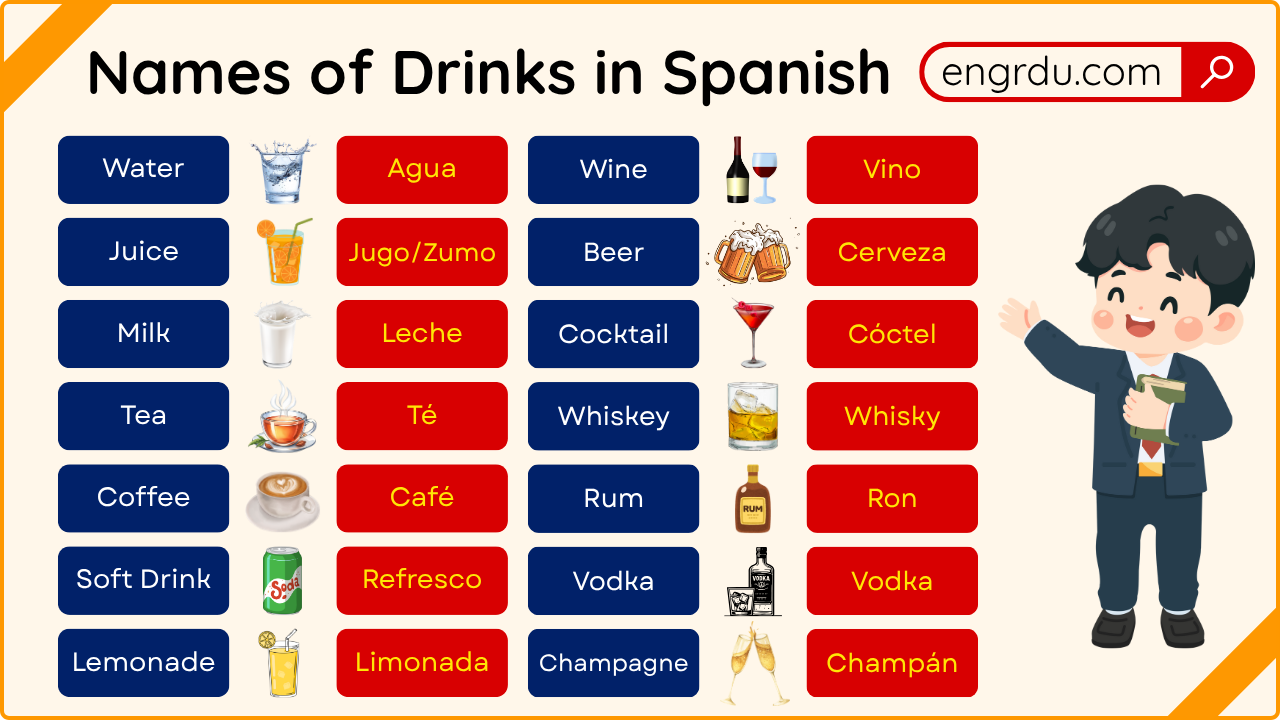
- Water – agua
- Juice – jugo / zumo
- Coffee – café
- Tea – té
- Milk – leche
- Soft drinks – refresco
- Lemonade – limonada
- Hot chocolate – chocolate caliente
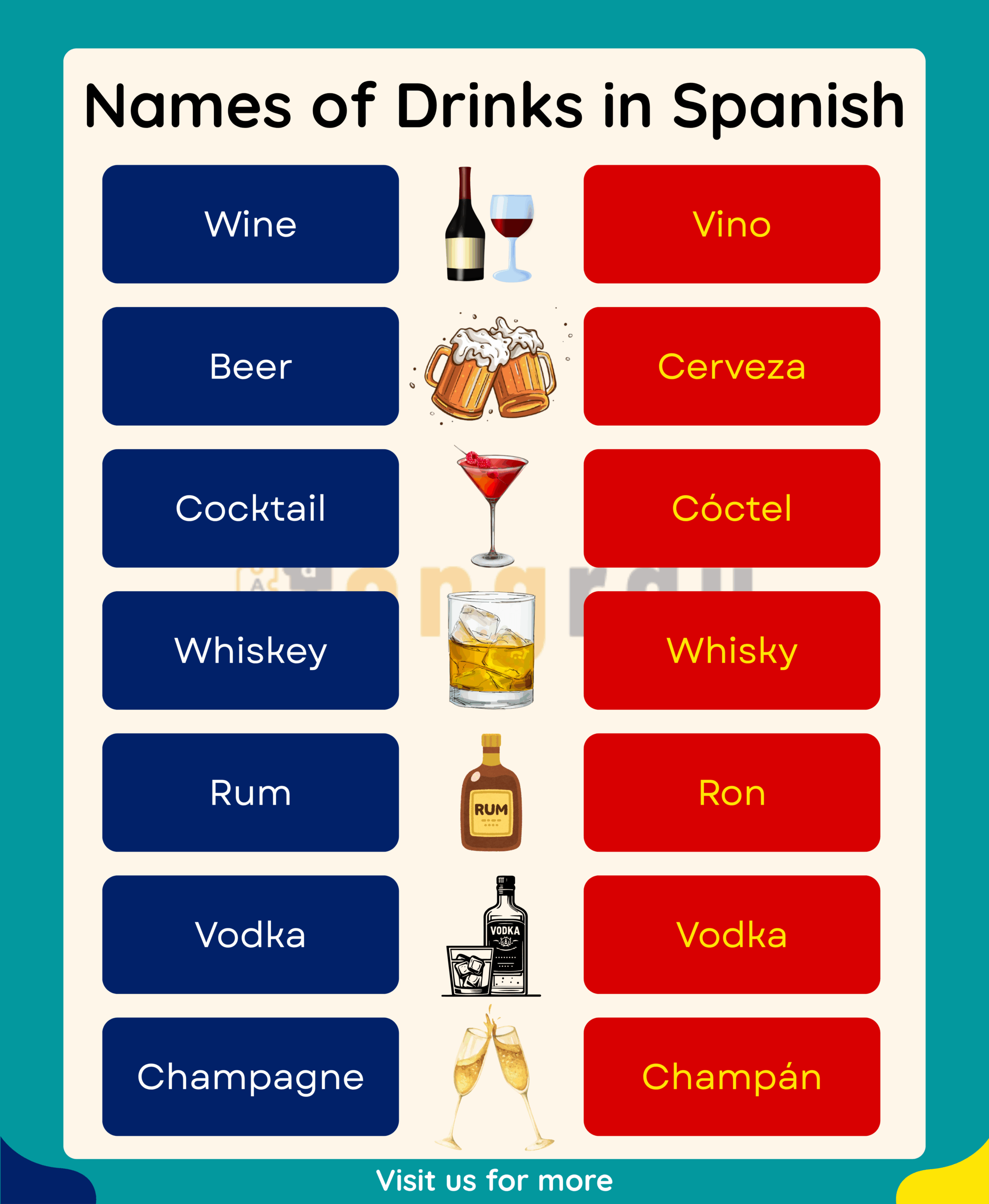
Alcoholic Drinks
These are drinks containing alcohol, usually for adults in social situations.
- Wine – vino
- Beer – cerveza
- Cocktail – cóctel
- Whiskey – whisky
- Rum – ron
- Vodka – vodka
- Champagne – champán
30+ Names of Drinks in Spanish with English
Here is a list of 30+ popular drinks for easy learning:
| Names of Drinks in Spanish | Names of Drinks in English |
|---|---|
| Agua | Water |
| Jugo / Zumo | Juice |
| Leche | Milk |
| Té | Tea |
| Café | Coffee |
| Refresco | Soft Drink |
| Limonada | Lemonade |
| Chocolate Caliente | Hot Chocolate |
| Batido | Milkshake |
| Agua con Gas | Sparkling Water |
| Vino | Wine |
| Cerveza | Beer |
| Cóctel | Cocktail |
| Whisky | Whiskey |
| Ron | Rum |
| Vodka | Vodka |
| Champán | Champagne |
| Sidra | Cider |
| Tequila | Tequila |
| Sangría | Sangria |
| Mojito | Mojito |
| Margarita | Margarita |
| Horchata | Horchata |
| Café con Leche | Coffee with Milk |
| Agua de Coco | Coconut Water |
| Mate | Mate Tea |
| Infusión | Herbal Tea |
| Smoothie | Smoothie |
| Granizado | Slush |
| Cidra | Apple Cider |
| Aperitivo | Aperitif |
Tips to Remember Drink Names
- Group drinks into categories (hot, cold, alcoholic, non-alcoholic).
- Use flashcards with Spanish on one side and English on the other.
- Practice ordering drinks at cafés or restaurants.
- Repeat often – short daily practice is better than long sessions.
Learning the names of drinks in Spanish is easy and useful. By practising these words and using simple examples, you can communicate confidently and enjoy drinks anywhere.
FAQs
What is the Spanish word for drinks?
The Spanish word for drinks is “bebidas”. It includes any liquid you can drink, like water, juice, or coffee.
How do you say water in Spanish?
Water in Spanish is “agua”. It is a basic and common drink word.
What are common non-alcoholic drinks in Spanish?
Common non-alcoholic drinks include agua (water), café (coffee), té (tea), jugo/zumo (juice), leche (milk), and limonada (lemonade).
How do you say wine and beer in Spanish?
Wine is “vino” and beer is “cerveza” in Spanish, commonly used in restaurants and social events.
What is a cocktail called in Spanish?
A cocktail in Spanish is called “cóctel”, used for mixed drinks at parties or bars.
Are there special Spanish drinks for children?
Yes, children often drink batido (milkshake), jugo/zumo (juice), chocolate caliente (hot chocolate), and limonada (lemonade).
How can I remember Spanish drink names easily?
Group drinks by type, use flashcards, and practice ordering at cafés. Short daily repetition works best.
Read More