In this blog post, you will learn the names of common hairdresser, tools, and vocabulary used in a salon. These are the words for the items hairdressers use to cut, dry, style, and manage hair. English learners often hear these words in daily conversations, beauty shops, and service places. When you understand these tool names, it becomes easier to talk about haircuts, read salon-related texts, and follow spoken instructions. Knowing this vocabulary also helps you write better sentences about personal care and grooming. As you continue reading, you will learn important hairdresser tools and understand how each one is used in real situations.
What Are Hairdresser Tools?
Hairdresser tools are special tools used to cut, wash, dry, and style hair. Hairdressers use these tools in salons to create different hairstyles.
Each tool has a specific job. Some tools cut hair, while others help shape or style it. Learning these words helps students understand how a hair salon works.
Why Learn Hairdresser Tools Vocabulary?
Learning this vocabulary is helpful for English learners for many reasons.
- First, these words appear in everyday conversations. For example, someone may say, “The hairdresser used scissors and a comb.”
- Second, it helps learners describe grooming and personal care activities.
- Finally, learning vocabulary related to jobs and tools builds stronger language skills and improves real-life communication.
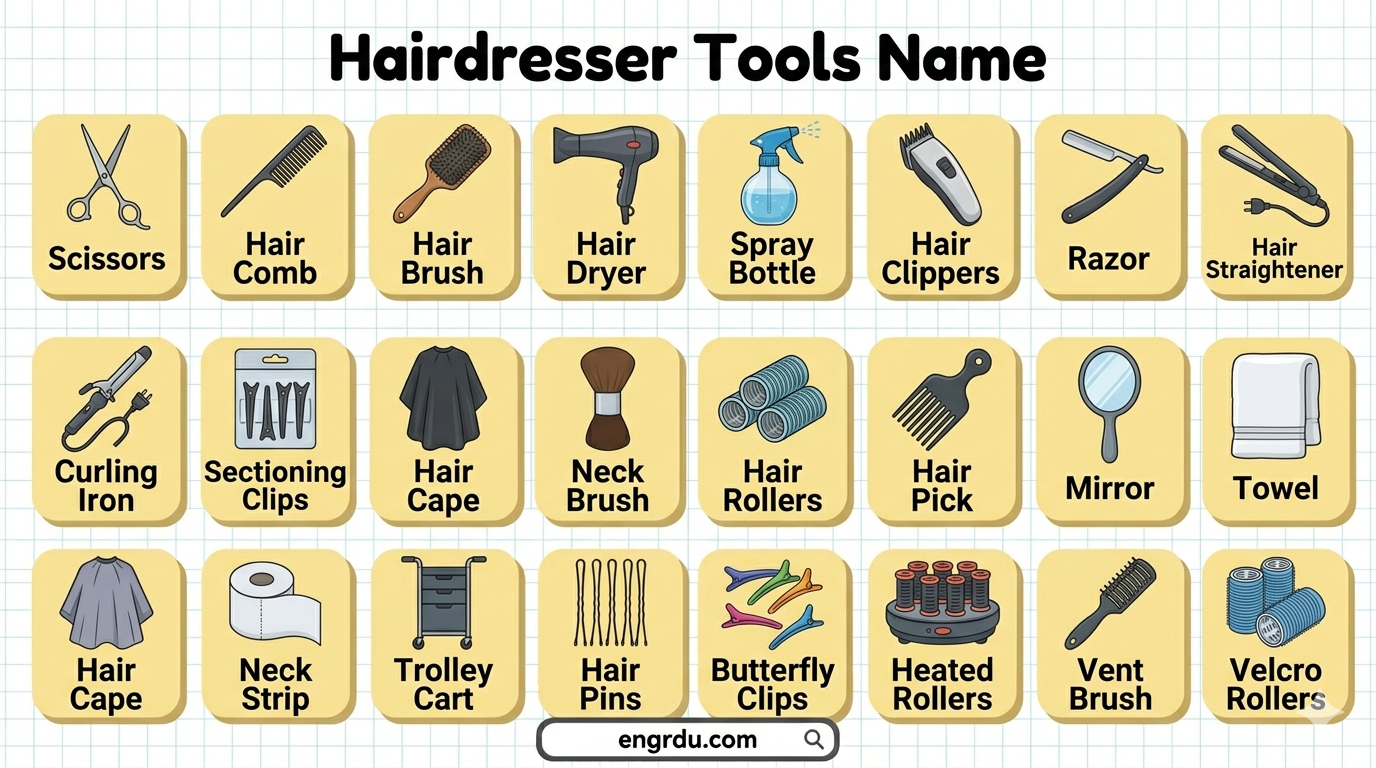
Common Hairdresser Tools Names with Pictures
Below are important hairdresser tools and their uses with pictures.
- Scissors – Used to cut hair into different lengths and styles.
- Hair Comb – Helps separate and arrange hair before cutting or styling.
- Hair Brush – Used to smooth and untangle hair.
- Hair Dryer – Dries wet hair using warm or hot air.
- Spray Bottle – Sprays water on hair to make it easier to cut.
- Hair Clippers – Electric tool used to cut very short hair.
- Razor – Used to thin hair or create sharp haircut lines.
- Hair Straightener – Makes curly or wavy hair straight using heat.
- Curling Iron – Creates curls or waves in hair.
- Sectioning Clips – Hold parts of the hair while the hairdresser works on another section.
- Hair Cape – A large cloth placed around the customer to keep hair off clothes.
- Neck Brush – Soft brush used to remove small hair pieces from the neck.
- Hair Rollers – Used to create curls or volume in hair.
- Hair Pick – Helps lift and shape curly or thick hair.
- Mirror – Allows customers to see their haircut or hairstyle.
- Towel – Used to dry hair after washing.
- Hair Dryer Diffuser – Attachment for a hair dryer that spreads air evenly.
- Hair Thinning Shears – Special scissors that reduce hair thickness.
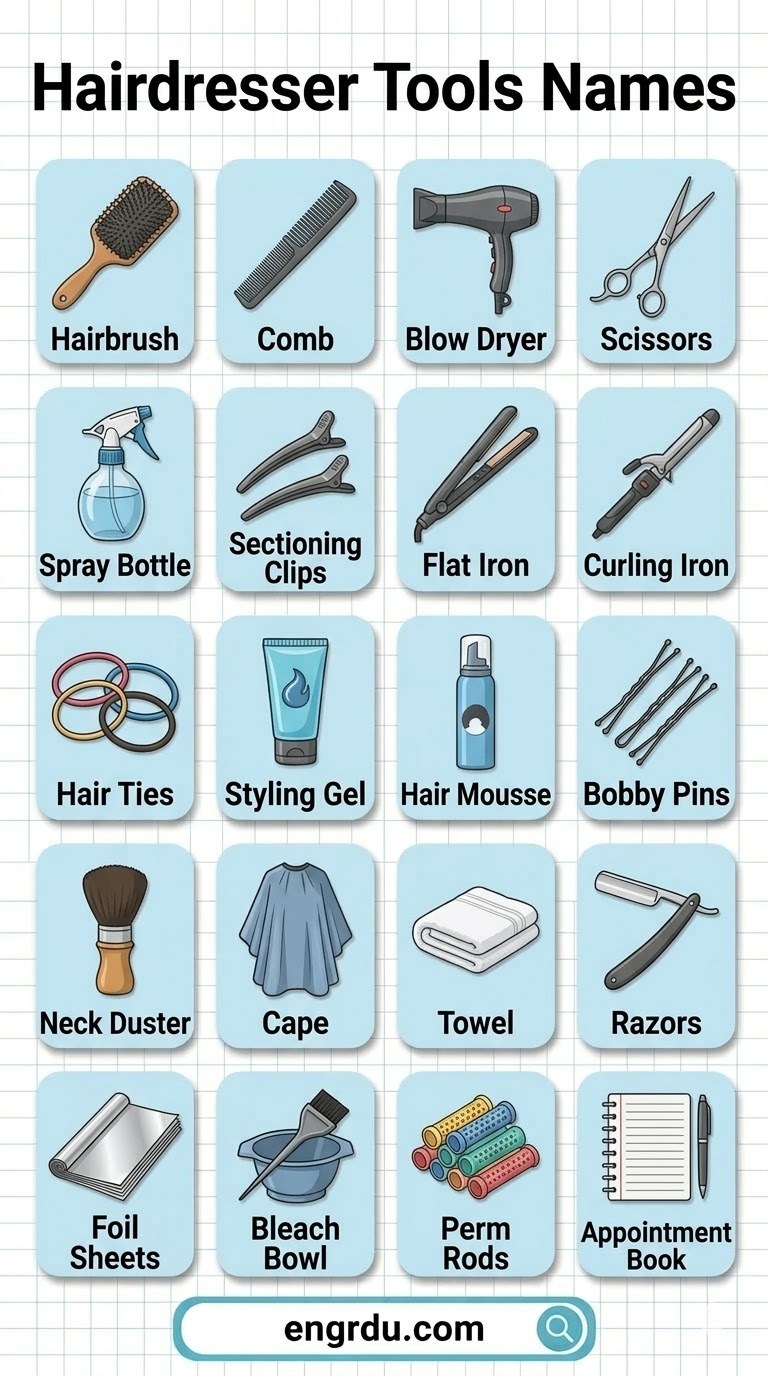
These tools help hairdressers perform their work quickly and neatly.
List of Hairdresser Tools and Equipment
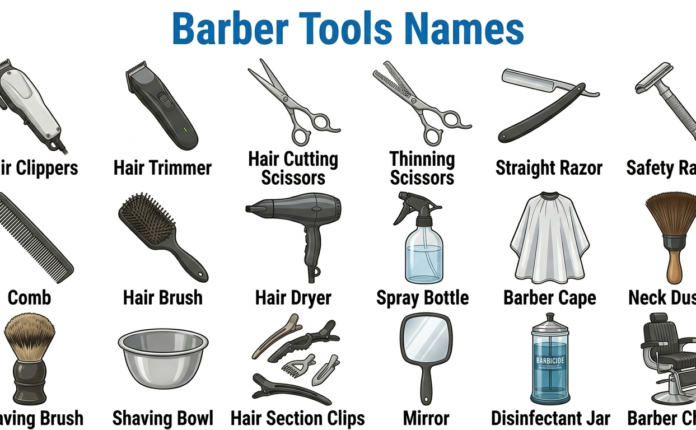
Hair Cutting Tools
- Scissors
- Hair Cutting Shears
- Thinning Shears
- Texturizing Shears
- Razor
- Straight Razor
- Hair Clippers
- Hair Trimmer
Combing and Brushing Tools
- Hair Comb
- Cutting Comb
- Tail Comb
- Wide-Tooth Comb
- Hair Brush
- Paddle Brush
- Round Brush
- Vent Brush
- Teasing Brush
Hair Styling Tools
- Hair Dryer
- Blow Dryer
- Curling Iron
- Curling Wand
- Hair Straightener
- Crimping Iron
- Hot Brush
- Hair Rollers
- Velcro Rollers
- Heated Rollers
Hair Sectioning and Holding Tools
- Sectioning Clips
- Hair Clips
- Duckbill Clips
- Butterfly Clips
- Bobby Pins
- Hair Pins
Hair Washing Tools
- Spray Bottle
- Shampoo Bowl
- Shampoo Brush
- Hair Towel
- Microfiber Towel
Hair Coloring Tools
- Hair Color Brush
- Tint Brush
- Color Mixing Bowl
- Applicator Bottle
- Foil Sheets
- Highlighting Cap
Hair Treatment and Care Tools
- Hair Steamer
- Hood Dryer
- Diffuser
- Hair Pick
- Scalp Massager
Salon Protection and Cleaning Tools
- Hair Cape
- Neck Strip
- Neck Brush
- Hand Mirror
- Styling Chair
- Trolley Cart
- Tool Organizer
Tips for Learning Hairdresser Tools Vocabulary
Learning new words becomes easier when you practice regularly.
- First, try to look at pictures of hairdresser tools and match them with their English names.
- Second, use the words in simple sentences. For example:
“The hairdresser used a hair dryer to dry my hair.” - Third, repeat the words aloud. Speaking helps your brain remember vocabulary better.
- Finally, watch simple videos about hair salons. Listening to native speakers helps improve pronunciation and understanding.