Blacksmithing is one of the oldest metalworking crafts in the world. A blacksmith heats metal and shapes it into useful objects such as tools, horseshoes, knives, and decorative items. To do this work, a blacksmith uses many special tools designed for heating, holding, cutting, and shaping metal.
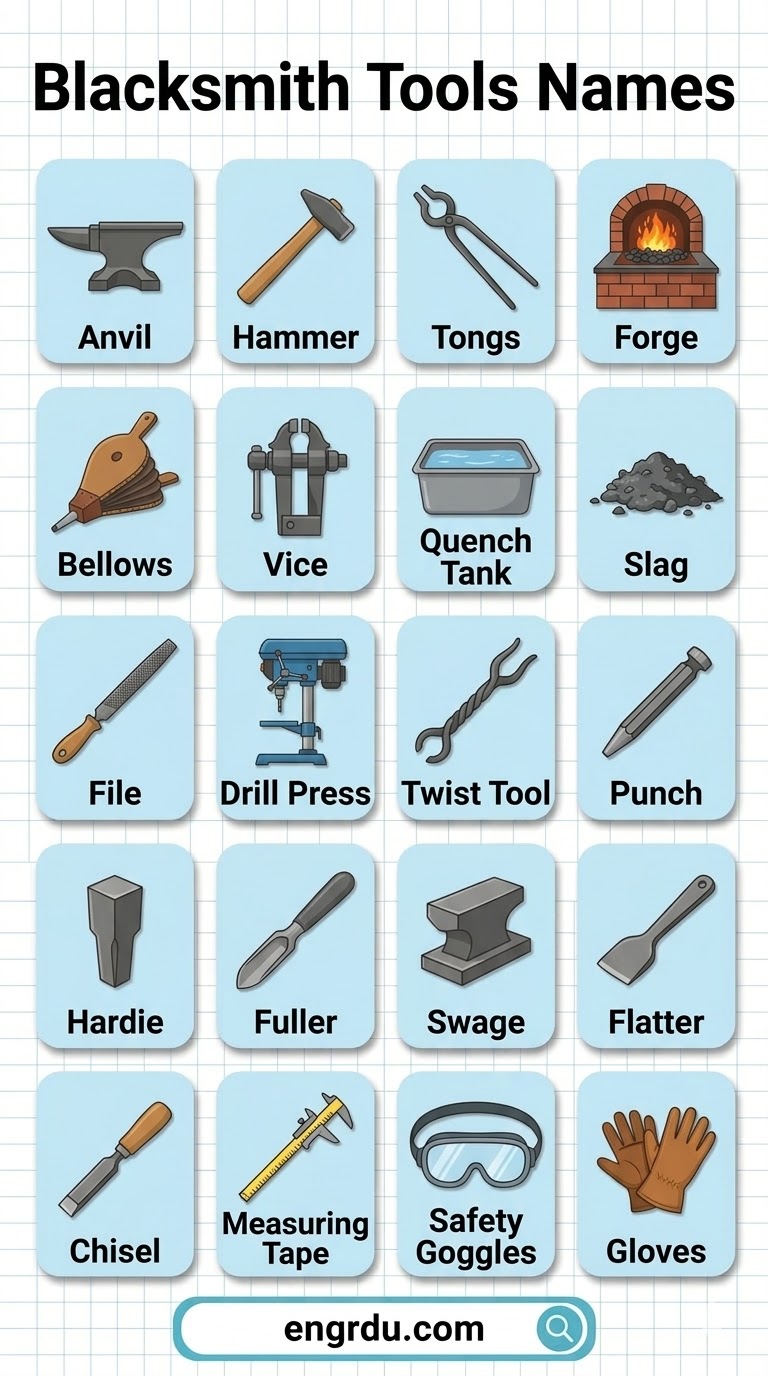
In this blog post, you will learn blacksmith tools names and their uses. Understanding these words helps English learners talk about traditional metalwork and workshop activities. When learners know the correct tool names, they can follow instructions, read about metalworking, and describe work processes more clearly.
Essential Blacksmith Hand Tools
Blacksmiths rely on hand tools to shape hot metal on the anvil. These tools help control the metal during forging.
- Blacksmith Hammer – A heavy hammer used to shape hot metal.
- Cross Peen Hammer – A hammer with a wedge-shaped end used to spread metal.
- Ball Peen Hammer – A hammer used to round metal surfaces.
- Sledgehammer – A large hammer used for powerful strikes.
- Tongs – Tools used to hold hot metal safely.
- Flat Tongs – Hold flat pieces of hot metal.
- Bolt Tongs – Hold round metal bars.
- Wolf Jaw Tongs – Hold different shapes of metal.
- Punch Tool – Makes holes in hot metal.
- Drift Tool – Enlarges or shapes holes in metal.
- Hardy Tool – A cutting tool placed in the anvil hole.
- Hot Cut Chisel – Cuts hot metal during forging.
- Cold Chisel – Cuts metal when it is cold.
- Fuller Tool – Creates grooves or shapes metal edges.
- Set Hammer – Smooths metal surfaces after shaping.
Heating Tools Used in Blacksmithing
Heating tools help the blacksmith raise the metal temperature until it becomes soft and workable.
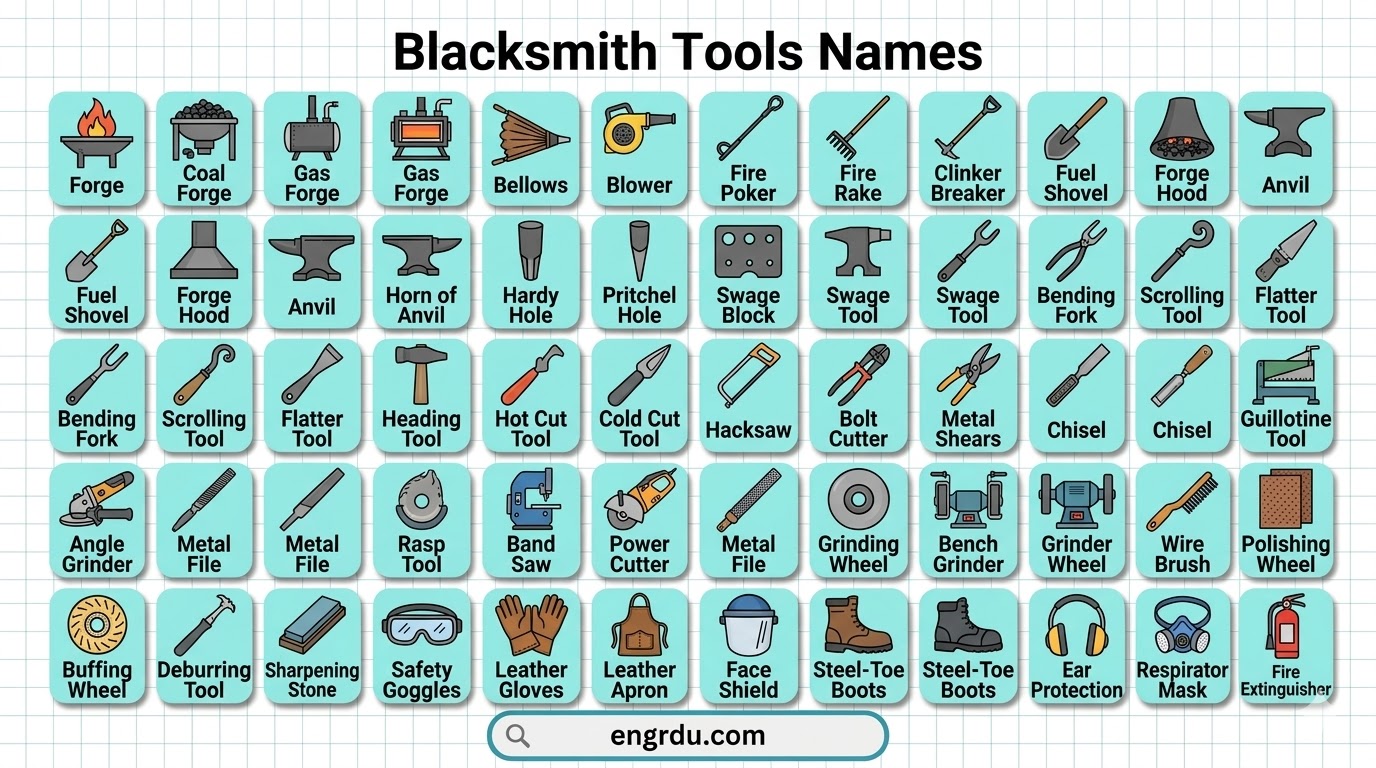
- Forge – A furnace used to heat metal before shaping.
- Coal Forge – Uses coal as fuel for heating metal.
- Gas Forge – Uses propane or gas for controlled heat.
- Bellows – Pushes air into the fire to increase heat.
- Blower – A mechanical device that feeds air to the forge.
- Fire Poker – Adjusts burning coal in the forge.
- Fire Rake – Moves hot coal inside the forge.
- Clinker Breaker – Removes waste material from coal fires.
- Fuel Shovel – Adds coal or fuel to the fire.
- Forge Hood – Removes smoke from the forge area.
Anvil Tools and Metal Shaping Equipment
Anvils and shaping tools help the blacksmith control the metal’s form.
- Anvil – A heavy metal block used as a working surface.
- Horn of Anvil – A curved part used for bending metal.
- Hardy Hole – A square hole that holds special tools.
- Pritchel Hole – A round hole used for punching metal.
- Swage Block – Shapes metal into curves or forms.
- Swage Tool – Helps shape round metal bars.
- Bending Fork – Bends heated metal rods.
- Scrolling Tool – Creates decorative curves.
- Flatter Tool – Smooths the surface of forged metal.
- Heading Tool – Forms bolt heads.
Cutting Tools Used in Blacksmith Workshops
Blacksmiths often cut metal during forging or finishing work.
- Hot Cut Tool – Cuts metal while it is hot.
- Cold Cut Tool – Cuts metal when it is cool.
- Hacksaw – Cuts metal bars and rods.
- Bolt Cutter – Cuts thick metal rods.
- Metal Shears – Cut thin sheets of metal.
- Chisel – Splits or cuts metal.
- Guillotine Tool – Cuts metal with controlled force.
- Angle Grinder – Cuts or grinds metal surfaces.
- Band Saw – Cuts metal with a continuous blade.
- Power Cutter – A machine for heavy metal cutting.
Finishing Tools for Blacksmith Work
After shaping metal, blacksmiths use finishing tools to smooth and refine the final product.
- Metal File – Smooths rough edges on metal.
- Rasp Tool – Removes rough metal quickly.
- Grinding Wheel – Sharpens or smooths metal edges.
- Bench Grinder – Polishes and sharpens tools.
- Wire Brush – Cleans metal surfaces.
- Polishing Wheel – Gives metal a smooth shine.
- Sandpaper – Smooths small metal areas.
- Buffing Wheel – Polishes metal surfaces.
- Deburring Tool – Removes sharp edges.
- Sharpening Stone – Sharpens cutting tools.
Safety Tools Used by Blacksmiths
Blacksmithing involves heat, sparks, and heavy tools. Safety equipment protects workers during forging.
- Safety Goggles – Protect the eyes from sparks and metal particles.
- Leather Gloves – Protect hands from heat and sharp edges.
- Leather Apron – Protects the body from hot metal and sparks.
- Face Shield – Protects the entire face.
- Steel-Toe Boots – Protect feet from heavy metal pieces.
- Ear Protection – Reduces noise from hammer strikes.
- Respirator Mask – Protects lungs from smoke and dust.
- Fire Extinguisher – Helps control fire emergencies.
Tips for Learning Blacksmith Tool Vocabulary
Learning blacksmith tools names becomes easier when you study them step by step.
- Learn tools in small groups by function.
- Look at pictures of tools while studying the names.
- Practice using each word in short sentences.
- Watch blacksmithing videos to hear real usage of the vocabulary.
- Review the tool names regularly to remember them longer.
Conclusion
Blacksmithing requires many specialized tools for heating, shaping, cutting, and finishing metal. Learning blacksmith tools names and their uses helps English learners understand traditional metalworking vocabulary and workshop language.
When learners study these tool names and their functions, they improve vocabulary and gain practical knowledge about metalwork. Over time, this vocabulary helps learners communicate more confidently about tools, crafts, and workshop activities.
FAQs
What are the tools used by blacksmith?
Blacksmiths use tools such as the anvil, hammer, tongs, forge, chisel, punch, and hardy tool. These tools help heat, hold, shape, cut, and form metal during forging work.
What is a blacksmith hammer called?
A blacksmith hammer is commonly called a forging hammer. Types include cross peen hammer, ball peen hammer, and rounding hammer, all used to shape hot metal on an anvil.
What are basic forging tools?
Basic forging tools include a forge, anvil, hammer, tongs, punch, chisel, and fuller. These essential tools allow blacksmiths to heat metal, hold it safely, and shape it.
What tools are in a forge?
Tools commonly found in a forge include a forge furnace, anvil, blacksmith hammer, tongs, swage block, punch, chisel, and grinding tools. These tools support heating and shaping metal.
What are the most common blacksmith tools names?
Common blacksmith tools names include anvil, hammer, tongs, punch, drift, fuller, hardy tool, chisel, and swage block. These tools are widely used for shaping and forming heated metal.
What is the difference between forging tools and regular workshop tools?
Forging tools are designed to work with hot metal and extreme heat, while regular workshop tools are used for wood, plastic, or general repair work without high temperatures.
How can beginners learn blacksmith tools names easily?
Beginners can learn blacksmith tools names by studying tool lists with pictures, watching forging demonstrations, and practicing the vocabulary while observing real blacksmith workshop tools.
Related Articles: