
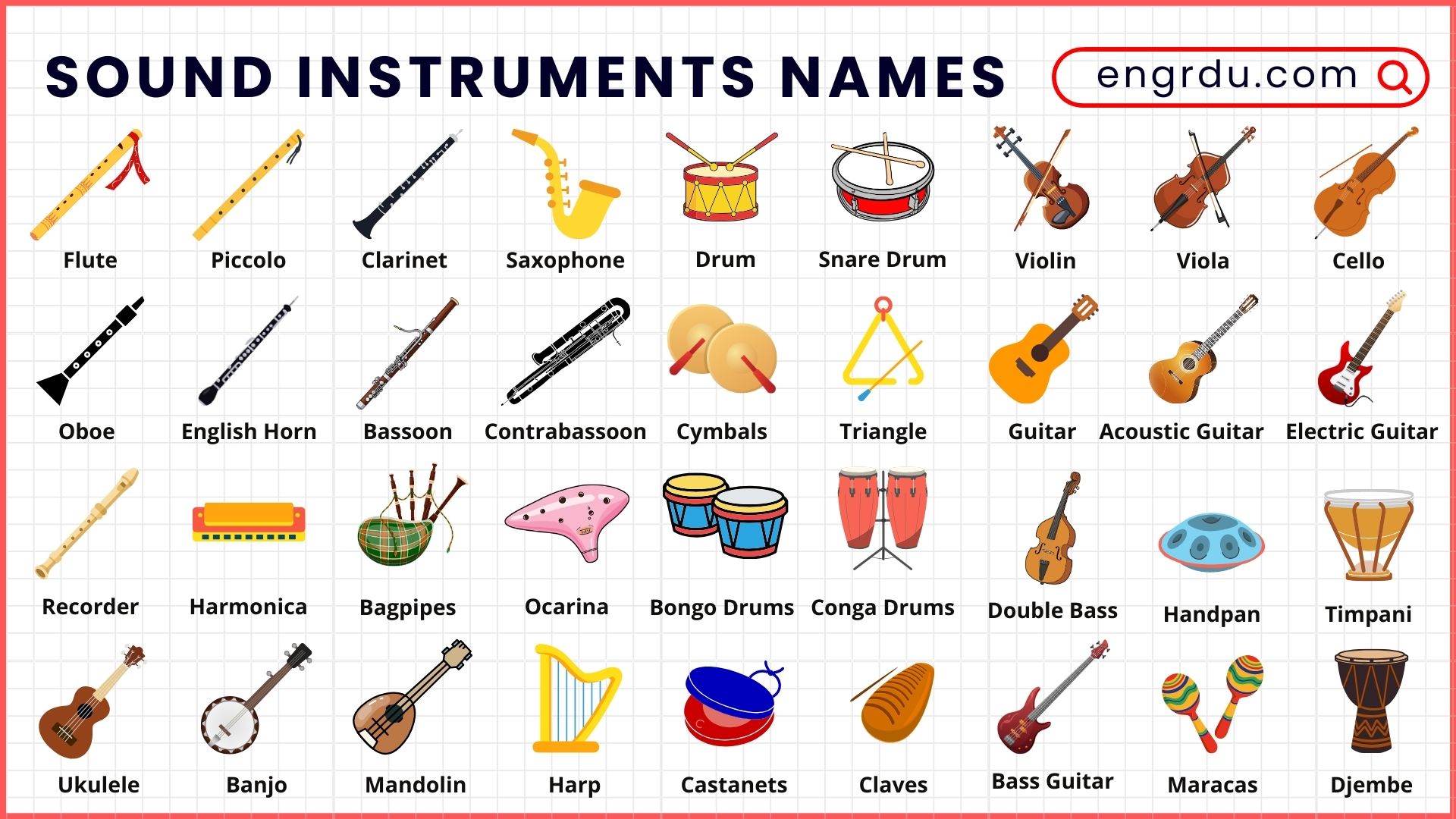

Music is created with the help of special tools called sound instruments or musical instruments. These instruments produce sound when people strike, blow, pluck, or press them. Each instrument has a unique name and sound.
Learning sound instruments names helps English learners build vocabulary related to music and everyday life. When learners know the names of instruments like guitar, piano, or drum, they can understand music discussions, songs, and educational videos more easily.
What Are Sound Instruments?
Sound instruments are tools used to produce musical sounds. Musicians play these instruments to create melodies, rhythms, and harmony.
Different instruments produce sound in different ways. Some instruments create sound when strings vibrate. Others produce sound when air moves through them or when their surfaces are struck.
These instruments are used in concerts, schools, religious gatherings, and entertainment events.
Why Learning Sound Instruments Names Is Important
Learning the names of sound instruments offers several benefits:
- Improves music vocabulary in English
- Helps learners talk about music and instruments
- Supports reading music-related articles
- Improves listening when hearing instrument names in songs or videos
- Helps students describe musical performances
Understanding these words makes communication about music easier and more accurate.
Common Sound Instruments Names and Uses
Here are important sound instruments and their uses.
- Guitar – A string instrument played by plucking or strumming the strings.
- Piano – A keyboard instrument where pressing keys produces sound from strings inside the instrument.
- Drum – A percussion instrument played by striking its surface with hands or sticks.
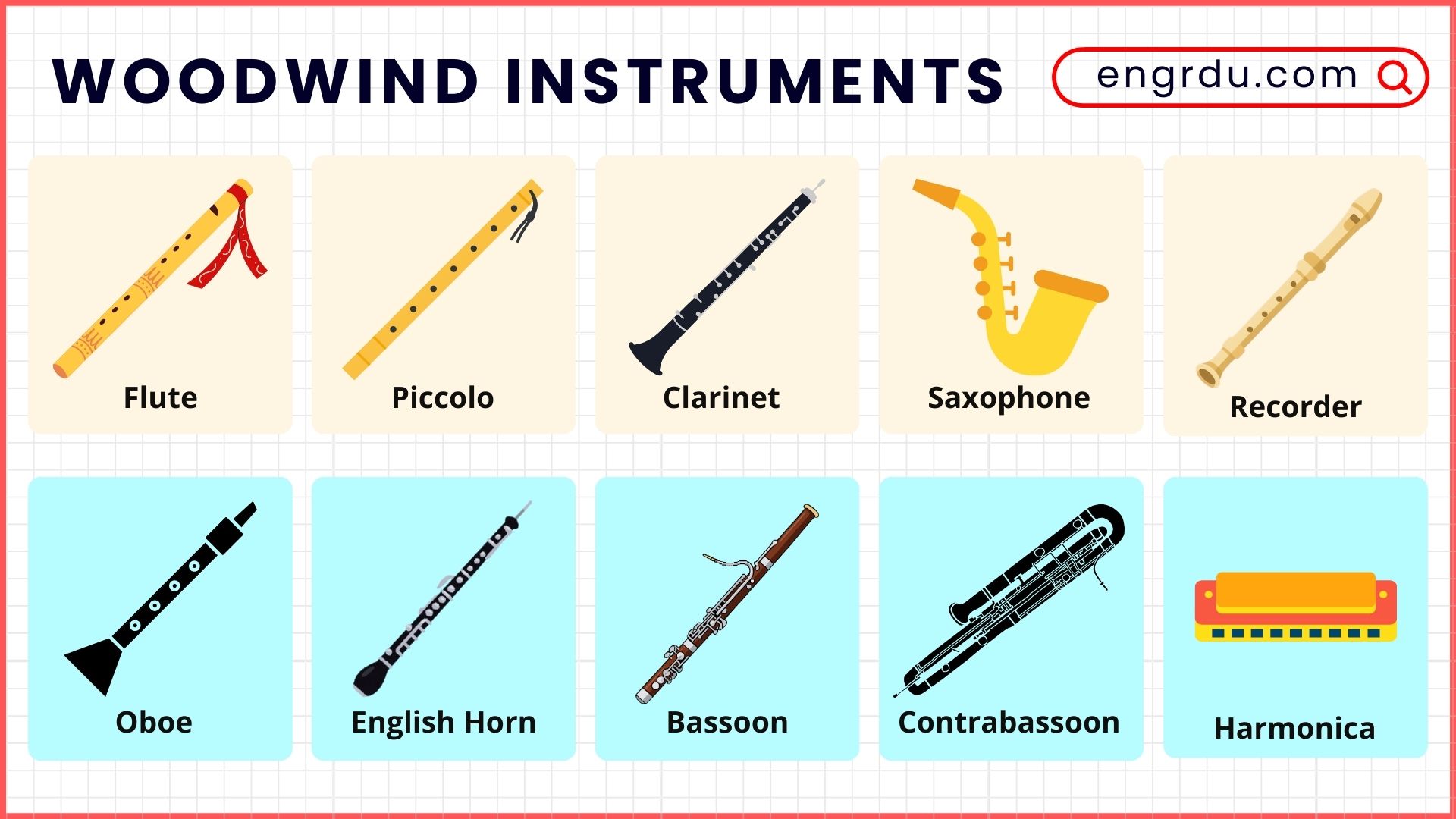
- Flute – A wind instrument played by blowing air across a hole.
- Violin – A string instrument played using a bow across its strings.
- Trumpet – A brass instrument played by blowing air through a mouthpiece.
- Saxophone – A wind instrument used in jazz and classical music.
- Harp – A large string instrument played by plucking its strings.
- Tambourine – A percussion instrument shaken or struck to produce sound.
- Xylophone – A percussion instrument with wooden bars struck by mallets.
- Accordion – A wind instrument played by pressing keys and expanding bellows.
- Clarinet – A woodwind instrument played by blowing through a reed.
- Harmonica – A small wind instrument played by blowing or drawing air.
- Trombone – A brass instrument played by moving a slide to change pitch.
- Cymbals – Metal percussion instruments struck together to produce sound.
- Banjo – A string instrument commonly used in folk and country music.
- Cello – A large string instrument played with a bow while seated.
- Triangle – A metal percussion instrument struck with a stick.
- Maracas – Hand percussion instruments shaken to produce rhythmic sound.
- Organ – A keyboard instrument often used in churches.
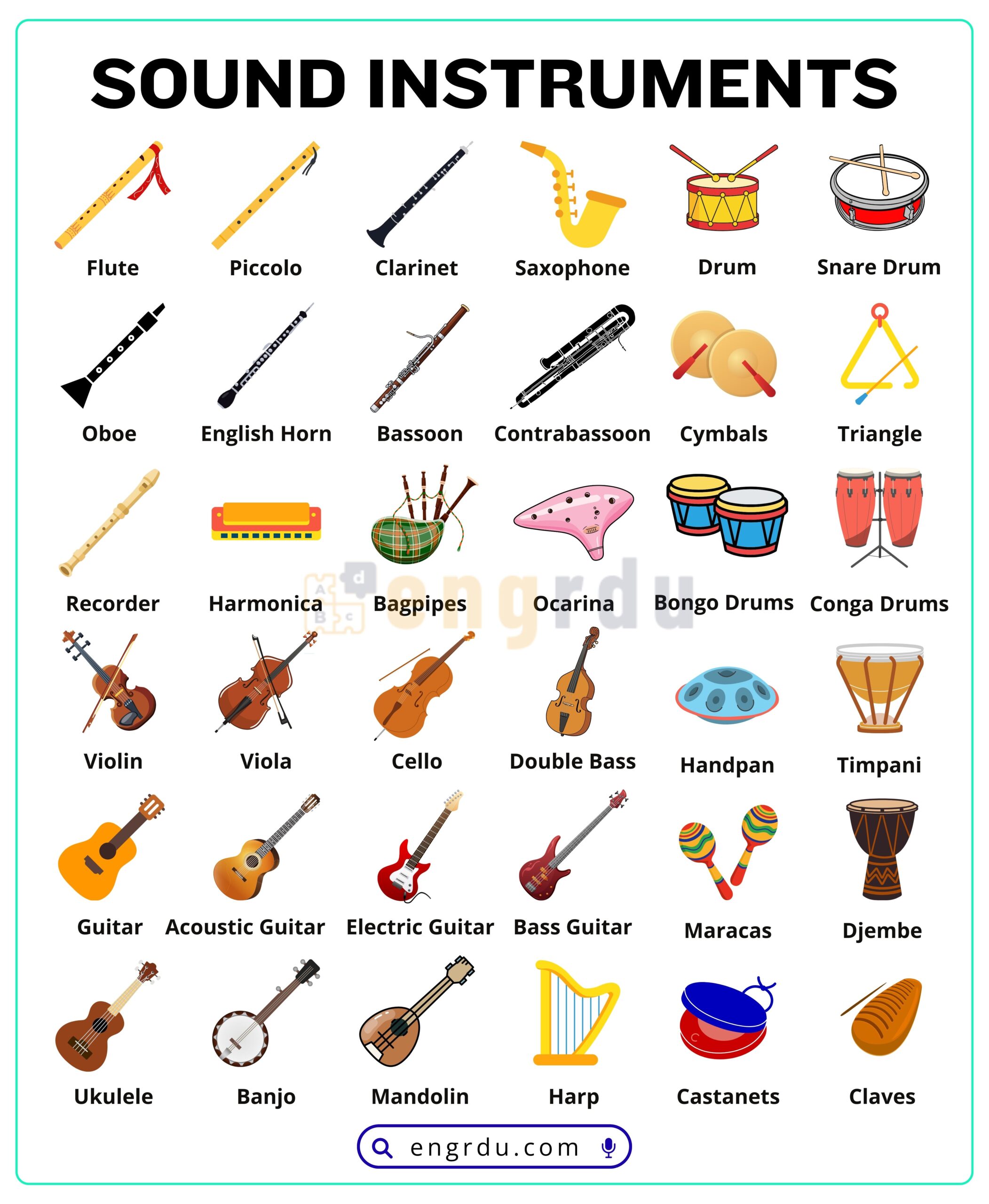
Sound Instruments Names
Types of Sound Instruments with Names
Musical instruments are usually grouped according to how they produce sound.
String Instruments
These instruments produce sound when their strings vibrate.
Examples:
- Guitar
- Violin
- Cello
- Harp
- Banjo
Wind Instruments
These instruments produce sound when air moves through them.
Examples:
- Flute
- Trumpet
- Saxophone
- Clarinet
- Harmonica
Percussion Instruments
These instruments produce sound when they are struck or shaken.
Examples:
- Drum
- Tambourine
- Cymbals
- Triangle
- Maracas
Keyboard Instruments
These instruments produce sound when keys are pressed.
Examples:
- Piano
- Organ
- Accordion
Frequently Used Musical Instruments
Many musical performances commonly include these instruments:
- Guitar
- Piano
- Drum
- Violin
- Flute
- Trumpet
- Saxophone
These instruments appear in many types of music such as classical, pop, jazz, and folk music.
Tips to Remember Sound Instrument Names
Learning instrument vocabulary becomes easier with practice.
Study with pictures
Images help learners connect the instrument name with its shape.
Listen to the instrument sound
Hearing the sound helps learners remember the instrument better.
Use the words in sentences
Example: The musician played the guitar during the concert.
Practice regularly
Repeated review helps store vocabulary in long-term memory.
Conclusion
Sound instruments play an important role in music and culture. Each instrument produces a unique sound that helps create rhythm, melody, and harmony.
Learning sound instruments names and uses helps English learners improve vocabulary and understand music discussions more easily. When learners recognize these words, they can read about music, watch performances, and talk about musical instruments with confidence.
FAQs
What are sound instruments?
Sound instruments are tools used to produce musical sounds. Musicians play them to create melodies, rhythms, and harmony in songs and performances.
What is the most common sound instrument?
The guitar is one of the most common sound instruments. It produces music when its strings are plucked or strummed and is used in many music styles.
What is a percussion instrument?
A percussion instrument produces sound when struck, shaken, or tapped. Examples include drums, cymbals, tambourines, and maracas.
What are wind instruments used for?
Wind instruments produce sound when air passes through them. Examples include flute, trumpet, saxophone, and harmonica.
What is the difference between string and keyboard instruments?
String instruments create sound by vibrating strings, such as violin or guitar. Keyboard instruments produce sound by pressing keys, such as piano or organ.
Which instruments are commonly used in music performances?
Common instruments include guitar, piano, drum, violin, flute, trumpet, and saxophone, appearing in classical, pop, jazz, and folk music.
Related Articles:

Leave a Comment