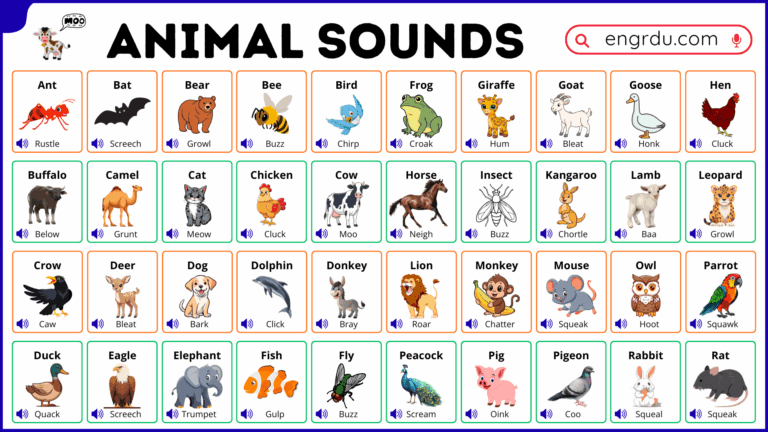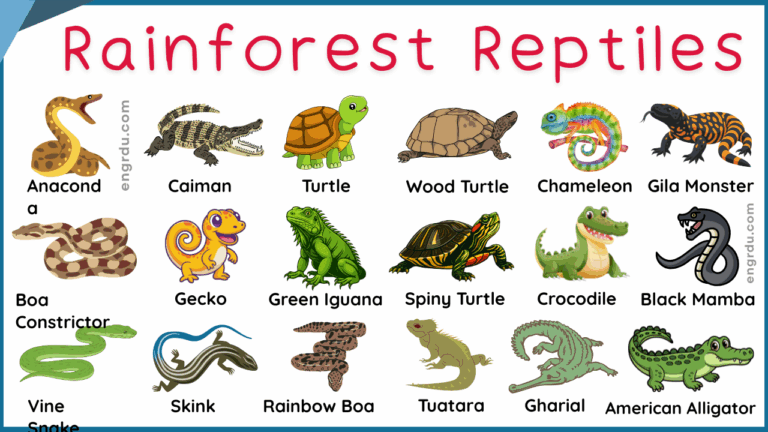
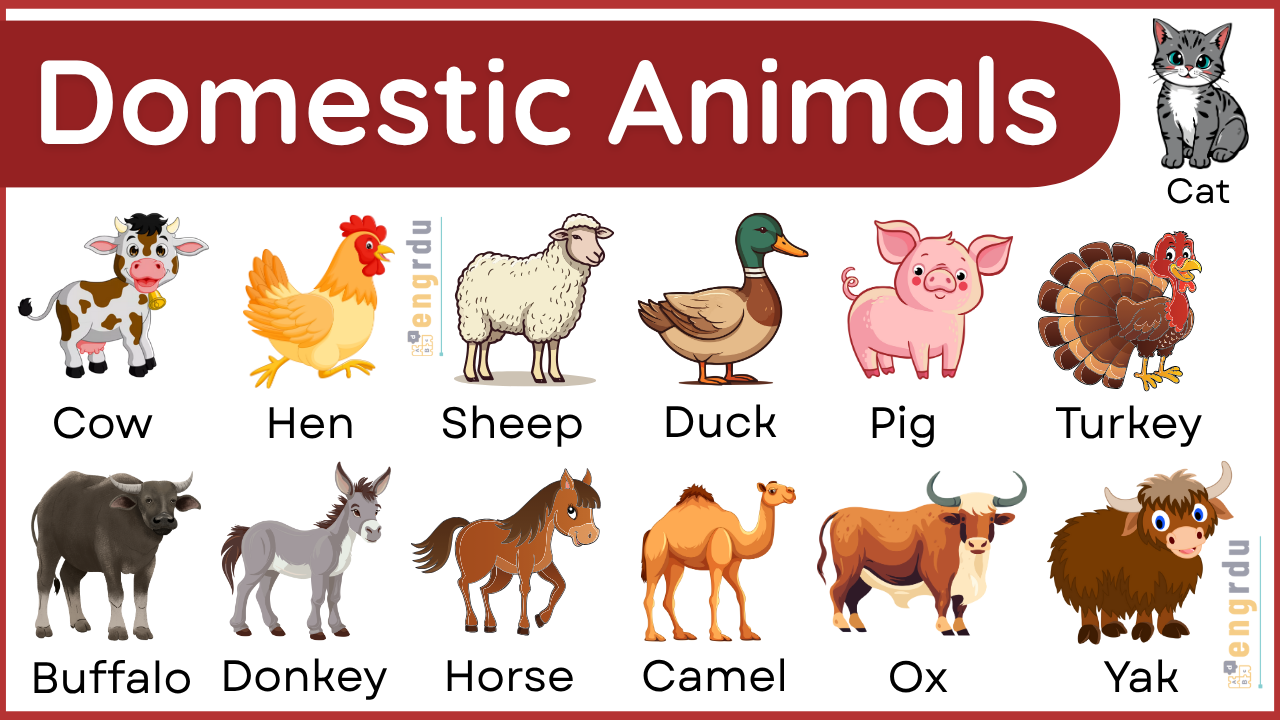
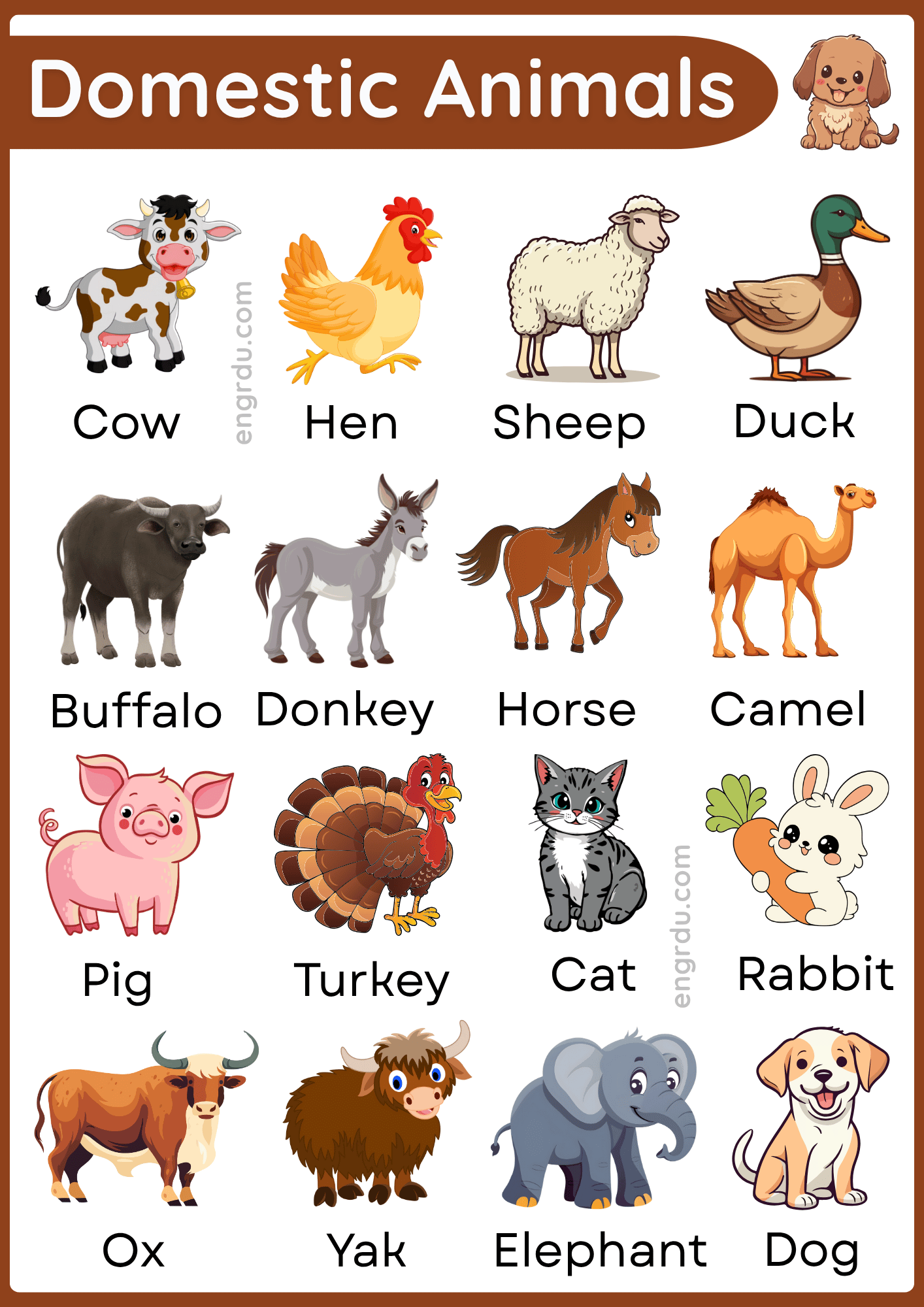
Domestic animals are animals that live with humans and help us in daily life, like cows, dogs, and chickens. In this Vocabulary lesson, you will learn the names of domestic animals along with pictures to remember them easily. Knowing these names helps you speak, write, and read about animals in English more confidently. In this blog post, you will explore 25+ domestic animals with pictures to practice identifying and using their names in sentences.
What Are Domestic Animals?
Domestic animals are species that humans have tamed and bred for generations to live and work with them. Unlike wild animals, these creatures depend on humans for food, shelter, and care. Common examples include cows, goats, dogs, and cats.
Why Humans Domesticated Animals
Humans began domesticating animals thousands of years ago for practical reasons such as food, transportation, and security. Over time, these animals became part of families and communities, offering both utility and emotional support.
List of Common Domestic Animals Name in English
Domestic animals can be broadly divided into three main categories: farm animals, pet animals, and working animals.
Farm Animals
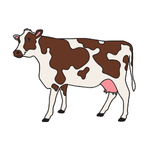
Cow
Cows are one of the most useful domestic animals. They provide milk, which is used to make butter, cheese, and yogurt. They also help plow fields in some rural areas.
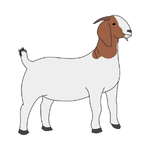
Goat
Goats are hardy animals known for their milk and meat. Goat milk is easier to digest than cow milk, making it popular in many regions.
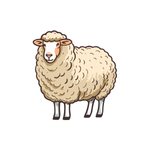
Sheep
Sheep are raised mainly for wool, milk, and meat. Their soft wool is used to make warm clothing and blankets.
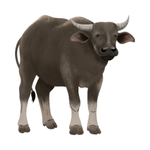
Buffalo
Buffaloes are strong animals often used for plowing fields and producing rich, creamy milk in countries like India and Nepal.
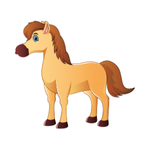
Horse
Horses are intelligent and graceful animals used for riding, racing, and pulling carts. They’ve been companions to humans for centuries.
Pet Animals

Dog
Dogs are known as “man’s best friend.” They are loyal, protective, and playful. Many families keep dogs as companions or guards.

Cat
Cats are independent and affectionate animals that help control pests like rats and mice. They make great indoor pets.

Rabbit
Rabbits are gentle, furry animals loved for their playful nature. They are often kept in cages and fed fresh vegetables.

Parrot
Parrots are colorful and intelligent birds capable of mimicking human speech. They bring joy to households with their lively personalities.

Goldfish
Goldfish are popular aquarium pets. They’re low-maintenance and add beauty and calmness to a room.
Working Animals
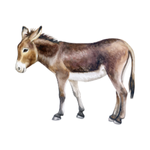
Donkey
Donkeys are hardworking animals used for carrying loads in villages and hilly regions.
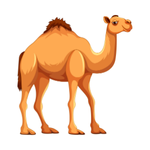
Camel
Camels are known as the “ship of the desert.” They can survive long journeys without water, making them ideal for desert regions.

Elephant
Elephants are intelligent giants used in transportation, tourism, and forestry in some Asian countries.
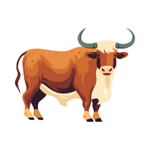
Ox
Oxen are powerful animals used in farming for plowing and carrying heavy loads.
Fun Facts About Domestic Animals
- Cows have best friends and get stressed when separated.
- A cat can jump up to six times its body length.
- Parrots can learn over 100 words with regular interaction.
- Donkeys have excellent memory and can recognize areas and other donkeys after many years.
FAQs About Domestic Animals
What is the difference between wild and domestic animals?
Wild animals live independently in nature, while domestic animals depend on humans for care and food.
Which domestic animals give us milk?
Cows, buffaloes, goats, and sheep provide milk for human consumption.
Which animals are both pets and farm animals?
Goats and rabbits can be both pets and farm animals depending on how they’re raised.
What are the most intelligent domestic animals?
Dogs, horses, and parrots are among the most intelligent domestic animals.
Which domestic animals help in farming?
Cows, oxen, and buffaloes are commonly used for plowing and carrying loads in agriculture.
How can children learn domestic animals’ names easily?
Children can learn through picture books, flashcards, or educational videos showing each animal and its name.
Read More