
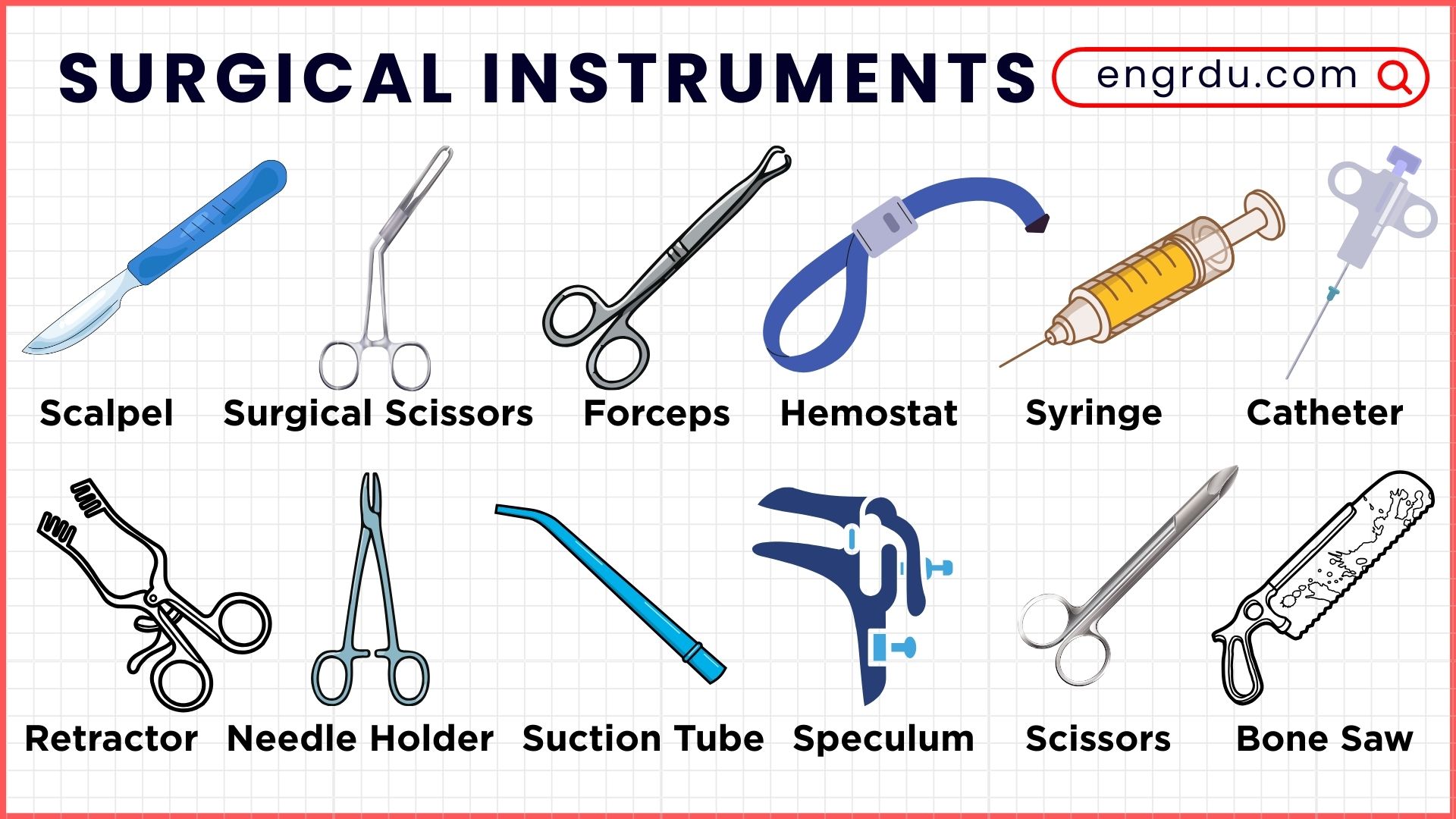

In hospitals and clinics, doctors use many special tools called surgical instruments to perform medical procedures. Each instrument has a specific name and purpose. For English learners, knowing these words helps build strong medical and everyday vocabulary. When you learn the names of tools like scalpels, forceps, and retractors, you start to recognize them in books, videos, and real-life medical discussions. In this blog post, you will explore surgical instruments names and their uses with images. You will also understand how these tools help surgeons cut, hold, stitch, and examine the body during treatment.
What are Surgical Instruments?
Surgical instruments are special medical tools that doctors and surgeons use to perform operations and medical procedures on the body. These instruments help surgeons cut, hold, move, examine, or repair tissues safely during surgery.
Learning the names and uses of surgical instruments helps English learners understand medical vocabulary, recognize these tools in health articles or videos, and communicate more confidently about medical topics.
Common Surgical Instruments and Their Uses
Here is a list of important surgical instruments with uses and images:
- Scalpel – Used to make precise cuts. Example: Doctors use scalpels during operations.
- Surgical Scissors – Used to cut tissue or sutures.
- Forceps – Used to hold small objects or tissue.
- Hemostat – A clamp used to control bleeding.
- Retractor – Keeps skin or organs open for surgery.
- Needle Holder – Holds a needle while stitching.
- Suction Tube – Removes blood or fluids from the wound.
- Speculum – Opens body openings for examination.
- Towel Clamp – Holds surgical drapes in place.
- Electrocautery – Stops bleeding using electricity.
- Syringe – Used to inject medicines.
- Catheter – A tube to drain fluids from the body.
- Surgical Tray – Holds all instruments for surgery.
- Spatula – Helps lift tissue gently.
- Scissors (Curved or Straight) – Specific designs for different tissues.
- Bone Saw – Cuts bones during orthopedic surgery.
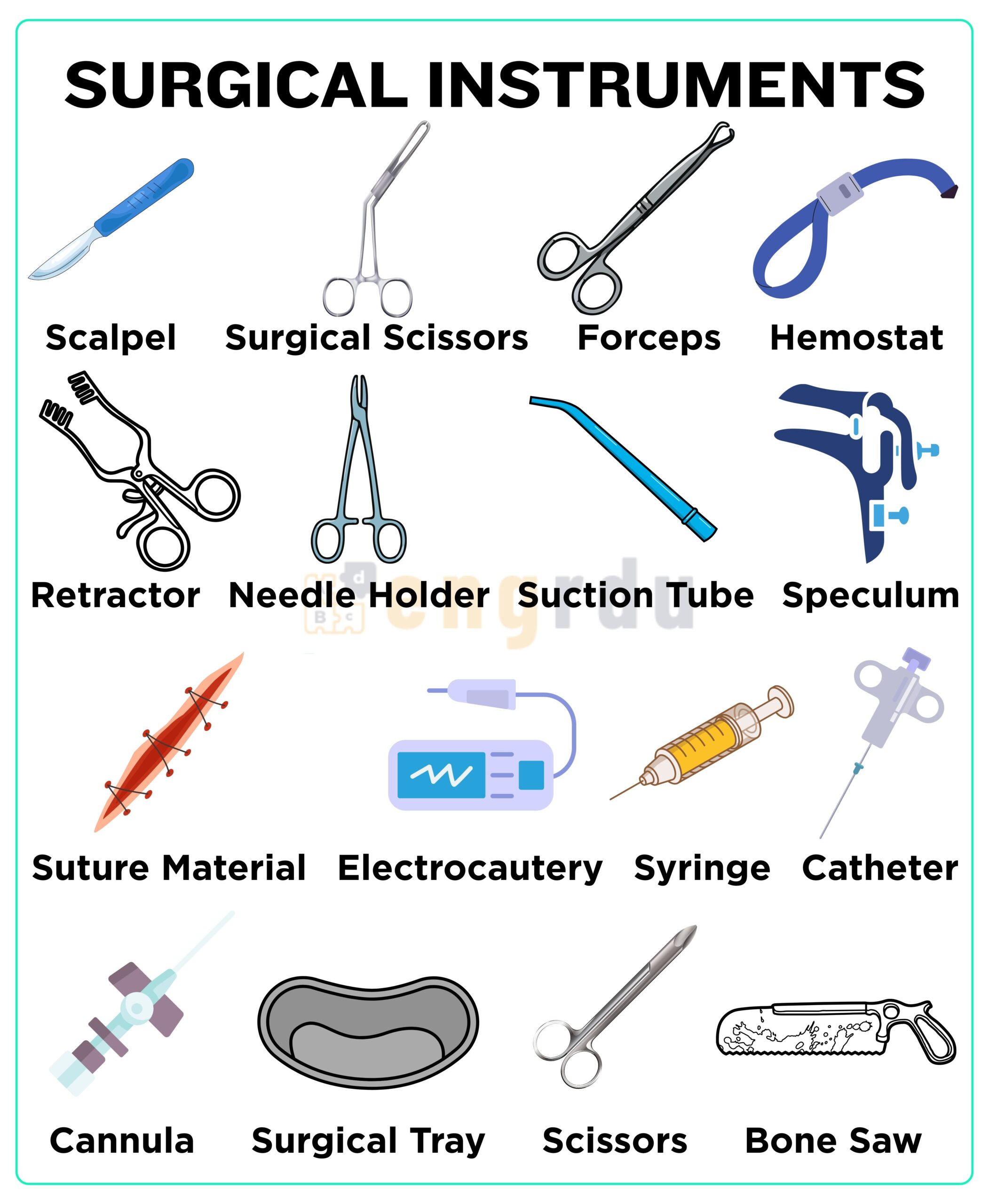
Surgical Instruments Names and Uses
Types of Surgical Instruments
Cutting and Dissecting Instruments
Used to cut tissue, organs, or bones.
- Scalpel / Surgical Knife
- Surgical Scissors (Straight, Curved, Mayo, Metzenbaum)
- Bone Saw / Gigli Saw
- Chisel
- Osteotome
- Curette
- Dissector / Surgical Elevator
- Dermatomes
Grasping and Holding Instruments
Used to hold tissue or objects during surgery.
- Forceps (Tissue Forceps, Dressing Forceps, Thumb Forceps)
- Hemostatic Forceps / Hemostat (Mosquito, Kelly, Crile)
- Needle Holder / Needle Driver
- Towel Clamp / Backhaus Clamp
- Allis Clamp
- Babcock Clamp
- Kocher Forceps
- Sponge Forceps
Retracting and Exposing Instruments
Used to hold back tissue or organs to access surgical sites.
- Handheld Retractors (Senn, Army-Navy, Deaver)
- Self-Retaining Retractors (Weitlaner, Gelpi, Balfour)
- Skin Hook
- Periosteal Elevator
Suturing and Stapling Instruments
Used to close wounds or surgical incisions.
- Needle Holder / Needle Driver
- Surgical Needles
- Suture Material (Silk, Vicryl, Nylon)
- Stapler (Skin Stapler, Endoscopic Stapler)
- Ligature Carrier
Clamping and Occluding Instruments
Used to stop bleeding or clamp tissue or vessels.
- Hemostatic Forceps (Mosquito, Crile, Kelly)
- Bulldog Clamp
- Vascular Clamp
- Atraumatic Clamp
Fluid Management Instruments
Used to manage blood, fluids, or irrigation.
- Suction Tube / Yankauer Suction
- Catheter (Urinary, Central Venous, Arterial)
- Syringe (Disposable, Metal, Irrigation)
- Cannula
- Trocar
Specialty Instruments
Used for specific surgical procedures or specialized areas.
- Speculum (Vaginal, Nasal, Ear)
- Endoscope
- Laparoscope
- Electrocautery / Diathermy
- Cryosurgery Instruments
- Orthopedic Drill / Reamer / Saw
- Bone Holding Forceps
- Biopsy Punch
Orthopedic Instruments
Specifically for orthopedic surgeries.
- Bone Chisel
- Osteotome
- Bone Rasp
- Gigli Saw
- Mallet
- Bone Cutter
Dental and Oral Surgical Instruments
Used in dental or oral surgeries.
- Dental Elevator
- Extraction Forceps
- Periodontal Scissors
- Curettes
- Retractors (Cheek, Tongue)
Miscellaneous or Support Instruments
- Surgical Tray / Instrument Tray
- Spatula / Dissector
- Dressing Scissors
- Towel / Draping Clamps
- Measuring Tools (Rulers, Depth Gauges)
Tips to Learn and Remember Instrument Names
- Visual Learning – Look at images of instruments while reading their names.
- Group by Type – Learn cutting tools, holding tools, etc., together.
- Use in Sentences – Example: “The nurse handed the scalpel to the surgeon.”
- Practice Spelling – Some words like “hemostat” are tricky.
- Repetition – Review the list daily for quick memory.
Conclusion
Learning surgical instruments names and uses is practical for English learners. It improves medical vocabulary, comprehension, and confidence in hospital settings. Start with common tools, group them by type, and practice using them in sentences. This approach makes learning easy, useful, and engaging.
FAQs
What are surgical instruments?
Surgical instruments are special tools used by doctors and surgeons to perform operations. They help cut, hold, retract, or stitch tissues safely and precisely.
What is the use of a scalpel in surgery?
A scalpel is a small, very sharp knife used to make precise cuts in skin or tissue during surgery. It is one of the most essential surgical instruments.
What are forceps and how are they used?
Forceps are like tongs or tweezers used to hold, grab, or move tissue and objects during surgery. They help surgeons work carefully without touching tissue directly.
What is a hemostat in surgical instruments?
A hemostat is a clamp used to control bleeding by holding blood vessels tightly. It is a common surgical instrument in most operations.
What are surgical scissors used for?
Surgical scissors are used to cut tissue, sutures, or bandages. They come in straight or curved shapes depending on the type of tissue being cut.
Why are retractors important surgical instruments?
Retractors are used to hold skin, muscles, or organs open. They give surgeons better visibility and space to work safely during operations.
What is a needle holder in surgery?
A needle holder is a surgical instrument used to hold a needle while stitching wounds or tissues. It ensures accurate suturing without slipping.
Which surgical instruments are most commonly used?
Scalpels, forceps, hemostats, retractors, needle holders, and surgical scissors are the most common surgical instruments used in hospitals worldwide.
Related Articles:

Leave a Comment