


An interrogative sentence is used to ask questions and get information. In this Grammar lesson, understanding interrogative sentences helps you speak, listen, and read English more effectively. Using them correctly makes your communication clear and interactive. In this blog post, you will learn the definition, uses, and examples of interrogative sentences to practice and apply them confidently in daily English.
What is an Interrogative Sentence?
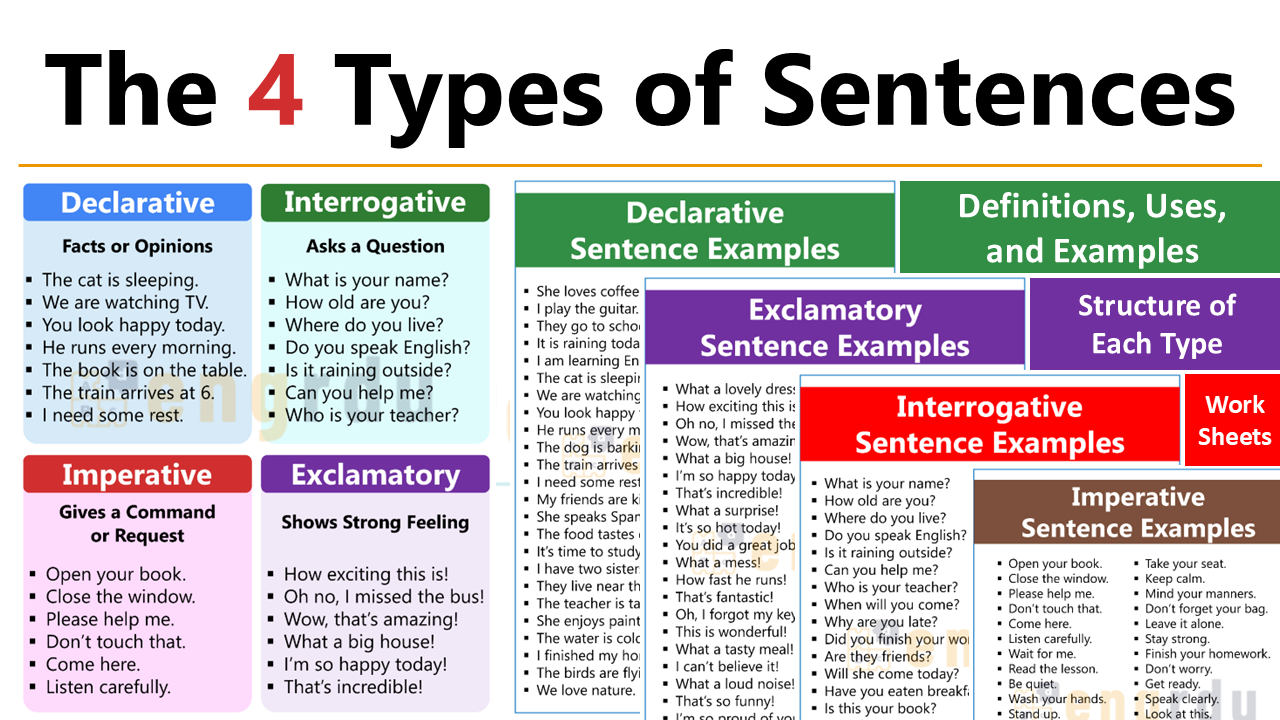
An interrogative sentence is a question sentence that asks for information, confirmation, or an opinion. It always ends with a question mark ( ? ) and often starts with a helping verb or a question word such as what, where, when, who, why, or how.
Examples:
- What is your name?
- Are you tired?
- Do you like music?
| Feature | Description |
|---|---|
| Purpose | To ask something |
| Ending Sign | Always ends with (?) |
| Starting Word | Helping or WH-word |
| Answer Type | Yes/No or full answer |

Interrogative Sentence
Interrogative Sentence Pronunciation
Phonetic Spelling:
- /ˌɪn.təˈrɒ.ɡə.tɪv ˈsen.təns/
Simple Sound Guide:
- in-tuh-ROG-uh-tiv sen-tuhns
Structure of Interrogative Sentences
The structure of an interrogative sentence is very simple. You can follow this pattern:
Helping Verb + Subject + Main Verb + Object + (?)
Examples:
- Do you play cricket?
- Can she speak French?
- Have they done the work?
When a question word is used, the structure changes slightly:
Question Word + Helping Verb + Subject + Main Verb + (?)
Examples:
- What are you eating?
- Where does he study?
- Why are you late?
Types of Interrogative Sentences
There are two main types of interrogative sentences in English.
1. Yes/No Questions
These are simple questions that can be answered with “Yes” or “No.” They usually begin with a helping verb such as is, are, do, does, have, can, or will.
Examples:
- Do you like pizza?
- Is she your sister?
- Have you done your homework?
2. WH-Questions
These questions begin with question words and need complete answers.
Examples:
- What are you doing?
- Where do you live?
- Why are you sad?
| Type | Starts With | Answer Type |
|---|---|---|
| Yes/No Question | Do, Does, Is, Are, Can, Will | Yes or No |
| WH-Question | What, When, Where, Why, Who, How | Full Answer |
Interrogative Sentence Rules
Follow these easy rules to form interrogative sentences correctly:
- Begin the question with a helping verb or question word.
- Add the subject after the verb.
- Use the main verb next.
- End the sentence with a question mark ( ? ).
Examples:
- Are you ready?
- Did he call you?
- Can I join the game?
Uses of Interrogative Sentences
Interrogative sentences are used in many situations in daily communication.
| Use | Example Sentence |
|---|---|
| To ask for information | What is your address? |
| To check something | Are you free now? |
| To show curiosity | Why is the baby crying? |
| To make polite requests | Could you pass the salt? |
Double Interrogative Sentences
A Double Interrogative Sentence contains two question words or two related questions in one sentence. It is used when the speaker wants extra information or when one question depends on another.
Structure:
Question Word + Question Word + Helping Verb + Subject + Main Verb + (?)
Examples of Double Interrogative Sentences:
- Who do you think will win the match?
- What do you believe is true?
- Which book do you think she likes most?
- How do you know where he lives?
- When do you think they will arrive?
- Who can tell me what happened?
- What do you think I should do?
- Why do you say who did it?
- How do you know what time it is?
- Where do you think I can find it?
Difference Between Single and Double Interrogative Sentences
| Feature | Single Interrogative Sentence | Double Interrogative Sentence |
|---|---|---|
| Number of Questions | One | Two (connected) |
| Question Words | One | Two |
| Purpose | Ask simple information | Ask complex or dependent questions |
| Example | Where are you going? | Who do you think is coming? |
Interrogative Sentences in Different Contexts
Interrogative sentences can be used in different ways or meanings depending on context.
1. Direct Questions
Used in normal speaking or writing.
Where are you going?
2. Indirect Questions
Used to sound more polite or formal.
Can you tell me where you are going?
3. Rhetorical Questions
Used to express emotion or make a point, not to get an answer.
Who doesn’t love holidays?
Examples of Interrogative Sentences
- What is your favourite subject?
- Are you feeling better?
- Where do you live?
- When will you come back?
- Who is your best friend?
- Do you like coffee?
- Did she send the message?
- Why are you late?
- How old are you?
- Have they arrived yet?
- Is it raining outside?
- Will you join us today?
- Which bag is yours?
- May I sit here?
- Does he play football?
- Shall we go now?
- What are they doing?
- Could you help me, please?
- Didn’t you see that?
- Why are you smiling?

Examples of Interrogative Sentences
Interrogative Sentences with Answers
1. What is your name?
My name is Alex.
2. Where do you live?
I live in London.
3. Are you a student?
Yes, I am a student.
4. Do you like tea or coffee?
I like coffee.
5. When will you come back?
I will come back tomorrow.
6. Who is your best friend?
John is my best friend.
7. Why are you late?
I missed the bus.
8. How old are you?
I am fifteen years old.
9. Is it raining outside?
Yes, it’s raining heavily.
10. Have you done your homework?
Yes, I have finished it.
11. Can you swim?
Yes, I can swim well.
12. Does she play the piano?
Yes, she plays the piano beautifully.
13. What are you doing?
I am reading a book.
14. Where is your school?
My school is near the park.
15. Will you help me?
Yes, I will help you.
16. Did they watch the movie?
No, they didn’t watch it.
17. Which colour do you like the most?
I like blue the most.
18. May I sit here?
Of course, you may.
19. Shall we go now?
Yes, let’s go.
20. Why are you smiling?
Because I am happy.

Interrogative Sentences with Answers
Interrogative Sentence Exercise with Answers
Change the following sentences into interrogative form.
Change each statement into a question.
Example: You are coming tomorrow. → Are you coming tomorrow?
- She is reading a book.
- They can play football.
- You like ice cream.
- He has done his work.
- She was cooking food.
- You are going to school.
- He will come to the party.
- They were watching TV.
- You have finished your homework.
- She sings beautifully.
Answers:
- Is she reading a book?
- Can they play football?
- Do you like ice cream?
- Has he done his work?
- Was she cooking food?
- Are you going to school?
- Will he come to the party?
- Were they watching TV?
- Have you finished your homework?
- Does she sing beautifully?

Change the following sentences
Fill in the blanks with suitable Question Words.
- _______ is your favourite subject?
- _______ are you going now?
- _______ is knocking at the door?
- _______ are you so happy today?
- _______ time does the class start?
- _______ old are you?
- _______ is your best friend?
- _______ do you go to school?
- _______ is your father’s name?
- _______ are you crying?
Answers:
- What is your favourite subject?
- Where are you going now?
- Who is knocking at the door?
- Why are you so happy today?
- What time does the class start?
- How old are you?
- Who is your best friend?
- When do you go to school?
- What is your father’s name?
- Why are you crying?
Give short answers to these questions.
- Do you like English?
- Can you ride a bicycle?
- Are you a student?
- Is this your book?
- Have you seen my pen?
Answers:
- Yes, I do.
- Yes, I can.
- Yes, I am.
- Yes, it is.
- No, I haven’t.
Make questions for the given answers.
- __________________________?
Yes, I am from Spain. - __________________________?
She is ten years old. - __________________________?
He goes to school by bus. - __________________________?
They are watching a movie. - __________________________?
My mother is cooking dinner.
Answers:
- Are you from Spain?
- How old is she?
- How does he go to school?
- What are they doing?
- What is your mother doing?

Fill in the blanks
Summary on Interrogative Sentence
| Feature | Details |
|---|---|
| Definition | A sentence used to ask a question |
| Punctuation | Ends with a question mark (?) |
| Common Words | What, When, Where, Why, Who, How |
| Main Types | Yes/No and WH-Questions |
| Purpose | To ask or request information |
An interrogative sentence helps us ask questions and understand information clearly. It is one of the most common sentence types in English. When you learn how to form and use it correctly, you can communicate better in daily life. Keep practising different types of questions to improve your speaking and writing skills.
FAQs about Interrogative Sentences
What is an interrogative sentence?
An interrogative sentence is a question sentence used to ask for information, confirmation, or explanation. It always ends with a question mark (?) and often begins with a helping verb or a question word such as what, where, when, who, why, or how.
What is an interrogative sentence with example?
An interrogative sentence asks a question.
Examples:
What is your name?
Are you happy today?
Do you like chocolate?
How to make interrogative sentences?
To make an interrogative sentence, follow this structure:
Helping Verb + Subject + Main Verb + Object + (?)
Example:
Do you play football?
If the sentence starts with a WH-word, then use:
WH-word + Helping Verb + Subject + Main Verb + (?)
Example:
Where do you live?
What is the meaning of interrogative sentence?
The meaning of an interrogative sentence is a sentence that asks a question to get an answer or information. It helps in daily communication to inquire, confirm, or clarify something.
How to change an interrogative sentence into passive voice?
To change an interrogative sentence into passive voice, place the object first, use the correct form of the verb to be, and then add the past participle of the main verb.
Example:
Active: Did he complete the work?
Passive: Was the work completed by him?
Read More





Leave a Comment