


A declarative sentence is used to make a statement or share information. In this Grammar lesson, learning declarative sentences helps you write, speak, and read English more accurately. Using them correctly makes your communication clear and understandable. In this blog post, you will explore the definition, uses, and examples of declarative sentences to practice and use them confidently in everyday English.
What Does Declarative Sentence Mean?
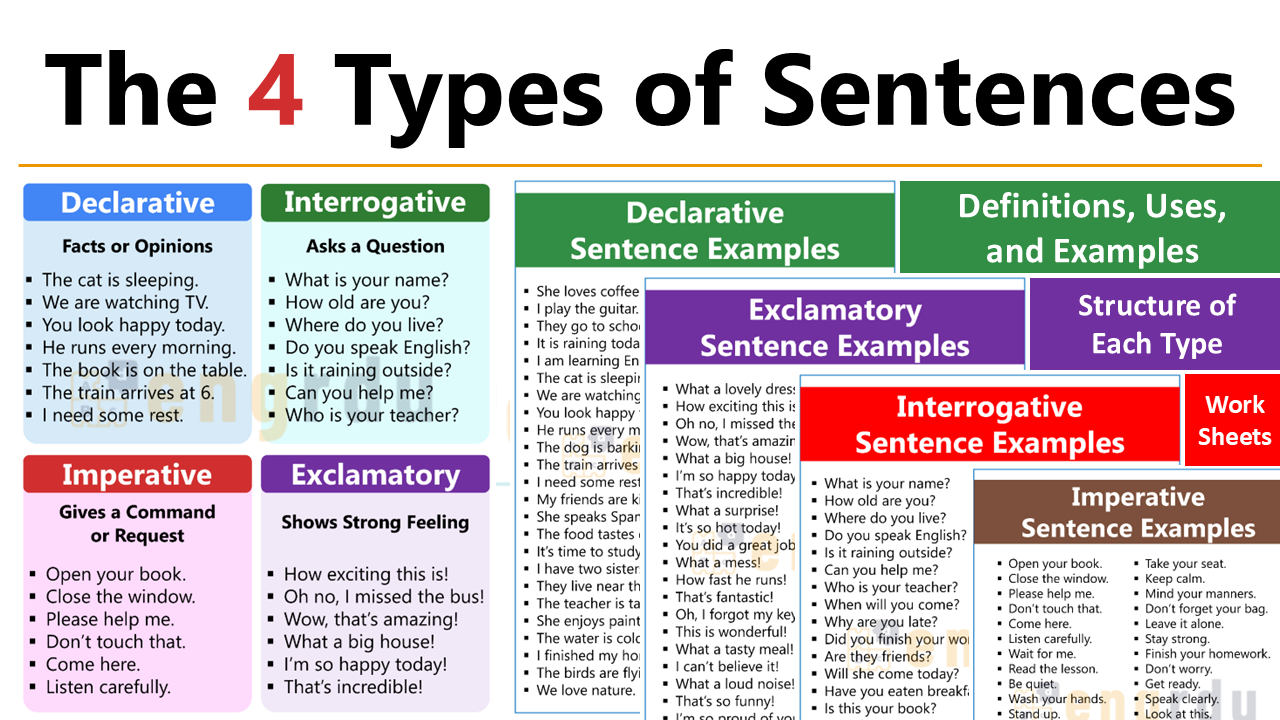
A declarative sentence is a type of sentence that makes a statement or gives information. It tells the reader or listener something true, known, or believed.
It usually ends with a full stop (.) and starts with a subject followed by a verb.
Structure:
| Type | Sentence Structure | Example |
|---|---|---|
| Simple Declarative | Subject + Verb + Object | She reads books. |
| Complex Declarative | Subject + Verb + Clause | I know that you are right. |
Types of Declarative Sentence
Declarative sentences can be positive (affirmative) or negative depending on their meaning.
Affirmative Declarative Sentence
An affirmative declarative sentence tells or states something positive, true, or real. It is used to share information, describe something, or express a fact or opinion.
Uses of Affirmative Declarative Sentence:
We use affirmative declarative sentences to:
- Give information about something
- Describe people, places, or things
- Express thoughts, feelings, or beliefs
- State facts that are true
Examples Affirmative Declarative Sentence:
- She is reading a book.
- The sun shines during the day.
- They play football every evening.
- My brother works in an office.
- I like learning English grammar.
Negative Declarative Sentence
A negative declarative sentence tells or states something that is not true or denies a statement. It uses negative words like not, never, no, or don’t to show negation.
Uses of Negative Declarative Sentences:
We use negative declarative sentences to:
- Reject or deny something
- Show that something didn’t happen
- Express disagreement or negative ideas
- Tell what is not true
Examples of Negative Declarative Sentences:
- She is not reading a book.
- The sun doesn’t shine at night.
- They don’t play football on Sundays.
- My brother doesn’t work on weekends.
- I don’t like cold weather.
Uses of Declarative Sentences
A declarative sentence is mainly used to give information, state facts, or share opinions. It’s the most common type of sentence we use in speaking and writing.
Here are the main uses explained:
To Give Information
We use declarative sentences to tell something or give details.
- The sun rises in the east.
- She works at a hospital.
To Express Opinions
They help to share thoughts or personal beliefs.
- I believe this film is great.
- Tea is better than coffee.
To Describe Events or Situations
They tell what happens or describe conditions.
- It rained all night.
- The children are playing in the park.
To State Facts or Truths
They are used to show something true or real.
- Water freezes at 0°C.
- Dogs are loyal animals.
20 Examples of Declarative Sentences
- I wake up early every morning.
- She likes to read novels.
- The train arrives at seven o’clock.
- They are watching a movie together.
- My father works in a bank.
- It is raining outside.
- We need more time to finish the project.
- The cat is sleeping on the sofa.
- He plays football with his friends.
- This restaurant serves delicious food.
- I don’t watch television at night.
- She is not coming to the party.
- The children are not studying right now.
- He doesn’t eat spicy food.
- I never forget my homework.
- Our teacher explains everything clearly.
- The sun sets in the west.
- Water boils at 100°C.
- They don’t live in this city anymore.
- I enjoy learning English grammar.
Declarative Sentence vs Imperative
| Feature | Declarative Sentence | Imperative Sentence |
|---|---|---|
| Purpose | To state something | To command, request, or advise |
| Tone | Informative | Directive |
| Subject | Usually has a clear subject | The subject “you” is understood, not written |
| Punctuation | Ends with a full stop (.) | Ends with a full stop (.) or exclamation mark (!) |
| Example | She is cooking dinner. | Cook the dinner now! |
A declarative sentence helps us communicate clearly and share information in a natural way. Whether you’re writing or speaking, mastering declarative sentences makes your English more fluent and confident.

Declarative Sentence
Declarative Sentence Worksheets
A. Identify the Declarative Sentences
Read the sentences below. Write “Declarative” if it makes a statement, or “Not Declarative” if it does not.
- The sun rises in the east.
- Do you like apples?
- Please open the window.
- They are watching a movie.
- What a beautiful day!
- My brother plays football on Sunday.
- Can you help me with this?
- It is raining outside.
B. Complete the Sentences
Fill in the blanks to make declarative sentences.
- My teacher ____________ very kind.
- The train ____________ at six o’clock.
- I ____________ learning English grammar.
- We ____________ go to school every day.
- She ____________ like spicy food.
C. Change into Declarative Sentences
Change the following sentences into declarative form.
- Do you play tennis? → ___________________________
- Please close the door. → ___________________________
- What a nice dress! → ___________________________
- Can you speak English? → ___________________________
- Don’t shout! → ___________________________
D. Write Your Own Declarative Sentences
Write five sentences of your own using declarative form. You can write about your daily life, hobbies, or family.
E. Quick Check — Declarative or Not?
Tick (✔️) the correct box for each sentence.
| Sentence | Declarative | Not Declarative |
|---|---|---|
| The dog is barking. | ☐ | ☐ |
| Don’t touch that! | ☐ | ☐ |
| Are you tired? | ☐ | ☐ |
| I like learning new words. | ☐ | ☐ |
| What time is it? | ☐ | ☐ |
FAQs about Declarative Sentence
What is a declarative sentence?
A declarative sentence is a sentence that states a fact, opinion, or idea. It gives information and always ends with a full stop (.).
Example: She likes reading books.
What is the main purpose of a declarative sentence?
The main purpose of a declarative sentence is to share information or express thoughts clearly. It helps communicate facts, ideas, and feelings in a simple way.
Example: The sky is blue.
What are the types of declarative sentences?
There are two types of declarative sentences:
- Affirmative declarative sentence – states something positive (He is my friend.)
- Negative declarative sentence – denies something (He is not my friend.)
How can you identify a declarative sentence?
You can identify a declarative sentence if it:
- Gives information or a statement
- Ends with a full stop (.)
- Starts with a subject followed by a verb
Example: They are playing in the garden.
What is the difference between declarative and imperative sentences?
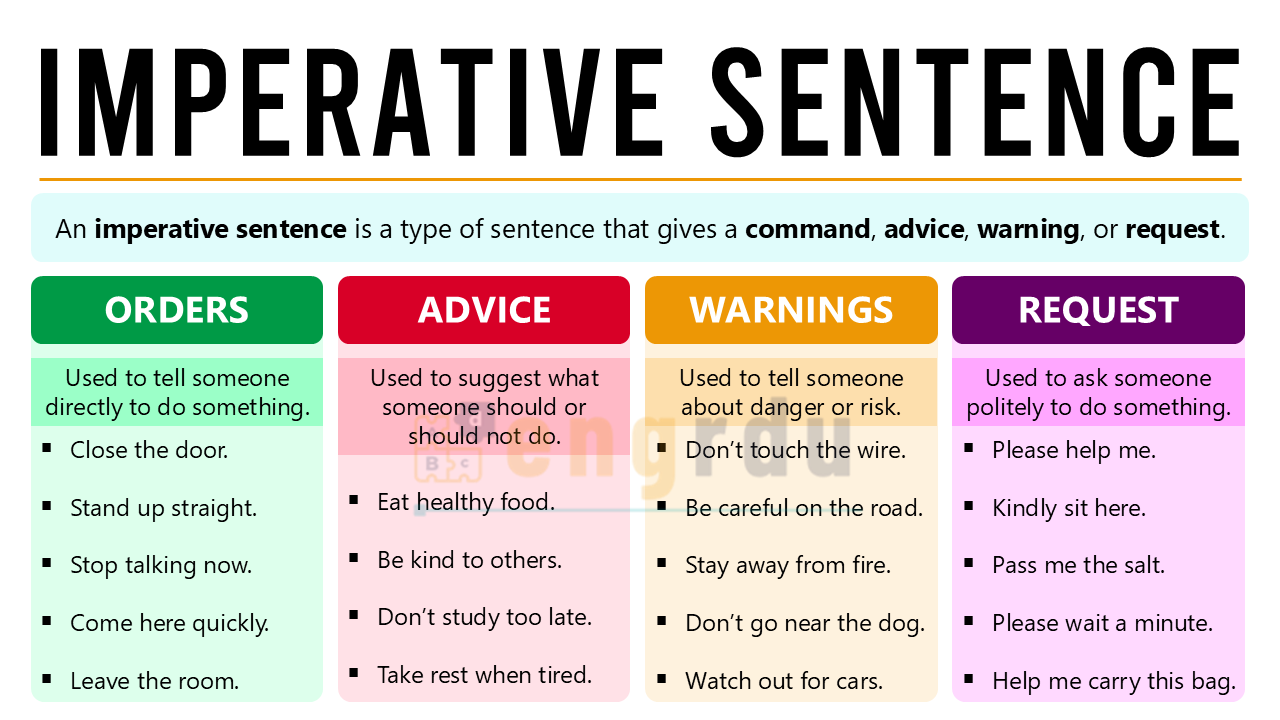
A declarative sentence tells or states something (She is a doctor.), while an imperative sentence gives a command or request (Close the door.).
Read More





Leave a Comment