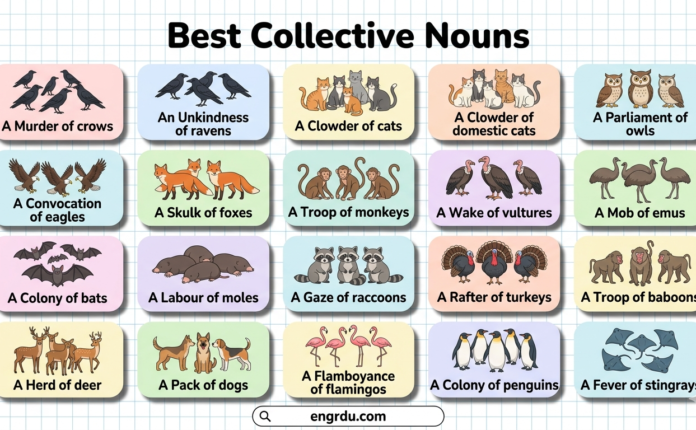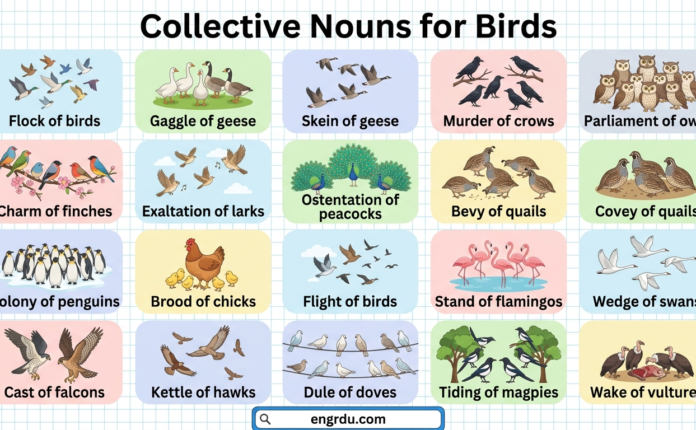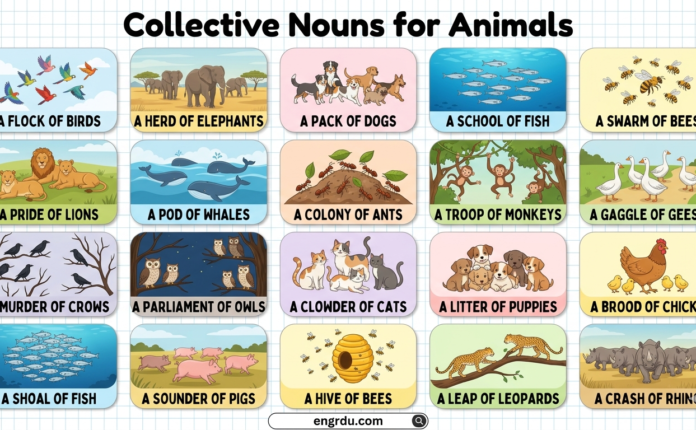
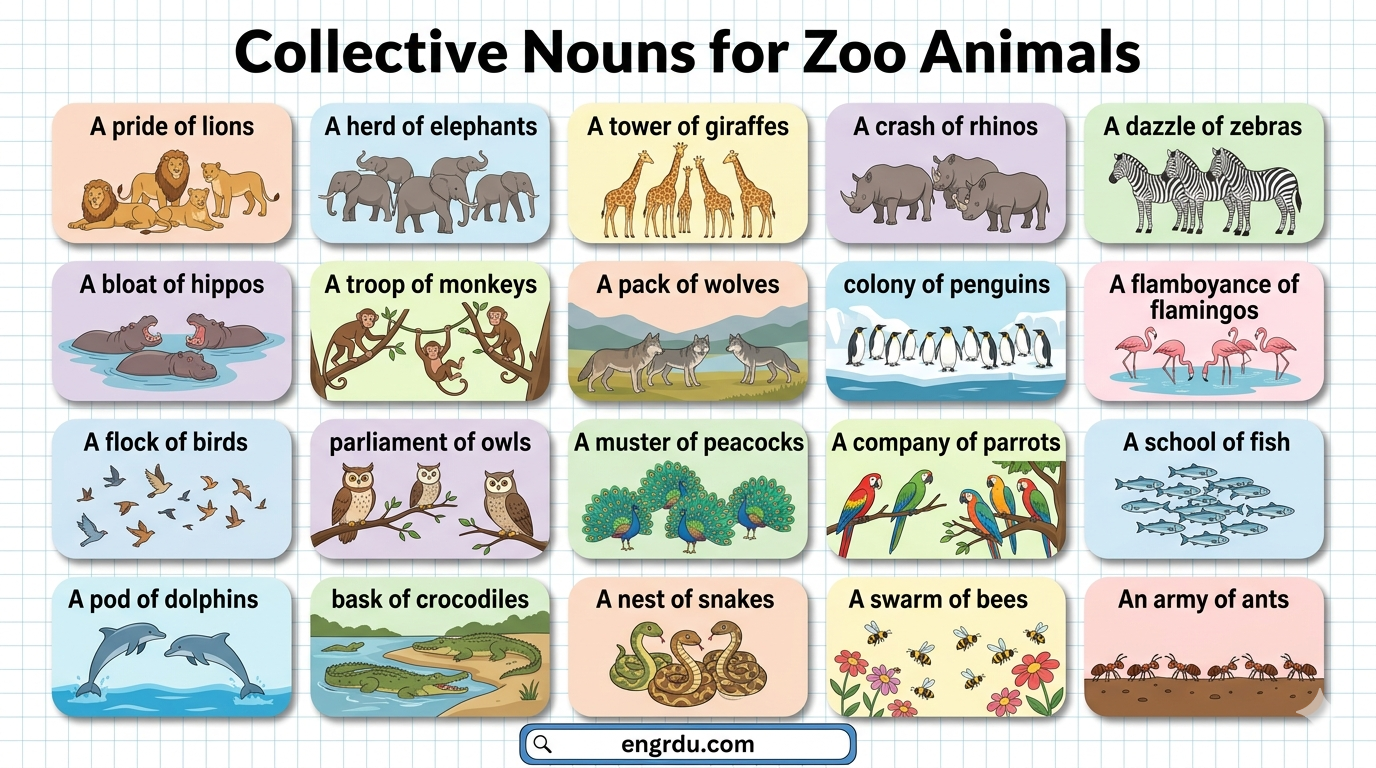
In this blog post, you will learn about Collective Nouns for Zoo Animals and how they help you describe groups like a pride of lions or a herd of elephants. These words are important because they improve your English vocabulary and make your sentences more natural. When you understand and use them, your speaking becomes smoother, your writing becomes more accurate, and your reading and listening skills also improve. By practicing these group names, you can communicate clearly and understand animal descriptions with more confidence.
Collective Nouns for Zoo Animals
Collective nouns are words used to describe a group of animals as one unit. Instead of saying many animals, we use one word to make the sentence shorter and clearer.
Examples:
- A pride of lions
- A flock of birds
- A herd of elephants
These words improve vocabulary skills, make speech more natural, and help in better communication.
Collective Nouns for Zoo Animals in English
- Pride of lions: group of lions living together, often led by strong male leader
- Herd of elephants: large group moving together for safety and survival
- Tower of giraffes: tall animals standing together, easy to see from distance
- Crash of rhinos: heavy animals moving together, often making loud strong sounds
- Troop of monkeys: active group climbing trees and playing socially together
- Colony of penguins: large group living and breeding together in cold regions
- Flamboyance of flamingos: bright pink birds standing together in shallow water
- Parade of zebras: striped animals walking together in organized group movement
- Bloat of hippos: group resting in water to stay cool and protected
- Clowder of cats: group of cats living or resting together peacefully
- Pack of wolves: organized group hunting and living together with strong teamwork
- School of fish: many fish swimming together in same direction for safety
- Pod of dolphins: intelligent animals traveling and communicating in close groups
- Army of ants: large number moving together in organized working system
- Swarm of bees: flying insects moving together around hive or searching food
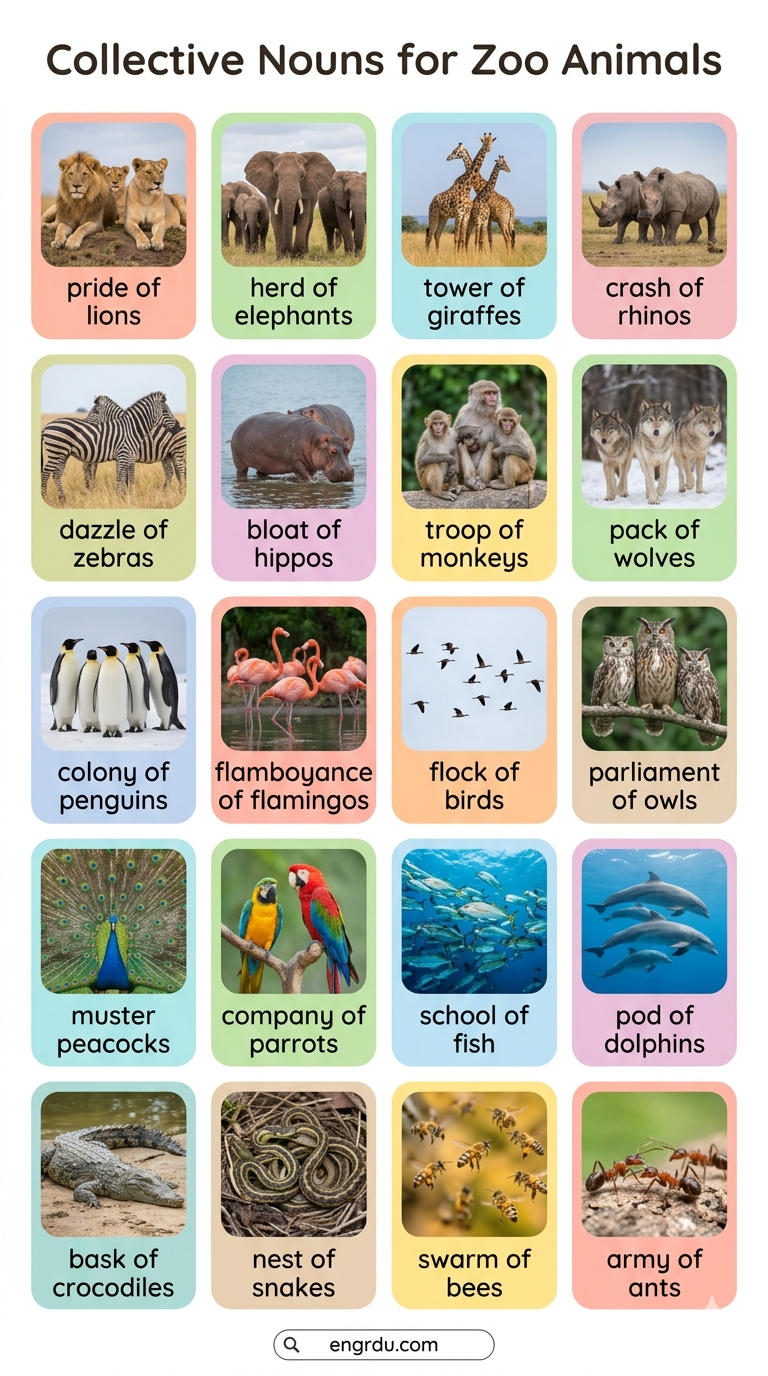
Mammals: Zoo Animals and Their Collective Nouns
Big Mammals
- Lions – Pride: strong social group living and hunting together
- Elephants – Herd: family-based group led by oldest female member
- Giraffes – Tower: tall animals grouped for better protection and visibility
- Rhinos – Crash: powerful animals moving together with force and weight
- Zebras – Dazzle: striped group confusing predators with visual patterns
- Hippos – Bloat: large animals resting together in water bodies
Medium Mammals
- Monkeys – Troop: playful and intelligent animals living in social groups
- Wolves – Pack: organized hunters working together for food and protection
- Foxes – Skulk: quiet group moving carefully and avoiding danger
- Kangaroos – Mob: group moving and feeding together in open areas
Small Mammals
- Rabbits – Colony: group living together in burrows underground
- Bats – Colony: large group hanging together in caves or dark places
- Otters – Raft: group floating together in water holding each other
Birds: Zoo Animals and Their Collective Nouns
- Flamingos – Flamboyance: colorful birds standing together in water areas
- Penguins – Colony: large group living in cold and icy conditions
- Owls – Parliament: wise birds sitting together quietly in trees
- Peacocks – Muster: beautiful birds gathering together during display time
- Parrots – Company: noisy and social birds staying together in groups
- Eagles – Convocation: powerful birds gathering in high places
Reptiles and Amphibians: Collective Nouns
- Snakes – Nest: group resting together in hidden or warm places
- Crocodiles – Bask: group lying together under sun for warmth
- Turtles – Bale: group swimming or resting together in water
- Frogs – Army: large group moving together near water areas
Aquatic Zoo Animals: Collective Nouns
- Fish – School: group swimming together in same direction for safety
- Dolphins – Pod: intelligent group communicating and traveling together
- Whales – Pod: family group moving together in oceans
- Seals – Colony: group resting together on land or ice
- Jellyfish – Smack: group floating together in water currents
Insects and Small Creatures in Zoos
- Ants – Army: organized group working together in large numbers
- Bees – Swarm: flying group searching for food or building hive
- Butterflies – Kaleidoscope: colorful group flying together in gardens
- Locusts – Plague: very large group moving together and covering wide areas
List of Collective Nouns for Zoo Animals
| Zoo Animal | Collective Noun | Example Phrase |
|---|---|---|
| Lions | Pride | A pride of lions |
| Elephants | Herd | A herd of elephants |
| Giraffes | Tower | A tower of giraffes |
| Rhinos | Crash | A crash of rhinos |
| Zebras | Dazzle | A dazzle of zebras |
| Hippos | Bloat | A bloat of hippos |
| Monkeys | Troop | A troop of monkeys |
| Wolves | Pack | A pack of wolves |
| Foxes | Skulk | A skulk of foxes |
| Kangaroos | Mob | A mob of kangaroos |
| Rabbits | Colony | A colony of rabbits |
| Bats | Colony | A colony of bats |
| Otters | Raft | A raft of otters |
| Flamingos | Flamboyance | A flamboyance of flamingos |
| Penguins | Colony | A colony of penguins |
| Owls | Parliament | A parliament of owls |
| Peacocks | Muster | A muster of peacocks |
| Parrots | Company | A company of parrots |
| Eagles | Convocation | A convocation of eagles |
| Snakes | Nest | A nest of snakes |
| Crocodiles | Bask | A bask of crocodiles |
| Turtles | Bale | A bale of turtles |
| Frogs | Army | An army of frogs |
| Fish | School | A school of fish |
| Dolphins | Pod | A pod of dolphins |
| Whales | Pod | A pod of whales |
| Seals | Colony | A colony of seals |
| Jellyfish | Smack | A smack of jellyfish |
| Ants | Army | An army of ants |
| Bees | Swarm | A swarm of bees |
| Butterflies | Kaleidoscope | A kaleidoscope of butterflies |
| Locusts | Plague | A plague of locusts |
Use of Collective Nouns in Sentences
Collective nouns are used in everyday English to make sentences clearer and more interesting.
Examples:
- A pride of lions rested under the tree.
- We saw a tower of giraffes near the feeding area.
- A school of fish moved quickly in the aquarium.
They are useful in writing, speaking, and storytelling, especially when describing nature or animals.
Related Articles:
- Collective Nouns for Birds with Pictures
- Collective Nouns for Animals with Their Pictures
- 100+ Collective Noun Examples in English
Conclusion
Collective nouns for zoo animals add richness and clarity to English. Learning them helps you describe groups like a herd of elephants, flamboyance of flamingos, or pack of wolves in a more natural way. With regular practice, these terms become easy to remember and use in daily communication.
Frequently Asked Questions
What are collective nouns for zoo animals?
Collective nouns for zoo animals are special words used to describe a group of animals as one unit, such as a pride of lions or a herd of elephants.
What are some common examples of collective nouns for zoo animals?
Common examples include a pride of lions, herd of elephants, flock of birds, colony of penguins, and pod of dolphins used in everyday English.
What is the collective noun for lions?
The correct collective noun is a pride of lions. It refers to a social group of lions living and hunting together under strong group structure.
What is the collective noun for elephants and giraffes?
A herd of elephants describes a family group, while a tower of giraffes refers to tall animals standing together for protection and better visibility.
What is the collective noun for monkeys?
The correct term is a troop of monkeys. It describes a social group living together, sharing food, and moving actively from place to place.
What is the collective noun for fish?
A group of fish is called a school of fish. This term shows how fish swim together in the same direction for safety and movement.
What is the collective noun for flamingos?
Flamingos are called a flamboyance of flamingos. This name reflects their bright color and the beautiful way they stand together in groups.