If you are learning Spanish or improving your English vocabulary, knowing common greetings is a great place to start. One of the most frequently used greetings is good morning in Spanish, which is “Buenos días.” Understanding the English translation and seeing the phrase in different situations can help you remember it more easily. It also helps you recognize how greetings work in everyday conversations at home, school, work, and while traveling.
In this article, you’ll learn how to say good morning in Spanish, its meaning, pronunciation, and plenty of practical examples with English translations.
What Is Good Morning in Spanish?
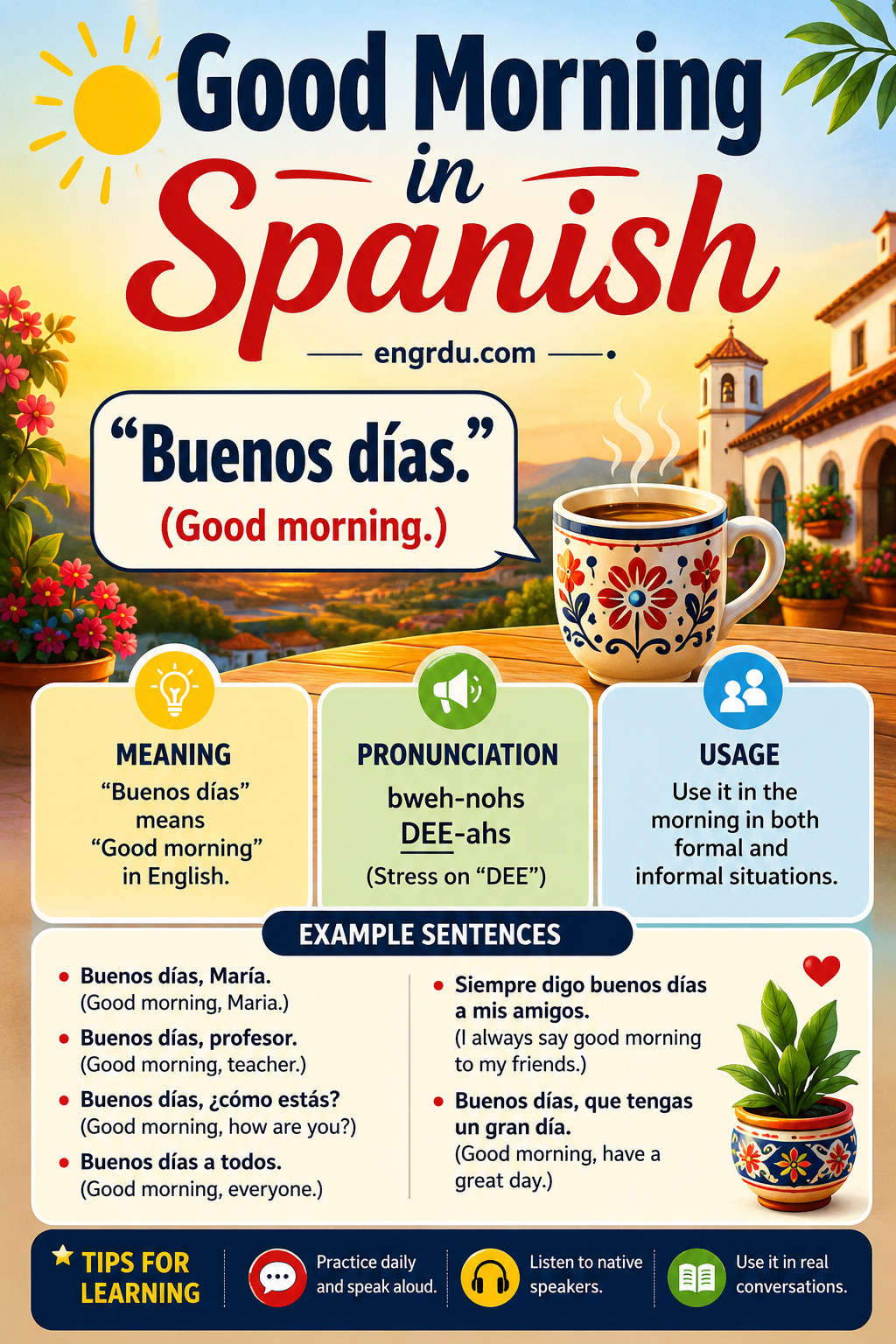
The phrase good morning in Spanish is Buenos días.
- Buenos = Good
- Días = Days
Together, Buenos días is used as the Spanish equivalent of Good morning.
Quick Facts:
| Spanish | English Translation |
|---|---|
| Buenos días | Good morning |
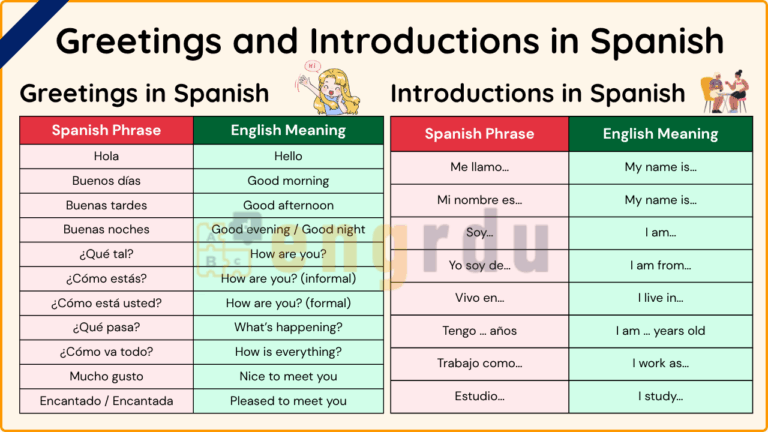
| Hola | Hello |
| Buenas tardes | Good afternoon |
| Buenas noches | Good evening / Good night |
Sentence Examples
- Buenos días. → Good morning.
- Ella dijo, “Buenos días”. → She said, “Good morning.”
- Escuché “Buenos días” al entrar. → I heard “Good morning” when I entered.
- Todos dijeron “Buenos días”. → Everyone said “Good morning.”
- Mi profesor dijo “Buenos días”. → My teacher said “Good morning.”
- Siempre digo “Buenos días” a mis vecinos. → I always say “Good morning” to my neighbors.
- ¿Puedes decir “Buenos días”? → Can you say “Good morning”?
- El recepcionista nos saludó con “Buenos días”. → The receptionist greeted us with “Good morning.”
- Aprendimos “Buenos días” en clase. → We learned “Good morning” in class.
- Él respondió con un amable “Buenos días”. → He replied with a friendly “Good morning.”
- Escucho esta frase todos los días. → I hear this phrase every day.
- Los estudiantes dijeron “Buenos días” juntos. → The students said “Good morning” together.
- Ella comenzó la conversación con “Buenos días”. → She started the conversation with “Good morning.”
- Todos sonrieron después del saludo. → Everyone smiled after the greeting.
- La frase es fácil de recordar. → The phrase is easy to remember.
- Mi amigo practica esta expresión cada mañana. → My friend practices this expression every morning.
- Muchos viajeros aprenden “Buenos días”. → Many travelers learn “Good morning.”
- La saludé con un “Buenos días”. → I greeted her with a “Good morning.”
- Él usó la frase correctamente. → He used the phrase correctly.
- Fue una bienvenida agradable. → It was a pleasant welcome.
How to Say Good Morning in Spanish
When learners ask how to say good morning in Spanish, the answer is usually Buenos días. It is used in both formal and casual situations.
Pronunciation
Buenos días
Approximate pronunciation:
bweh-nohs DEE-ahs
Sentence Examples
- Buenos días, María. → Good morning, Maria.
- Buenos días, profesor. → Good morning, teacher.
- Buenos días, mamá. → Good morning, Mom.
- Buenos días, papá. → Good morning, Dad.
- Buenos días, amigos. → Good morning, friends.
- Buenos días, señor. → Good morning, sir.
- Buenos días, señora. → Good morning, ma’am.
- Buenos días a todos. → Good morning, everyone.
- Buenos días, equipo. → Good morning, team.
- Buenos días, niños. → Good morning, children.
- Buenos días, abuela. → Good morning, Grandma.
- Buenos días, vecino. → Good morning, neighbor.
- Buenos días, compañeros. → Good morning, classmates.
- Buenos días, jefe. → Good morning, boss.
- Buenos días, doctor. → Good morning, doctor.
- Buenos días, ¿cómo estás? → Good morning, how are you?
- Buenos días, ¿todo bien? → Good morning, is everything okay?
- Buenos días, me alegra verte. → Good morning, I’m happy to see you.
- Buenos días, gracias por venir. → Good morning, thank you for coming.
- Buenos días, espero que tengas un gran día. → Good morning, I hope you have a great day.
- Buenos días, ¿estás listo para empezar? → Good morning, are you ready to start?
- Buenos días, es un placer conocerte. → Good morning, it’s nice to meet you.
- Buenos días, bienvenido. → Good morning, welcome.
- Buenos días, ¿puedo ayudarte? → Good morning, may I help you?
- Buenos días, qué gusto verte. → Good morning, it’s great to see you.
Good Morning in Spanish Sentence Examples with English Translation
Seeing the phrase in different situations makes it easier to understand and remember. The examples below show natural daily usage.
Home and Family Examples
- Buenos días, mamá. Dormí muy bien. → Good morning, Mom. I slept very well.
- Buenos días, papá. → Good morning, Dad.
- Mi hermana dijo “Buenos días” al despertar. → My sister said “Good morning” after waking up.
- Todos nos saludamos con “Buenos días”. → We all greeted each other with “Good morning.”
- El desayuno estaba listo después del saludo. → Breakfast was ready after the greeting.
- Buenos días, abuelo. → Good morning, Grandpa.
- Mi madre sonrió y dijo “Buenos días”. → My mother smiled and said “Good morning.”
- Comenzamos el día con un alegre saludo. → We started the day with a cheerful greeting.
School Examples
- Buenos días, profesora. → Good morning, teacher.
- Los estudiantes dijeron “Buenos días” juntos. → The students said “Good morning” together.
- Buenos días, clase. → Good morning, class.
- Llegué temprano y saludé a todos. → I arrived early and greeted everyone.
- El maestro respondió con una sonrisa. → The teacher replied with a smile.
- Buenos días, ¿podemos comenzar? → Good morning, can we begin?
- La clase empezó después del saludo. → The class started after the greeting.
- Todos parecían felices esta mañana. → Everyone seemed happy this morning.
Work Examples
- Buenos días, equipo. → Good morning, team.
- Buenos días, jefe. → Good morning, boss.
- La reunión comenzó con saludos amistosos. → The meeting started with friendly greetings.
- Buenos días, ¿cómo va todo? → Good morning, how is everything going?
- Saludé a mis compañeros al llegar. → I greeted my coworkers when I arrived.
- El ambiente fue positivo desde el principio. → The atmosphere was positive from the start.
- Buenos días, gracias por su ayuda. → Good morning, thank you for your help.
- Todos respondieron educadamente. → Everyone responded politely.
Common Responses to Buenos Días
After hearing Buenos días, people often respond with another greeting or a short question.
- Buenos días. → Good morning.
- Buenos días, ¿cómo estás? → Good morning, how are you?
- Buenos días, estoy bien. → Good morning, I’m fine.
- Buenos días, gracias. → Good morning, thank you.
- Buenos días, mucho gusto. → Good morning, nice to meet you.
- Buenos días, ¿qué tal? → Good morning, how are things?
- Buenos días, me alegra verte. → Good morning, I’m happy to see you.
- Buenos días, que tengas un buen día. → Good morning, have a good day.
- Buenos días, todo está bien. → Good morning, everything is fine.
- Buenos días, gracias por preguntar. → Good morning, thanks for asking.
- Buenos días, ¿cómo estuvo tu fin de semana? → Good morning, how was your weekend?
- Buenos días, nos vemos luego. → Good morning, see you later.
- Buenos días, bienvenido de nuevo. → Good morning, welcome back.
- Buenos días, encantado de verte. → Good morning, delighted to see you.
- Buenos días, vamos a empezar. → Good morning, let’s begin.
- Buenos días, ¿necesitas ayuda? → Good morning, do you need help?
- Buenos días, todo marcha bien. → Good morning, everything is going well.
- Buenos días, gracias por venir. → Good morning, thank you for coming.
- Buenos días, hasta pronto. → Good morning, see you soon.
- Buenos días, disfruta tu día. → Good morning, enjoy your day.
Formal and Casual Uses of Buenos Días
Buenos días works well in many situations. You can use it with family members, friends, teachers, customers, coworkers, and strangers.
- Buenos días, señor García. → Good morning, Mr. Garcia.
- Buenos días, doctora. → Good morning, doctor.
- Buenos días, oficial. → Good morning, officer.
- Buenos días, vecino. → Good morning, neighbor.
- Buenos días, amigo. → Good morning, friend.
- Buenos días, compañeros. → Good morning, classmates.
- Buenos días, clientes. → Good morning, customers.
- Buenos días, señora López. → Good morning, Mrs. Lopez.
- Buenos días, familia. → Good morning, family.
- Buenos días, todos. → Good morning, everyone.
- Buenos días, entrenador. → Good morning, coach.
- Buenos días, estudiantes. → Good morning, students.
- Buenos días, queridos amigos. → Good morning, dear friends.
- Buenos días, bienvenidos. → Good morning, welcome.
- Buenos días, es un placer estar aquí. → Good morning, it is a pleasure to be here.
- Buenos días, espero que estén bien. → Good morning, I hope you are well.
- Buenos días, gracias por su tiempo. → Good morning, thank you for your time.
- Buenos días, me alegra verlos. → Good morning, I am happy to see you.
- Buenos días, comencemos. → Good morning, let’s begin.
- Buenos días, tengan un excelente día. → Good morning, have an excellent day.
Pronunciation Tips for Buenos días
Buenos días is pronounced approximately as bweh-nohs DEE-ahs.
Here are a few quick tips:
- Buenos sounds like “bweh-nohs.”
- Días sounds like “DEE-ahs.”
- Put a little more stress on DEE in días.
- Pronounce both words clearly without rushing.
- The b in Buenos is softer than the English b in some Spanish accents.
- The í in días shows where the stress falls, so emphasize DEE slightly.
Example:
Buenos días, señor. → Good morning, sir.
Pronunciation: bweh-nohs DEE-ahs seh-NYOR.
With practice, Buenos días will sound natural and comfortable in everyday conversations.
Tips for Learning Buenos Días
Learning a new greeting becomes easier when you use it regularly. Here are a few helpful tips:
- Say it every morning. Start your day by saying “Buenos días” aloud.
- Practice with family and friends. Use the greeting whenever you meet someone in the morning.
- Listen to native speakers. Watch Spanish videos or podcasts and pay attention to how Buenos días is pronounced.
- Learn it with responses. Practice phrases like “Buenos días, ¿cómo estás?” (Good morning, how are you?).
- Use flashcards. Write Buenos días on one side and Good morning on the other.
- Repeat it in different situations. Imagine greeting a teacher, coworker, neighbor, or friend.
- Read example sentences. Seeing the phrase in context helps you remember it longer.
- Practice daily. Even a few minutes each day can improve your confidence and pronunciation.
You May Also Like:
FAQs About Good Morning in Spanish
What is “good morning” in Spanish?
Good morning in Spanish is Buenos días. It is the standard greeting used during the morning.
How do you say good morning in Spanish?
You say Buenos días, which is the most common way to greet someone in the morning in Spanish.
What does Buenos días mean in English?
Buenos días translates to Good morning in English.
How is Buenos días pronounced?
It is commonly pronounced as bweh-nohs DEE-ahs, with the stress on DEE.
When should I use Buenos días?
Use Buenos días in the morning, typically from sunrise until around noon.
Is Buenos días formal or informal?
Buenos días works in both formal and informal situations. You can use it with friends, family, teachers, coworkers, customers, and strangers.
How do people respond to Buenos días?
People often reply with Buenos días. They may also add phrases like ¿Cómo estás? (How are you?) or ¿Qué tal? (How are things?).
Can I use Buenos días in professional settings?
Yes. Buenos días is widely used in offices, business meetings, schools, hotels, shops, and other professional environments.
Is Buenos días used in all Spanish-speaking countries?
Yes. Buenos días is understood and commonly used throughout the Spanish-speaking world.
What are other common Spanish greetings?
Other common greetings include:
- Hola — Hello
- Buenas tardes — Good afternoon
- Buenas noches — Good evening / Good night
Why is Buenos días important for beginners?
It is one of the first Spanish phrases many learners study because it is useful in everyday conversations and helps create a polite first impression.
Conclusión
Learning good morning in Spanish is useful for everyday communication. The phrase Buenos días is widely used across Spanish-speaking countries and works in both casual and professional situations. By practicing these examples and their English translations, you can better understand how to say good morning in Spanish and use it naturally in conversations.